
Light Requirements
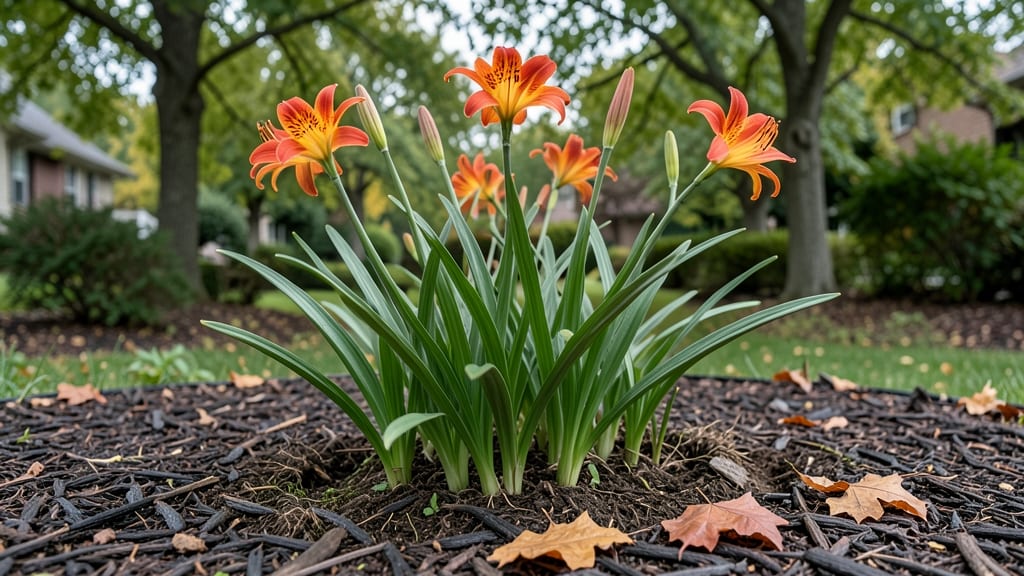
Daylilies can grow in shade but thrive best with at least 4-6 hours of sunlight daily. Some shade-tolerant varieties like 'Happy Returns' or 'Stella de Oro' adapt well to partial shade, though blooms may be fewer and foliage less vibrant without adequate light.
Daylilies are famously adaptable, but their performance in low-light areas depends on genetics and environmental factors. 🌿 While they can survive with minimal sunlight, reduced light triggers slower growth and weaker stems, often resulting in smaller, less vibrant blooms.
The key difference lies in chlorophyll production—shade-tolerant varieties develop thicker leaves to capture more diffuse light, but this comes at the cost of energy that could otherwise fuel flower production. For optimal results, I recommend placing them in filtered light spots where they receive dappled sunlight throughout the day.
If you're working with a heavily shaded garden, focus on varieties specifically bred for low-light conditions. These cultivars often feature darker foliage and more compact growth habits, making them better suited for understory planting.
Just remember that even shade-tolerant daylilies will reward you with more abundant blooms when given a few hours of direct sunlight each day.
💡 In This Article
- How Light Affects Daylily Growth and Bloom Performance
- Best Shade-Tolerant Daylily Varieties for Low-Light Gardens
How light affects daylily growth and bloom performance
Daylilies rely on photosynthesis to convert light energy into chemical energy, and their growth patterns shift dramatically based on light exposure. In full sun, these plants produce more chlorophyll, allowing them to create abundant glucose through the Calvin cycle—this fuels rapid stem elongation and vibrant flower production.
The difference is striking: a daylily in 6+ hours of sunlight may produce 30-50 blooms per stalk, while the same variety in deep shade might yield only 5-10. This happens because limited light reduces the plant's ability to synthesize ATP, slowing down all metabolic processes.
The impact on flower color is equally fascinating. Sunlight enhances the production of anthocyanins—pigments that give daylilies their rich hues. In shade, these pigments become diluted, resulting in paler blooms that lack the deep reds, purples, and oranges seen in full sun.
For example, 'Happy Returns' typically displays vibrant orange flowers in sunlight, but under trees, they may appear more muted yellow-orange. The foliage also changes: sun-grown leaves are thinner and lighter green, while shade leaves develop a thicker, darker green texture to capture more diffuse light.
Here's what happens genetically: shade-tolerant daylilies have evolved with different photosynthetic pathways. They produce more rubisco enzyme (the protein that fixes carbon dioxide) and develop larger stomata (leaf pores) to maximize gas exchange in low-light conditions. However, this adaptation comes at a cost—they allocate fewer resources to flower production.
In my garden, I've noticed that shade varieties like 'Stella de Oro' compensate by producing more scapes (flower stalks) but with smaller blooms compared to their sun-loving counterparts.
Watering needs change dramatically with light exposure too. Shade-grown daylilies require more frequent watering because their slower metabolism means they transpire less water. The soil stays moist longer in shaded areas, but this also creates ideal conditions for fungal diseases like powdery mildew.
I've found that shade daylilies need watering every 5-7 days in summer, compared to every 10-14 days for sun-grown plants. The key is monitoring soil moisture with your finger—shade plants show wilting signs more quickly than sun plants.
One surprising fact is how daylilies respond to light intensity changes. They exhibit phototropism, growing toward available light sources. This is why you often see daylilies leaning toward the edge of shade or growing in uneven patterns under trees.
In extreme shade (less than 2 hours of light), they may develop etiolated growth—long, weak stems with sparse foliage and almost no blooms. This condition is reversible if you gradually introduce more light, but it's a clear sign the plant is struggling.
For gardeners working with limited light, consider these practical adjustments: plant shade-tolerant varieties on the north or east sides of trees where they'll receive morning sun. Avoid planting under evergreens like pines, as they create dense, permanent shade.
Instead, choose deciduous trees that allow winter sunlight to reach the ground. This seasonal light change can make a significant difference in bloom production.
The bottom line is that while daylilies can survive in shade, they'll always perform better with some direct sunlight. Think of it like a trade-off: you can have a hardy, long-lived plant with modest blooms in shade, or a showstopper with abundant flowers in sun.
Most gardeners find that 3-4 hours of morning sun provides the best compromise for vibrant growth and consistent blooming.