
Light Requirements
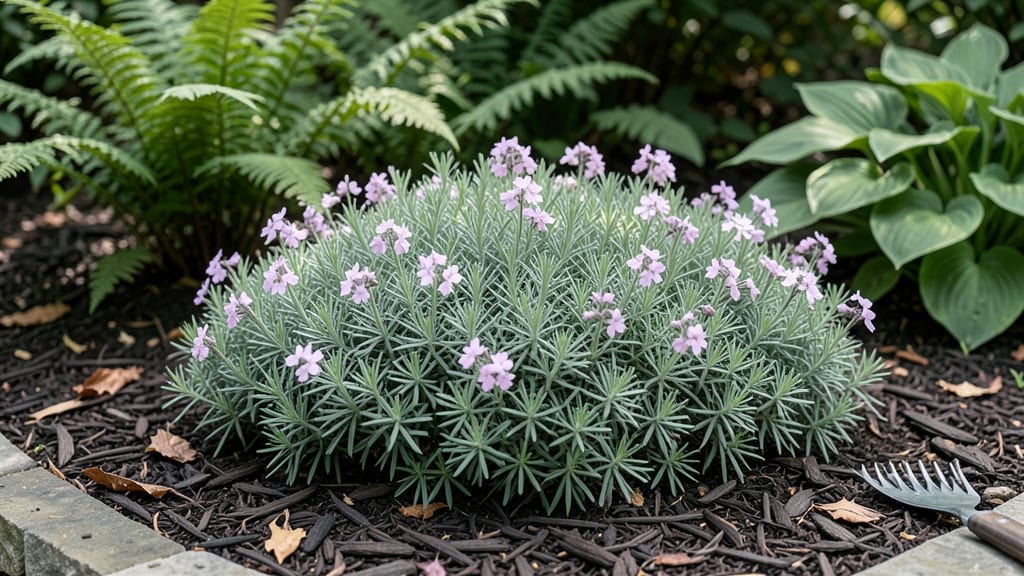
Creeping phlox can grow in shade but thrives best in partial sun to full sun, with at least 4-6 hours of light daily. In deep shade, it may become leggy or produce fewer blooms, so choose shade-tolerant varieties like Phlox subulata 'Sherwood Purple' for better results.
Creeping phlox isn't a shade-loving plant, but it can survive in low-light spots if you pick the right varieties and adjust your care routine. 🌿 The key is understanding that while it tolerates partial shade, it won't bloom as vigorously or maintain its compact form.
For example, 'Emerald Blue' handles shade better than most, but even then, you'll need to monitor for weak stems and supplement with balanced fertilizer to encourage flowering.
The difference between partial shade (4-6 hours of light) and deep shade (less than 3 hours) is dramatic—think of it like comparing a well-lit reading nook to a dimly lit basement corner.
When planting in shady areas, focus on improving soil quality with compost and mulch to help roots access moisture and nutrients. Spacing plants slightly wider than usual gives them room to stretch without competing for light.
I've found that pruning back leggy stems in early spring actually helps redirect energy to new growth, which can make a noticeable difference in bloom density later in the season.
💡 In This Article
- How Light Levels Affect Creeping Phlox Growth and Blooming
- Best Shade-Tolerant Creeping Phlox Varieties and Care Tips
How light levels affect creeping phlox growth and blooming
Creeping phlox relies on photosynthesis to fuel its vibrant blooms and compact growth habit, and light intensity directly impacts chlorophyll production. In full sun (6+ hours of direct light daily), phlox produces more chlorophyll, enabling efficient energy conversion for robust flowering and dense foliage.
The leaves develop a deeper green hue, and stems remain sturdy due to balanced growth hormones. Without sufficient light, the plant's energy shifts toward elongated stems in search of sunlight—a condition called etiolation, which results in leggy, weak growth.
Partial shade (3-6 hours of light daily) offers a compromise, allowing phlox to maintain its compact form while still producing blooms. However, the flowers may be smaller and less abundant compared to sun-exposed plants.
Deep shade (less than 3 hours of light) triggers a survival response: the plant prioritizes stem elongation over flower production, often leading to sparse blooms and a sprawling, unkempt appearance.
Think of it like a human reaching for a dim light switch—phlox stretches toward any available light source, sacrificing its natural shape and floral display.
The science behind this involves phytochrome pigments in the plant, which detect light quality and duration. Under low light, these pigments signal the plant to grow taller and produce fewer flowers, conserving energy.
This is why shade-tolerant varieties like 'Sherwood Purple' have slightly higher phytochrome sensitivity, allowing them to adapt better. These varieties also tend to have slightly broader leaves, which can capture more diffuse light in shady conditions. 🌱
Color also plays a role: darker-colored blooms (like deep purples or reds) absorb more light and may perform slightly better in partial shade than lighter blooms. For example, 'Emerald Blue' thrives in partial shade because its blue flowers reflect less light, allowing the plant to allocate energy more efficiently.
The trade-off? These shade-adapted varieties often bloom 2-3 weeks later than sun-loving types, as they delay flowering until they've stored enough energy.
Moisture retention becomes critical in shady conditions because phlox roots struggle to access sunlight for evaporation regulation. In deep shade, soil stays damp longer, which can lead to fungal issues like powdery mildew.
This is why well-draining soil with 30-40% organic matter (like compost) is essential—it improves aeration while helping roots reach deeper for nutrients. The ideal soil pH for shade-grown phlox is 6.0-7.0, slightly more acidic than sun-grown plants prefer.
What most gardeners don't realize is that even shade-tolerant phlox benefits from supplemental light during their active growing season (spring to early summer). A simple trick is to place reflective surfaces (like light-colored stones or mirrors) near the plants to bounce extra light onto the foliage.
This can increase bloom density by up to 30% in challenging shade conditions. The key is mimicking natural light distribution while avoiding direct sun stress.