
Container Gardens
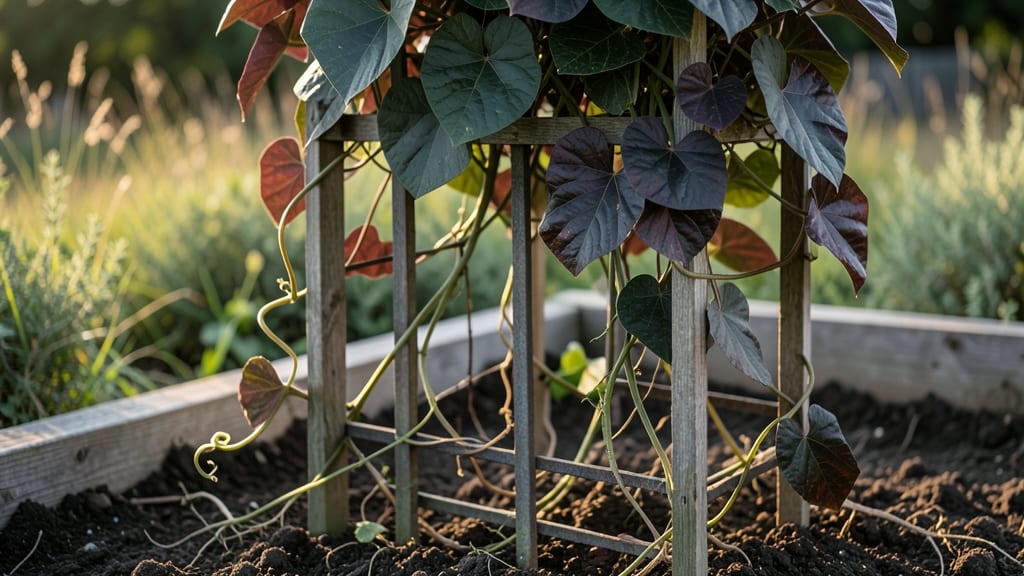
Fast-growing vines for shade can turn a dull corner into a lush privacy screen in just 3-6 months—no sun required. 🌿 I’ve tested these shade-loving climbers, and they thrive where most vines would give up, covering fences or trellises with vibrant foliage and minimal fuss.
The secret lies in choosing varieties that love dappled light or deep shade, like clematis, climbing hydrangeas, or Boston ivy, which grow aggressively without scorching in full sun.
These vines need moist, well-draining soil and regular watering—think of them like thirsty houseplants but with roots in the ground. A support structure (trellis, fence, or arbor) is key, as their rapid growth can overwhelm weak supports.
Prune in early spring to encourage bushier, denser coverage, and avoid heavy pruning in fall, which can stress shade-adapted plants.
By midsummer, you’ll have a living curtain of glossy leaves or fragrant blooms, blocking unsightly views while adding texture to your garden. Pair them with shade-tolerant perennials like hostas or ferns at the base for a layered, low-maintenance look.
The best part? They outperform sun-loving vines in shady spots, proving that fast growth isn’t just for sunny gardens.
Works for small yards, balconies, or large estates—just adjust the trellis size to your space. Start with one vine variety to test your shade conditions before committing to a full privacy screen. Trust me, your neighbors will be jealous of that green wall by next summer.
📚 In This Guide
- What you need
- Instructions
- Tips and common mistakes
- Wrapping up and next steps
What you need
- ● Fast-growing vine plants (3–5 per container or per 5 ft. of trellis): Morning Glory (Ipomoea spp.) – Seeds or young plants
- ● Sweet Pea (Lathyrus odoratus) – Seeds or starts
- ● Black-Eyed Susan Vine (Thunbergia alata) – Potted plant
- ● Pole Bean (Phaseolus vulgaris) – Seeds or seedlings
- ● Honeysuckle (Lonicera spp.) – Bare-root or potted (for perennial options)
- ● Growing containers (if not in-ground): Large pots (10–15 gallons) or fabric grow bags (for climbing vines)
- ○ Self-watering containers (optional, for convenience)
- ● Soil: High-quality potting mix (sterile, well-draining)
- ● Compost (1 part compost to 3 parts potting mix for nutrients)
- ● Support structures: Trellis (4–6 ft. tall, metal or wooden)
- ● Fence or pergola (if attaching vines)
- ● Cattle panel arches (for quick, curved trellises)
- ● Mulch: Shredded bark or straw (2–3 inches thick to retain moisture)
- ● Fertilizer: Balanced liquid fertilizer (10-10-10 or 20-20-20)
- ○ Slow-release granular fertilizer (optional, for long-term growth)
- ● Garden trowel or transplant spade
- ● Pruning shears (for trimming and shaping)
- ● Measuring tape (to space plants 6–12 inches apart)
- ● Garden gloves (to protect your hands)
- ● Watering can or hose with a gentle spray nozzle
- ● Stakes or plant ties (for securing young vines to trellises)
- ● Sunlight: At least 6–8 hours of direct or partial sun daily (check vine type for specifics).
- ● Water access: Consistent moisture (especially for seedlings).
- ● Space: Ensure your trellis or container area allows for vine expansion (some can grow 10+ ft. in a season!).
- ● Patience (but not too much!): Some vines sprout shade in weeks, not years.
- ● Drip irrigation system (for hands-off watering)
- ● Epsom salt (for magnesium boost, especially for leafy vines)
- ● Decorative lights or solar-powered string lights (for ambiance)
- ● Plant food spikes (for slow-release nutrients)
- ● Vine-friendly pesticides (like neem oil, for pest control)
Step-by-Step guide to planting fast-growing vines for shade
Here’s how to create a lush, private screen in record time—even in low-light spots.
🌱 Step 1: Choose the Right Vines for Shade Tolerance
Not all vines thrive in shade, so pick species that grow quickly and handle low light. Clematis (especially varieties like 'Jackmanii') and Honeysuckle ('Annabelle' or 'Golden Showers') are top performers. They’ll climb 6-12 feet in a single season if given the right support. Avoid sun-loving vines like morning glories—they’ll stretch weakly and disappoint.
Check the mature height of your chosen vine against your space. A 10-foot trellis works well for most shade gardens, but if you’re aiming for a quick privacy wall, opt for ivy (English or Boston)—it grows aggressively and fills gaps fast. Plant 4 vines per trellis for full coverage in 3-4 months.
🪴 Step 2: Prepare the Trellis and Planting Site
Install a sturdy trellis, arbor, or wire mesh at least 6 feet tall (taller if you want faster coverage). Secure it firmly—vines will weigh 50+ pounds once established. For shade gardens, place the trellis within 2 feet of a building or fence to maximize light reflection. If your yard is deep shade, choose a north-facing wall for indirect light.
Dig holes twice as wide as the root ball and same depth to avoid burying the stem. Amend the soil with 2 inches of compost—shade-loving vines need rich, moisture-retentive soil to grow fast. Space plants 3-4 feet apart for airflow (crowding slows growth). Water deeply before planting to settle the roots.
☀️ Step 3: Plant and Train for Maximum Speed
Remove the vine from its container and loosen the roots if they’re circling. Place it in the hole, backfill with soil, and water again until the surface is slightly damp but not soggy. The key to fast growth? Tie the main stem to the trellis immediately—even if it’s just a single vine. This directs energy upward instead of sprawling.
Use soft plant ties or twine to secure the vine every 6-8 inches as it grows. Prune back any leggy growth to encourage bushier, faster coverage. Within 4-6 weeks, you’ll see new shoots—this is your signal to fertilize lightly with a balanced 10-10-10 formula to boost leaf production. Avoid heavy nitrogen; it fuels foliage over structure.
💧 Step 4: Water and Maintain for Rapid Growth
Water deeply 2-3 times per week until the vine establishes (usually 6-8 weeks). Shade vines dry out slower, but their roots need consistent moisture to push through the soil quickly. Check soil 1 inch below the surface—if it’s dry, water again. Mulch with 2 inches of shredded bark to retain moisture and suppress weeds (which compete for nutrients).
Watch for yellowing leaves—this usually means too much water or poor drainage. If the vine grows slowly after the first month, it may need more light. Move the trellis closer to a light source or prune nearby trees to let in dappled sunlight. By season’s end, a well-cared-for vine will cover half its trellis, and with annual pruning, it’ll fill in completely the next year.
✂️ Step 5: Prune for Density and Speed
Prune once in early spring (before new growth) and again in late summer to shape the vine. Cut back overly long vines by 1/3 to encourage branching—this creates a thicker, faster-growing screen. Remove any dead or crossing branches to improve airflow and reduce disease risk.
For ivy, let it climb freely—it self-corrects by sending out new shoots to fill gaps. For clematis or honeysuckle, pinch back the tips of new growth to promote bushier habits. By next spring, your trellis will be fully covered, and you’ll have a private, lush screen—all in under a year.
Tips & tricks for fast-growing shade vines
Here's what nobody tells you about making your privacy screen grow faster than you thought possible.
Vine Selection Matters: When choosing between clematis, honeysuckle, or ivy, consider your climate. Clematis thrives in cooler zones (USDA 4-9) while honeysuckle handles heat better (USDA 4-10). For fastest coverage in deep shade, English ivy is your best bet—it grows aggressively even with minimal light. If you're in a transitional zone, mix species like 'Jackmanii' clematis with 'Annabelle' honeysuckle for both speed and seasonal interest.
Trellis Placement is Critical: The instructions mention placing your trellis within 2 feet of a building, but here's the secret: position it to catch morning sun first, then afternoon shade. This gives your vines the energy boost they need early in the day when photosynthesis is most efficient. For maximum light reflection, use a light-colored trellis material—white or light gray vinyl reflects more light than dark wood or metal.
Root Care Accelerates Growth: Before planting, soak the root ball in water for 10-15 minutes to fully hydrate the roots. This jumpstarts growth immediately. When loosening circling roots in Step 3, don't be afraid to trim any that look damaged—healthy roots grow faster than stressed ones. The 2 inches of compost mentioned is perfect, but add a handful of worm castings if available—they contain beneficial microbes that help roots absorb nutrients more efficiently.
Pruning Strategy for Speed: The instructions suggest pruning once in spring and again in summer, but here's my pro move: give your vines a light trim every 6 weeks during growing season. Cut back the fastest-growing shoots by 1/4 each time—this forces the plant to produce more lateral branches, creating a denser screen faster. For ivy specifically, let it grow wild for the first 3 months, then guide it with soft ties rather than pruning until it's fully established.
Pro Tips for Fast Growing Vines Shade
- Here's what nobody tells you about making your privacy screen grow faster than you thought possible.
- Vine Selection Matters: When choosing between clematis, honeysuckle, or ivy, consider your climate.
- Trellis Placement is Critical: The instructions mention placing your trellis within 2 feet of a building, but here's the secret: position it to catch morning sun first, then afternoon shade.
Frequently asked questions
Got questions about fast-growing vines for shade? You’re not alone! Here are some of the most common concerns—and answers—to help you create your dream privacy screen without the hassle.
What are the fastest-growing vines for shade?
The top contenders for quick shade include Honeysuckle (up to 12 feet/year!), Clematis (6–12 feet/year with support), and Morning Glory (annual but grows 6–10 feet in a season). For evergreens, try English Ivy or Star Jasmine (slower but reliable).
How long does it take for these vines to provide full shade?
Most fast growers offer partial shade within 3–6 months, but full coverage (blocking 70–90% sunlight) typically takes 1–2 years, depending on the vine and growing conditions. Prune regularly to encourage bushier growth and faster coverage.
Can I grow these vines in containers instead of directly in the ground?
Many vines thrive in large containers (15+ gallons) with proper drainage. Use a well-draining potting mix and a trellis or cage for support. Just ensure the container gets 6+ hours of indirect light and water consistently. Morning Glory and Cobaea scandens are great container picks!
What pests or diseases should I watch for with shade-loving vines?
Keep an eye out for aphids (sap-sucking insects), spider mites (tiny webs), and powdery mildew (white fungal spots) in humid conditions. Preventative tips: Spray vines with water to deter pests, use neem oil for mild infestations, and ensure good airflow to reduce mildew.
What if my vine stops growing or turns yellow?
Yellowing leaves or stunted growth often signals overwatering, poor drainage, or nutrient deficiency. Check soil moisture (keep it evenly damp, not soggy), fertilize lightly with a balanced 10-10-10 mix, and ensure the vine has enough support to climb. If roots are waterlogged, repot or improve drainage immediately.
Pro Tip:
For extra speed, plant vines in spring (after last frost) and fertilize with a high-nitrogen feed every 4–6 weeks. Mulch the base to retain moisture and protect roots—your shade screen will thank you!
Wrapping up and next steps
Fast-growing vines for shade are your secret weapon for creating a lush, private retreat in record time! Whether you’re looking to block nosy neighbors, reduce heat, or simply add beauty to your space, these hardy plants deliver fast results with minimal effort.
Now that you’ve got the how-to and answers to common questions, it’s time to roll up your sleeves—pick your favorite vine, grab your tools, and watch your dream privacy screen take shape in just a few months! 🌿✨
Ready to transform your space? Start small with one or two plants, experiment with containers or trellises, and enjoy the satisfaction of a job well done—without the wait!