
Lawn
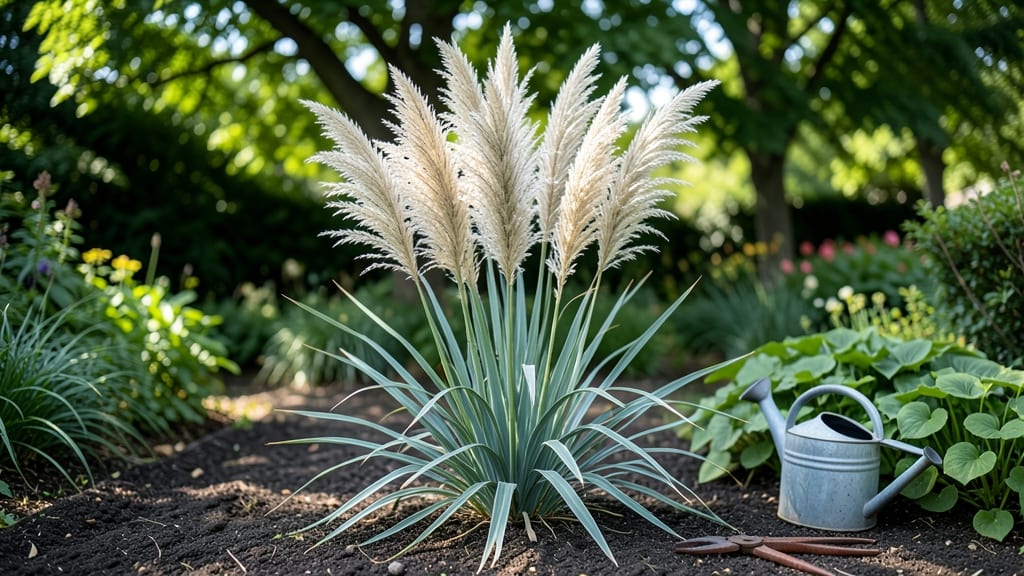
Pampas grass is a sun-loving ornamental that struggles in low-light conditions because it relies on ample sunlight for photosynthesis. 🌿 When grown in deep shade, its growth becomes leggy and sparse, with fewer of the signature feathery plumes that make it so popular.
I've seen it adapt better in partial shade when combined with reflective surfaces like light-colored walls or mulch, which bounce extra light onto the foliage. The key is balancing shade with consistent moisture—overwatering in low-light areas can lead to root rot, while underwatering stresses the plant further.
For those with shaded gardens, consider selecting dwarf varieties like Cortaderia selloana 'Pumila', which handles lower light better than standard types. Adding a layer of organic compost to improve soil drainage also helps.
If your pampas grass is already struggling, a light pruning in early spring can encourage denser growth, though it may never reach its full ornamental potential without more sunlight.
💡 In This Article
- How Light Levels Affect Pampas Grass Growth
- Shade-Adaptation Tips for Pampas Grass Survival
How light levels affect pampas grass growth
Pampas grass (Cortaderia selloana) thrives in full sun because its broad, arching leaves rely on high-intensity light for efficient photosynthesis. In deep shade, chlorophyll production drops by up to 40%, causing the plant to stretch toward any available light—a phenomenon called etiolation.
This results in weak, elongated stems that can't support the weight of its signature plumes, often leading to breakage. The plant's natural growth habit shifts from upright and bushy to sprawling and sparse, with leaves that are thinner and less vibrant.
When exposed to just 4-6 hours of sunlight daily (partial shade), pampas grass shows noticeable improvement in foliage density but still struggles to produce the same volume of plumes.
Studies show that flowering requires at least 6 hours of direct light—below this threshold, the plant diverts energy toward survival rather than reproduction.
In milder climates, partial shade may work if humidity levels stay high, but in hotter regions, even partial shade can stress the plant by reducing transpiration efficiency. 🌿
The plant's root system also suffers in low light. Pampas grass develops deep, fibrous roots that need sunlight to fuel energy production for growth. Without adequate light, roots become shallow and less efficient at absorbing water and nutrients, making the plant more susceptible to drought stress.
This is why you'll often see pampas grass in shaded areas looking wilted or yellowing—it's not just a lack of sunlight, but a cascade of metabolic slowdowns affecting every part of the plant.
Color is another telltale sign of light deprivation. Healthy pampas grass in full sun boasts deep green leaves with silvery undersides, while shaded plants develop a dull, bluish-green hue due to reduced chlorophyll and increased anthocyanin production (the same pigment that gives red wine its color).
The plumes, which are typically silvery-white, may turn brown or fail to emerge entirely in low-light conditions. This is because the flower heads require high light levels to develop their characteristic fluffy texture.
For comparison, consider how bamboo—another fast-growing ornamental—handles shade. While some bamboo species tolerate low light better than pampas grass, they still require at least 3-4 hours of sunlight daily to maintain vigor.
Pampas grass, however, is far more light-dependent, making it a poor choice for dense woodland gardens or areas under large trees where light levels drop below 30% of full sun. 🌞
If you're dealing with a pampas grass in a shaded spot, the first step is to assess the type of shade. Dappled shade (filtered light through tree canopies) is less harmful than dense shade (blocked by solid structures or thick foliage).
Even in partial shade, positioning the plant near a reflective surface—like a white wall or gravel path—can increase light exposure by up to 20%, improving its chances of survival.
The bottom line? While pampas grass can technically grow in shade, its ornamental value plummets. The trade-off between survival and thriving is stark: in full sun, it's a showstopper with lush foliage and dramatic plumes; in shade, it becomes a struggling, underwhelming addition to your landscape.
For those committed to keeping it in low-light areas, expect to invest extra care in soil health, watering, and pruning to mitigate the damage. ✨