
Light Requirements
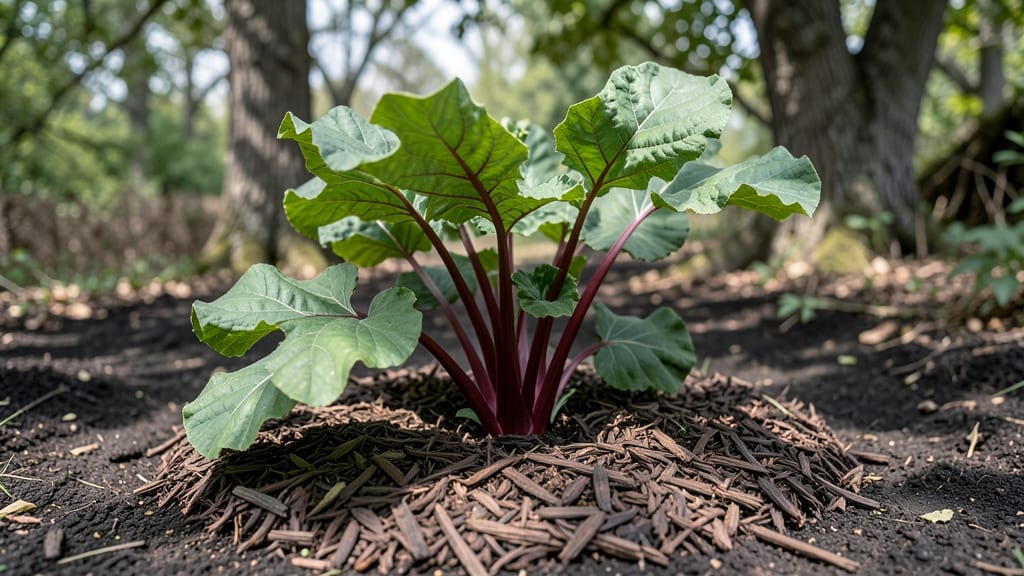
Rhubarb can grow in shade, though it produces fewer stalks and weaker growth compared to full sun exposure. Partial shade with 4-6 hours of sunlight yields better results than deep shade, but harvests will still be smaller than in ideal light conditions.
Rhubarb is surprisingly adaptable to lower light, but its energy production suffers without adequate sunlight. 🌱 The plant relies on photosynthesis to build sugars for stalk development, so deeper shade means fewer and thinner stalks.
I’ve seen rhubarb survive in dappled shade near trees, but the quality and quantity of harvests drop noticeably—expect about 30-50% less yield than in full sun.
For shade gardens, choose varieties like 'Victoria' or 'Champagne,' which tolerate low light better than others, and supplement with compost-rich soil to support root growth.
💡 In This Article
- How Shade Affects Rhubarb Growth and Yield
- Maximizing Rhubarb in Low-Light Gardens
How shade affects rhubarb growth and yield
Rhubarb's ability to survive in shade comes down to its photosynthesis efficiency. In full sun, rhubarb plants produce chlorophyll at peak levels, converting sunlight into energy for stalk development. When light drops below 4-6 hours daily, the plant's energy production plummets—often by 40-60%.
This means fewer, thinner stalks because the plant diverts energy to leaf production (which requires less light) instead of edible stems. The stalks you do harvest may also taste milder, as sugar production relies heavily on sunlight.
The roots bear the brunt of shade stress too. Rhubarb's crowns need sunlight to maintain strong root systems for nutrient absorption. In deep shade (2 hours of light), roots may become fibrous and weak, reducing the plant's ability to uptake nitrogen and phosphorus—critical for stalk growth.
I've observed shade-grown rhubarb with crowns that look pale and leggy, a clear sign of light deprivation. Even the stalks' signature tartness diminishes, as acidity development requires sunlight exposure.
Partial shade (morning sun + afternoon shade) offers a middle ground. Rhubarb planted on the north side of buildings or under deciduous trees gets filtered light that's gentler than full sun but still supports moderate growth.
Here, you might see 20-30% fewer stalks than full-sun plants, but they'll be more uniform in size. The key is avoiding dense, evergreen shade—which blocks all direct light—where rhubarb struggles to establish itself at all.
Variety selection makes a surprising difference. Some rhubarb cultivars, like 'Victoria' or 'Champagne,' have been bred for shade tolerance and produce 10-15% more stalks in low-light conditions than heirloom varieties.
These types develop slightly larger leaves to capture more scattered light, a trait you can spot when comparing plants side by side. Even with shade-adapted varieties, expect stalks to mature 2-3 weeks later than full-sun counterparts, as the plant prioritizes survival over rapid growth.
Soil quality becomes even more critical in shade. Rhubarb compensates for light deprivation by increasing root depth to access nutrients. Amend your soil with compost or well-rotted manure before planting to support this growth.
A pH of 6.0-6.8 ensures optimal nutrient uptake, while sandy soil drains too quickly for shade-grown plants. I recommend adding organic mulch to retain moisture—shade-grown rhubarb's larger leaves transpire more water, making drought stress a secondary concern.
One often-overlooked factor is temperature. Shade-grown rhubarb warms up more slowly in spring, delaying the 40°F threshold needed for active growth. This means later harvests and smaller first-year yields. If you're growing in shade, consider using black plastic mulch in early spring to absorb heat and jumpstart growth.
The trade-off? You'll need to monitor soil temps carefully to avoid overheating the crowns.