
Size
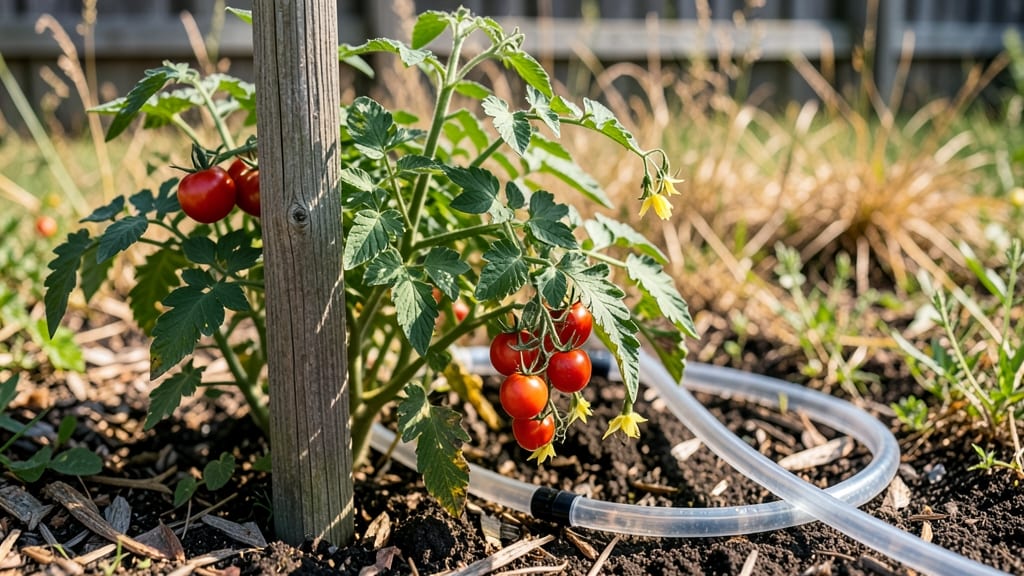
Cherry tomatoes can grow in shade—but only if you call it "partial sun" and set proper expectations. 🌿 I’ve grown them under a pergola where they produced half the yield of full-sun plants, but still enough for salads all summer.
The key isn’t forcing them to thrive in deep shade; it’s working with what light you’ve got.
Most cherry tomato varieties need 6-8 hours of direct sun daily to set fruit, but some shade-tolerant types like 'Solar Fire' or 'Tiny Tim' handle 4-6 hours better than others. The real battle is heat stress—shady spots stay cooler, so plants focus energy on leaves instead of fruit.
That’s why pruning and consistent watering become even more critical in low-light spots.
You’ll still get tomatoes, but they’ll be smaller and fewer—think pint-sized clusters instead of grape-sized bunches. The plants stay lush and green, but the trade-off is worth it if your yard lacks full sun.
Try drip irrigation to keep roots cool and mulch heavily to preserve moisture, which helps compensate for weaker photosynthesis.
For best results, pair them with shade-friendly companions like basil (which loves partial shade) or lettuce (which thrives under the tomato canopy). If your space is truly dark, consider container growing near a south-facing window—just rotate pots weekly for even light exposure.
The harvest won’t match full sun, but it’ll still be rewarding.
Limited Sunlight’s Hidden Impact
If your cherry tomatoes are struggling in shady spots, the root cause likely lies in how photosynthesis and plant physiology respond—or fail to respond—to low light. Unlike sun-loving varieties, cherry tomatoes (especially heirlooms like 'Sweet 100' or 'Sun Gold') need a balance of light and energy to thrive.
Let’s break down the science behind why shade stunts growth and how it affects your harvest.
Cherry tomatoes are obligate photophiles, meaning they require full sun (6–8+ hours daily) to produce enough energy via photosynthesis. Here’s why shade creates a deficit:
- Chlorophyll Shortage: Low light reduces chlorophyll production, the pigment that captures sunlight. Without enough chlorophyll, plants can’t convert CO₂ and water into glucose—leaving them energy-starved. Result? Stunted vines, small leaves, and fewer flowers (which means fewer tomatoes!).
- Weakened Sugar Production: Photosynthesis is the plant’s kitchen, turning sunlight into sugars (glucose/fructose) that fuel growth. In shade, this process slows dramatically. Tomatoes need these sugars to:
- Build strong stems and leaves
- Develop fruit (especially sweet, juicy cherry tomatoes)
- Support root expansion for nutrient uptake
- Leggy, Weak Growth: When light is scarce, tomatoes stretch (etiolation) toward any available light, creating tall, spindly plants with weak cell walls. These vines are prone to snapping under fruit weight or disease.
💡 Pro Tip: If your tomatoes are already in shade, supplement with a grow light (LED or fluorescent) for 4–6 hours daily. Place it 6–12 inches above the plants to mimic sunlight.
Shade doesn’t just reduce light—it often alters temperature and humidity, creating a secondary stressor for cherry tomatoes:
| Factor | Shade’s Effect | Impact on Tomatoes |
|---|---|---|
| Cooler Temperatures | Shady areas stay 5–10°F cooler than sunny spots, especially at night. |
|
| Higher Humidity | Moist, stagnant air traps in shaded gardens. |
|
✨ Fix It: Improve airflow with pruning (remove crowded leaves) and mulch (straw or grass clippings) to regulate soil temperature. If humidity is extreme, use a fan for 10–15 minutes daily to circulate air.
Shade-stressed tomatoes can’t absorb nutrients efficiently, even if the soil is rich. Here’s how it backfires:
- Reduced Root Growth: Without enough light, tomatoes prioritize above-ground growth over roots. Weak roots mean less water and nutrient uptake, leading to:
- Yellowing leaves (chlorosis from nitrogen deficiency)
- Pale stems (phosphorus shortage)
- Small, underdeveloped fruit (potassium or calcium issues)
- Imbalanced Soil Microbes: Shady, damp conditions favor pathogenic fungi over beneficial microbes (like mycorrhizae). These microbes help tomatoes access phosphorus and zinc—critical for fruit development.
🔥 Action Step: Test your soil’s pH (ideal: 6.0–6.8 for tomatoes) and amend with compost or worm castings to boost microbial activity. A side-dressing of fish emulsion (high in nitrogen) can give shaded plants a quick energy boost.
Understanding these root causes helps you target fixes—whether it’s relocating plants, optimizing light, or tweaking care routines. Next, we’ll explore practical workarounds to coax cherry tomatoes into producing in less-than-ideal conditions.
Boosting Shade-Grown Tomatoes
Growing cherry tomatoes in partial shade isn’t impossible—it just requires a few strategic tweaks to maximize their potential. Below are practical, step-by-step solutions tailored to common shade-related challenges, along with prevention tips to keep your plants thriving.
Problem: Tomatoes need 6–8 hours of direct sunlight daily, but partial shade (especially deep or dense shade) limits photosynthesis.
Solutions:
- 🔥 Relocate the Plant – Move containers or seedlings to a sunnier spot (e.g., near a south-facing window, patio, or balcony). Even 2–3 extra hours of light can make a difference.
- 🏠 Use Reflective Surfaces – Place white walls, mirrors, or aluminum foil behind plants to bounce extra light onto leaves.
- 🌿 Thin Out Nearby Plants – If shade comes from overgrown neighbors (like tall herbs or shrubs), prune them back to let light through.
✨ Pro Tip: If relocating isn’t an option, supplement with grow lights (LED full-spectrum bulbs) for 12–14 hours/day to mimic sunlight.
Problem: Most cherry tomato varieties (like 'Sweet 100' or 'Sun Gold') need full sun, but some adapt better to partial shade.
Solutions:
- 🌿 Pick Determinate Types – These bush varieties (e.g., 'Tiny Tim,' 'Patio Princess') grow slower and tolerate 4–6 hours of sun better than indeterminate vines.
- 🍅 Opt for Smaller-Fruited Types – 'Micro Tom' or 'Tumbling Tom' produce earlier and in lower light than large beefsteak tomatoes.
- 🌱 Start with Seedlings – Young plants (vs. seeds) have more energy to adjust to shade, so buy healthy 4–6" starts from nurseries.
💡 Prevention Tip: Avoid heat-loving varieties (like 'Solar Fire')—stick to cool-season or shade-adapted types.
Problem: Shade slows evaporation, leading to overwatering, root rot, or nutrient deficiencies.
Solutions:
- 💦 Water Deeply but Less Often – Shady soil stays moist longer, so water every 3–5 days (check soil 1" down—if dry, water).
- 🌱 Use Well-Draining Soil – Mix compost + perlite (or coconut coir) to prevent soggy roots. Avoid garden soil in containers—it compacts easily.
- 🍄 Add Organic Matter – Amend soil with worm castings or fish emulsion to boost nutrients tomatoes crave (like potassium for fruit set).
⏰ Schedule Check: Water early morning to reduce humidity-related diseases (like blight).
Problem: Dense foliage in shade traps moisture, inviting pests and fungal issues.
Solutions:
- 🔪 Prune Lower Leaves – Remove yellow or crowded leaves to improve airflow. Focus on lower stems where humidity lingers.
- 🌱 Stake or Cage Early – Even in shade, supporting vines prevents leaf rot and helps them reach for light.
- 🍃 Thin Suckers – Indeterminate tomatoes (like 'Cherry Roma') produce suckers (side shoots). Pinch these off to redirect energy to fruit.
🎯 Prevention Tip: Disinfect pruners with rubbing alcohol between cuts to avoid spreading disease.
Problem: Shade keeps soil cooler but air humid, stressing plants.
Solutions:
- 🌡️ Use Black Plastic Mulch – Warms soil 5–10°F faster than bare earth, helping roots thrive.
- 💨 Improve Airflow – Place a small fan nearby (on low) to reduce humidity without drying soil.
- 🌿 Avoid Overcrowding – Space plants 18–24" apart to prevent leaf dampness (a fungal magnet).
🔥 Quick Fix: If nights are below 55°F, use a row cover to retain heat around plants.
Problem: Tomatoes in shade grow leggy or produce few fruits due to low energy.
Solutions:
- 🌱 Feed with Balanced Fertilizer – Use a 10-10-10 or 5-5-5 (NPK ratio) every 2–3 weeks to support leafy growth and fruiting.
- 🍄 Boost Phosphorus – At flowering, switch to a high-phosphorus fertilizer (like bone meal) to encourage fruit set.
- 🍃 Use Liquid Seaweed – Spray kelp extract weekly to strengthen cell walls against shade stress.
💡 Prevention Tip: Stop fertilizing 4 weeks before harvest to avoid bitter-tasting fruit.
Before giving up on shade-grown tomatoes, run through this quick troubleshooter: ✅ Light: Can you add 2+ extra hours of sun? ✅ Variety: Are you growing a shade-tolerant type? ✅ Soil: Is it well-draining and rich in compost? ✅ Water: Are you watering deeply but infrequently? ✅ Pruning: Are leaves spread out for airflow? ✅ Fertilizer: Are you feeding for shade conditions?
With these adjustments, your cherry tomatoes can not only survive but thrive in partial shade—proving that even the sunniest gardeners can grow a bountiful harvest with a little creativity!
Frequently asked questions
What’s the minimum sunlight cherry tomatoes actually need to produce fruit?
Most cherry tomato varieties need 6-8 hours of direct sun daily for optimal fruit production, but some shade-tolerant types like 'Tiny Tim' or 'Patio Princess' can thrive with just 4-6 hours. Below 4 hours, expect very limited fruit set—plants will focus on leafy growth instead. For best results, position containers near reflective surfaces (white walls or mirrors) to bounce extra light onto leaves.
Can I grow cherry tomatoes indoors under artificial light?
Use a full-spectrum LED grow light (12–14 hours/day) placed 6–12 inches above plants. Cherry tomatoes need 14+ hours of light indoors to match outdoor yields. Rotate containers weekly for even growth, and supplement with a balanced fertilizer (like 5-5-5) every 2 weeks. Varieties like 'Micro Tom' or 'Balcony Red' are perfect for indoor shade gardens.
Why are my shade-grown cherry tomatoes staying small and green?
This happens when plants lack enough light for photosynthesis, causing them to prioritize leaf growth over fruit development. To fix it, prune lower leaves to improve airflow, use a high-phosphorus fertilizer (like bone meal) to encourage flowering, and check for blossom end rot (common in cool, shady conditions). If possible, move plants to a sunnier spot or add a grow light for 4–6 hours daily.
Are there any companion plants that help cherry tomatoes in shade?
Yes! Pair cherry tomatoes with shade-tolerant companions like basil (which repels pests), lettuce (thrives under tomato canopies), or marigolds (deter nematodes). Avoid planting near fennel or dill—these herbs compete for nutrients and can stunt tomato growth. For containers, try mixing tomatoes with nasturtiums (edible flowers that attract pollinators) or spinach (which grows well in partial shade).
How do I know if my cherry tomatoes are getting too much shade?
Watch for these signs: long, leggy stems (etiolation), small yellow leaves, and few or no flowers. If plants look pale and stretched with tiny leaves, they’re desperate for light. To confirm, check your garden’s sunlight with a sunlight tracker app—if your spot gets less than 4 hours of direct sun, supplement with a grow light or relocate plants to a sunnier area.