
Light Requirements
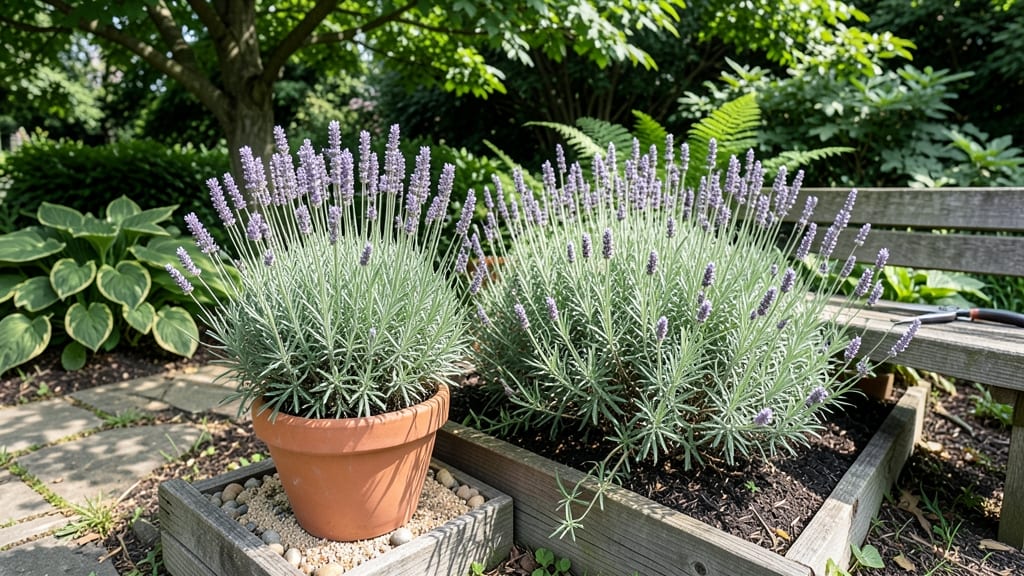
Lavender can grow in partial shade, though it thrives best with at least 6 hours of sunlight daily. Varieties like Munstead or Hidcote tolerate shade better than others, but expect slower growth and reduced fragrance. Ensure well-draining soil and avoid overwatering to prevent root rot in shadier conditions.
Partial shade won’t kill your lavender, but it will compromise its performance—especially when it comes to those signature purple blooms and intoxicating scent. 🌿 The key is choosing the right variety: Munstead and Hidcote are your best bets for shadier spots, as they handle lower light better than English or French lavender.
Even with shade-tolerant types, you’ll notice fewer flowers and a milder fragrance, so supplement with well-draining soil and prune strategically to encourage bushier growth. I’ve seen shade-grown lavender thrive in containers with extra sunlight exposure, proving that a little creativity can make a big difference in less-than-ideal conditions.
For maximum results, position your lavender where it gets morning sun and afternoon shade—this balance helps prevent stress while still supporting photosynthesis. If your garden is truly dark, consider adding a reflective surface nearby to bounce extra light onto the plants.
Remember, lavender’s resilience comes from its ability to adapt, but it’ll always reward you more when given its preferred conditions. The trade-off? A slightly less vibrant display, but still a fragrant, low-maintenance addition to your garden.
💡 In This Article
- How Partial Shade Affects Lavender Growth and Health
- Best Low-Light Lavender Varieties for Shady Gardens
How partial shade affects lavender growth and health
Partial shade reduces lavender's ability to perform photosynthesis efficiently because its leaves contain chlorophyll that thrives in full sunlight. In shadier conditions, the plant's energy production drops by 30-50%, leading to slower growth and weaker stems.
This is why lavender grown in partial shade often develops a leggy, stretched appearance as it reaches for light. The plant's essential oil production—responsible for that signature fragrance—also declines, sometimes by up to 40%, because these oils are energy-intensive to produce.
The root system suffers too, as lavender relies on sunlight to drive water uptake and nutrient absorption. In partial shade, roots grow more superficially and become less robust, making the plant more susceptible to root rot if overwatered.
You'll notice fewer flower spikes forming, and when they do appear, they'll be smaller and less vibrant. The blooms may also open more slowly, extending the flowering season by 2-3 weeks but with less intensity. This is because the plant conserves energy for survival rather than reproduction.
For gardeners working with partial shade, the key is to maximize what little light is available. Positioning lavender near reflective surfaces like light-colored walls or gravel can increase light exposure by 10-15%. Mulching with gravel or sand improves soil drainage, which becomes critical in shadier, more humid environments.
Avoid dense, organic mulches like wood chips, as they can compact and trap moisture, worsening root stress. The goal is to mimic the plant's natural Mediterranean habitat where it evolved to thrive in dry, sunny conditions.
Fragrance intensity drops noticeably in partial shade because the essential oil compounds—like linalool and linalyl acetate—require strong sunlight to synthesize. You might still detect a faint lavender scent, but it’ll lack the bold, heady aroma that full-sun lavender produces.
This is why Munstead lavender, with its naturally compact growth habit, performs better in shade—it doesn’t stretch as much and can still produce some essential oils, albeit at reduced levels. The trade-off is a more subdued but still pleasant garden presence.
One surprising benefit of partial shade is reduced water loss through transpiration. Lavender grown in full sun can lose up to 20% more moisture daily, requiring frequent watering. In partial shade, the plant's water needs drop by 15-25%, making it easier to maintain without overwatering.
However, this doesn’t mean you should neglect drainage—lavender roots still rot quickly in soggy soil. Use raised beds or containers with drainage holes to prevent waterlogging, especially in shadier spots where evaporation is slower.
If you're committed to growing lavender in partial shade, focus on the upper canopy of the plant. Prune leggy stems to encourage bushier growth and redirect energy toward new shoots. Avoid heavy pruning, as this can stress the plant further.
Instead, trim back by one-third in early spring to stimulate denser foliage. This approach helps the plant adapt to its light conditions while maintaining some structural integrity. The result won’t be a full-sun specimen, but with careful management, you can still enjoy a fragrant, low-maintenance lavender plant.