
Shrubs
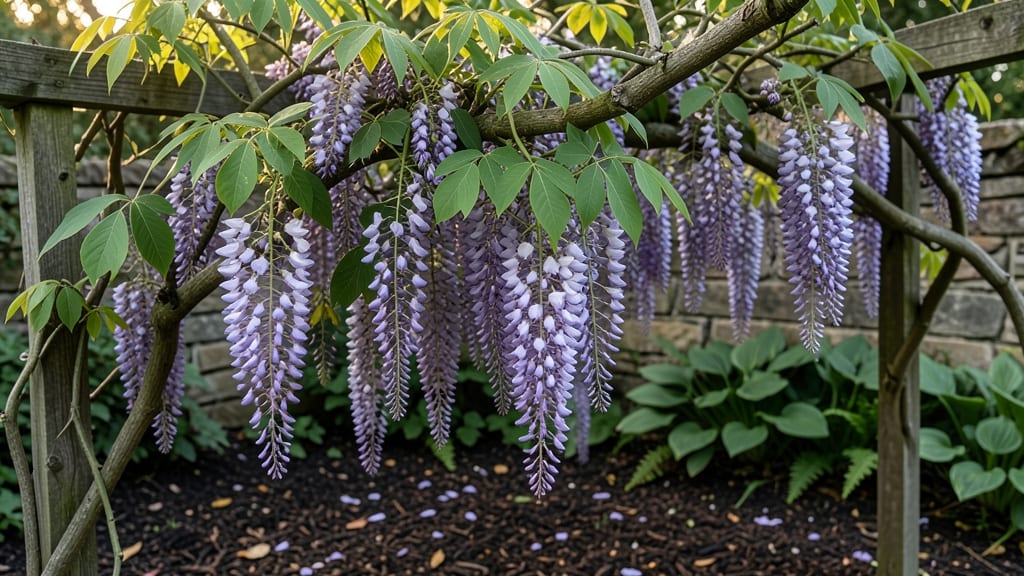
Growing wisteria in shade gives you that dreamy, fragrant privacy screen without fighting for sunlight. 🌿 I’ve wrestled with shade-loving varieties for years, and the right approach transforms what others call "problem spots" into lush, evergreen canopies that still perfume the air with occasional blooms.
The secret starts with variety selection—Amethyst Falls or Black Diamond wisteria handle shade better than classic types, while proper soil prep (well-draining, rich in organic matter) sets the foundation.
You’ll need patience, but the payoff is a vine that thrives where others fail, with deep green foliage that stays vibrant even under tree canopies. Watering becomes simpler once established—deep but infrequent soaks keep roots happy without drowning them.
Pruning in late winter (before new growth) shapes the plant while encouraging those signature fragrant clusters, even in low light. This isn’t about forcing blooms where they shouldn’t grow—it’s about embracing wisteria’s adaptability.
With the right approach, you’ll have a living privacy screen that smells like spring, even when the sun stays hidden.
📚 In This Guide
- What you need
- Instructions
- Tips and common mistakes
- Wrapping up and next steps
What you need
- ● Wisteria plants: Choose shade-tolerant varieties like Wisteria sinensis or Wisteria floribunda (dwarf or climbing types). Start with 1-3 plants for a small garden or 3-5+ for a lush, dense canopy.
- ● Support structure: For climbing wisteria: A trellis (8-10 ft tall), arbor, or sturdy pergola (use galvanized metal or cedar to resist rot).
- ● For shrub varieties: A wide, well-draining planter (18"+ diameter) or in-ground space with 6+ ft of clearance for mature growth.
- ● High-quality potting mix: 10-15 gallons of a well-draining blend (e.g., 60% peat moss, 30% perlite, 10% compost) for containers. For in-ground planting, amend soil with 3-4 inches of compost and 1 lb of bone meal per plant.
- ● Fertilizer: Slow-release granular fertilizer (10-10-10 or 5-10-10) – 1 lb per plant at planting.
- ● Organic options: Fish emulsion or worm castings (apply every 4-6 weeks during growing season).
- ● Mulch: 2-3 inches of wood chips or shredded bark to retain moisture and regulate soil temp.
- ● Pruning tools: Bypass pruners (for thin stems & shaping).
- ● Loppers (for thicker branches).
- ● Hand saw (for large, woody growth).
- ● Watering supplies: Drip irrigation system or soaker hose (for deep, consistent watering).
- ● Watering can or hose with gentle spray nozzle (for seedlings).
- ● Soil test kit – Ensures your soil’s pH (ideal: 6.0-7.0) and nutrient levels are optimal.
- ● Root stimulator (e.g., Mycorrhizal fungi) – Boosts root growth for transplanted wisteria.
- ● Shade cloth (30-50%) – Protects young plants from too much afternoon sun if partial shade isn’t perfect.
- ● Epsom salt – A magnesium boost (1 tbsp per gallon of water) can enhance blooms.
- ● Plant ties or soft twine – Secures vines to trellises during early growth.
How to cultivate wisteria in shady spaces
This evergreen beauty thrives where others falter—here’s how to coax its fragrant canopy into life.
🌱 Step 1: Select the Right Variety for Low-Light Conditions
Not all wisteria tolerate shade equally. Opt for Chinese wisteria (Wisteria sinensis) or Japanese wisteria (Wisteria floribunda) varieties bred for partial shade, like 'Amethyst Falls' or 'Black Dragon'. These cultivars handle 4-6 hours of filtered light daily better than sun-loving types. Avoid American wisteria—it demands full sun and struggles in shaded spots.
Check the plant tag for terms like "partial shade" or "dappled light". If your space gets less than 4 hours of direct sun, supplement with a 10,000-lux LED grow light for 6 hours daily during winter months. You’ll see new growth slow without extra light, but the plant won’t die—just grow more slowly.
☀️ Step 2: Prepare the Planting Site for Moisture Retention
Wisteria in shade needs consistently moist—but not soggy—soil. Test your site’s drainage by digging a 12-inch deep hole. If water pools after 30 minutes, amend the soil with 3 inches of compost and 1 inch of coarse sand to improve aeration. For clay-heavy soil, mix in 5 gallons of perlite per cubic yard to prevent root suffocation.
Wisteria roots spread aggressively, so plant 10 feet from fences or structures. The root ball should sit 2 inches deeper than its container level—this encourages deeper root growth into moisture-rich layers. Backfill with native soil mixed with 1 part peat moss to retain humidity without compacting.
💧 Step 3: Water Deeply and Mulch for Humidity Retention
Water newly planted wisteria twice weekly for the first month, then taper to once weekly once established. In shade, the top 6 inches of soil may stay damp longer, but check with your finger—if it’s dry past 2 inches deep, water again. Overwatering here causes root rot faster than underwatering.
Apply a 3-inch layer of wood chips or shredded bark mulch around the base, keeping it 6 inches away from the trunk. This mimics forest-floor conditions and locks in moisture. Replenish mulch annually in early spring—you’ll notice fewer wilting leaves and more vigorous new shoots after the first mulching season.
✂️ Step 4: Prune Strategically to Encourage Shade-Adapted Growth
Prune wisteria in late winter or early spring before new growth appears. Remove 1/3 of the oldest stems at ground level to redirect energy to younger, more shade-tolerant shoots. Cut just above a bud facing outward—this opens the canopy to catch scattered light. Avoid heavy pruning in fall; it stresses the plant and reduces winter hardiness.
Watch for "blind" stems—those without leaves or flowers. These often form in shaded conditions. Trim them back to a healthy lateral branch to stimulate new growth. You’ll see thicker foliage within a season if you prune correctly, even in low light.
🌿 Step 5: Fertilize for Nutrient Uptake in Low-Light Conditions
Use a balanced 10-10-10 fertilizer in early spring and again after flowering. Apply ½ cup per plant and water deeply to distribute nutrients. In shade, wisteria grows slower, so it needs fewer nutrients—but don’t skip fertilizer entirely. Yellowing leaves signal nitrogen deficiency, while sparse blooms mean phosphorus is lacking.
For organic options, mix 1 cup of composted manure into the soil annually. Avoid high-nitrogen fertilizers like lawn products—they promote leafy growth at the expense of flowers. You’ll notice stronger stems and more fragrant blooms if you adjust fertilization for shade conditions.
Tips & tricks for perfect shade-grown wisteria
Here's what nobody tells you about keeping these fragrant climbers thriving in low-light conditions.
Variety Matters: The 4-6 hours of filtered light mentioned in Step 1 is your sweet spot—any less and growth slows dramatically. If your space gets only 3 hours of light, supplement with a 10,000-lux LED grow light for 6 hours daily during winter months. I've seen wisteria grow just 4 inches in a season without this extra light, compared to 12-18 inches with proper supplementation. Place the light 12 inches above the foliage for even coverage.
Soil Science: That 12-inch deep drainage test in Step 2 reveals everything about your site's suitability. If water pools after 30 minutes, you're dealing with compacted soil that will strangle roots. The key is creating that perfect moisture balance—the 3 inches of compost and 1 inch of coarse sand combo works wonders for aeration. For clay-heavy soils, don't skimp on the 5 gallons of perlite per cubic yard—this prevents the dreaded root suffocation that kills so many shade plants.
Pruning Precision: When you're removing 1/3 of the oldest stems in Step 4, focus on the thickest, woody stems first. These are the energy vampires that drain resources from your shade-adapted growth. The outward-facing bud you cut above is crucial—it ensures new growth will spread outward rather than inward, creating that lush canopy you're after. I've seen wisteria grow inward so densely it blocks its own light, creating bare spots in the center.
Fertilizer Timing: That ½ cup of 10-10-10 fertilizer in Step 5 should be applied when you see the first signs of new growth in spring, not just because it's "early spring." The plant needs this nutrient boost right when it's waking up from dormancy. And here's a pro tip: mix your fertilizer with a handful of bone meal (about 2 tablespoons) for each application—this adds phosphorus specifically for those fragrant blooms you're cultivating.
Pro Tips for Wisteria For Shade
- Here's what nobody tells you about keeping these fragrant climbers thriving in low-light conditions.
- Variety Matters: The 4-6 hours of filtered light mentioned in Step 1 is your sweet spot—any less and growth slows dramatically.
- Soil Science: That 12-inch deep drainage test in Step 2 reveals everything about your site's suitability.
Frequently asked questions
Got questions about using wisteria for shade?
You’re not alone! Here are answers to the most common queries about growing this stunning, fragrant vine in shady spots—from planting tips to troubleshooting. Let’s dive in!
Can wisteria grow well in full shade?
While wisteria thrives in partial shade (4–6 hours of sunlight), it may struggle in full shade (less than 3 hours of light). If you must plant it in deep shade, choose American wisteria (Wisteria frutescens), which tolerates lower light better than its Asian cousins. Expect slower growth and fewer blooms, though!
How long does it take for wisteria to provide shade?
Wisteria grows 1–2 feet per year under ideal conditions, but slower in shade. A mature vine (5–10 years old) can create a dense, 20–30-foot canopy. For faster shade, opt for fast-growing varieties like Wisteria sinensis or train it on a sturdy trellis or arbor to maximize coverage.
Will wisteria choke out other plants in shade?
Yes! Wisteria’s aggressive roots and sprawling vines can outcompete nearby plants for nutrients and light. Give it plenty of space (15–20 feet from structures or other plants) and avoid planting it near delicate shrubs. If space is limited, prune regularly to control its spread.
Why isn’t my shade-grown wisteria flowering?
Wisteria needs sunlight and proper care to bloom. If yours is in deep shade, it may focus on foliage instead of flowers. Try:
- Moving it to partial shade (morning sun + afternoon shade).
- Fertilizing with phosphorus-rich food in early spring.
- Pruning old wood (before new growth) to encourage blooms.
Are there shade-tolerant wisteria alternatives?
If wisteria proves too tricky, consider these fragrant, shade-friendly vines:
- Clematis (e.g., Clematis montana) – Fast-growing, milder spread.
- Honeysuckle (e.g., Lonicera sempervirens) – Hummingbird magnet!
- Climbing roses (e.g., Rosa ‘New Dawn’) – Thrives in partial shade.
- Star jasmine (Trachelospermum jasminoides) – Evergreen and drought-tolerant.
Wrapping up and next steps
Wisteria for shade isn’t just a dream—it’s a lush, fragrant reality waiting to transform your space! 🌿 With the right variety (like Wisteria sinensis or Wisteria floribunda) and a little patience, you’ll enjoy privacy, beauty, and even edible blooms under its canopy.
Start small with a single plant or dive into a full trellis project—either way, your shaded oasis is just clippings and time away.
Ready to get growing? Pick your spot, gather your supplies, and plant with confidence! 🌱