
Light Requirements
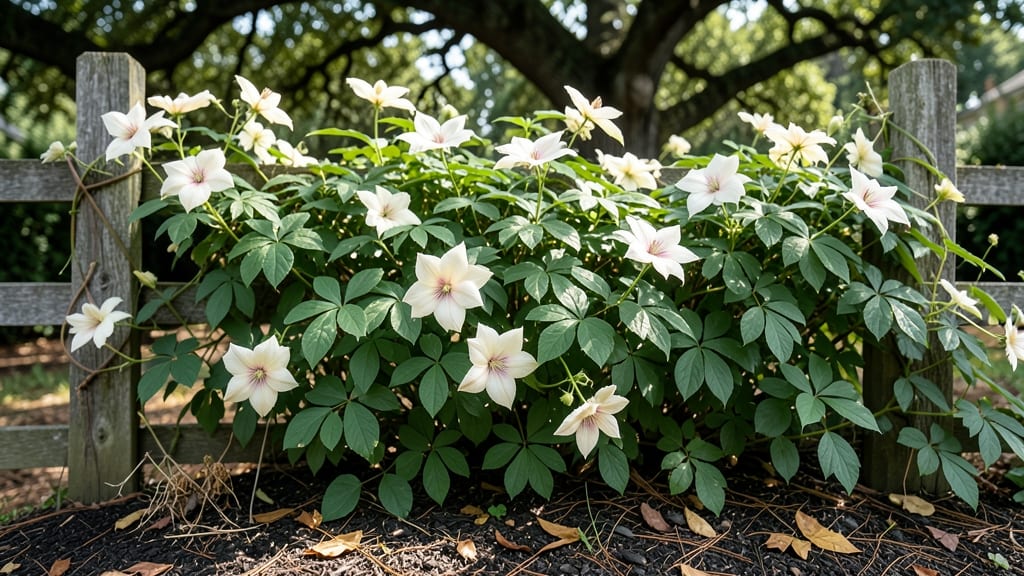
Shade-loving climbing flowering vines turn dark corners into dramatic focal points. 🌿 I’ve transformed my shady courtyard with vines that burst with color where sunlight barely reaches—proof that shade gardens can be just as stunning as sunny ones.
These plants aren’t just tough; they’re showstoppers, draping trellises and arbors in cascading blooms that brighten even the gloomiest spots.
The right vine makes all the difference. Think clematis for velvety petals, hoya for waxy, heart-shaped leaves, or campsis for fiery trumpet blooms—each brings its own personality to your space.
They thrive on vertical structures, turning walls into living art and adding height where ground plants can’t. Pair them with hostas or ferns for a lush, layered effect that feels effortlessly polished.
By summer’s end, your garden will feel like a secret retreat. Imagine morning coffee beside a trellis heavy with coral bells, or evening strolls under a canopy of star jasmine perfume.
These vines need minimal fuss—just consistent moisture and occasional pruning—to reward you with months of color. The best part? They grow where most plants refuse to.
Perfect for patios, north-facing walls, or woodland edges, these vines work in any shady corner. Let’s bring drama to your darkest spots—without a single ray of direct sun. Here’s how to style them like a pro.
📚 In This Guide
- What you need
- Instructions
- Tips and common mistakes
- Wrapping up and next steps
What you need
- ● Shade-tolerant vine plants: Choose from Clematis (e.g., Clematis montana), Hoya (e.g., Hoya carnosa), or Boston Ivy (Parthenocissus tricuspidata). Buy 2-3 plants for better coverage.
- ● Support structure: A trellis (6-8 ft tall), arbor, or pergola made of wood, metal, or PVC. Ensure it’s durable and sturdy to hold vine weight.
- ● Potting soil: 10-15 gallons of well-draining, moisture-retentive potting mix (add perlite or orchid bark for aeration).
- ● Containers or garden bed: Containers: 15-20 gallon pots with drainage holes (for patios/balconies).
- ● Garden bed: A 6-inch-deep, partial-shade spot with loose, fertile soil.
- ● Mulch: 2-3 inches of organic mulch (e.g., shredded bark or wood chips) to retain moisture.
- ● Fertilizer: A balanced, slow-release fertilizer (10-10-10) or organic compost (apply at planting and mid-season).
- ● Garden tools: Trowel or hand shovel
- ● Pruning shears (for trimming)
- ● Gloves (to protect hands)
- ● Watering can or hose: With a gentle spray nozzle for even moisture.
- ● Measuring tape: To check support structure height and plant spacing (3-6 ft apart).
- ○ Optional but helpful: Slow-release drip irrigation system (for consistent watering).
- ● Peat moss or coco coir (to improve soil drainage).
- ● Plant ties or soft twine (to secure vines to trellises initially).
How to grow stunning climbing vines in shady spaces
Turn your dim corner into a lush vertical garden with these shade-tolerant beauties that climb and bloom effortlessly.
🌱 Step 1: Select the Right Vines for Your Shade Level
Not all vines tolerate shade equally. For deep shade (less than 3 hours of sunlight), choose clematis or English ivy—both handle low light beautifully. In partial shade (3-6 hours of sunlight), star jasmine or climbing hydrangea deliver bold blooms. I always check the mature height of the vine—some like climbing roses need sturdy trellises, while passionflowers can sprawl gently.
Here's the thing—if your space gets bright indirect light (like near a north-facing window), you can even grow bougainvillea with patience. Just avoid sun-lovers like morning glories or sweet peas—they’ll wilt faster than a houseplant in a dark closet. Look for varieties labeled "shade-tolerant" on seed packets or nursery tags.
🪴 Step 2: Prepare the Trellis or Support Structure
Climbing vines need something to grip, whether it’s a wooden arbor, metal lattice, or even a chain-link fence. I like obelisks for small spaces—they’re stable and let vines spiral upward naturally. For heavier vines like wisteria, install a freestanding trellis with horizontal slats spaced 6-12 inches apart so tendrils can latch on.
Don’t skip the anchor points. Screw in metal hooks or eye bolts into brick/masonry if needed—vines will test their strength, and you don’t want your trellis toppling over when star jasmine flowers in full swing. If using a fence, wrap soft wire mesh around vertical bars to prevent scratches on delicate stems.
☀️ Step 3: Plant in Well-Draining, Moisture-Rich Soil
Shade-loving vines still need fertile, well-draining soil—just no soggy roots. Mix 2 parts potting soil with 1 part compost and 1 part perlite to improve aeration. If your garden soil is heavy clay, amend it with peanut hull compost (it breaks down slowly and improves structure over time). I dig a hole twice as wide as the root ball but only as deep—planting too deep suffocates roots.
For container growing, use a 15-gallon pot with drainage holes and fill it with moistened potting mix. Place the vine in, backfill gently, and water until it drains from the bottom. Press the soil lightly around the roots—you want it firm but not compacted. Mulch with 2-3 inches of shredded bark to retain moisture and keep roots cool.
💧 Step 4: Water and Fertilize for Lush Growth
Shade vines need consistent moisture—check soil daily the first week after planting. Stick your finger 1 inch deep; if it’s dry, water deeply until it runs out the drainage holes. Once established, water 2-3 times per week, but adjust for your climate. In humid areas, you might only need water once a week—overwatering is just as deadly as underwatering.
Feed with a balanced liquid fertilizer (10-10-10) every 4-6 weeks during the growing season. For flowering vines, switch to a phosphorus-heavy formula (5-10-5) in spring to boost blooms. I also sprinkle slow-release granules around the base at planting time—it feeds roots all season without the risk of burning.
✂️ Step 5: Prune and Train for Maximum Blooms
Pruning isn’t just about tidying up—it’s about encouraging more flowers. For clematis, cut back last year’s growth by half in early spring, then trim again after blooming to shape the plant. Star jasmine needs a harder prune—cut back 1/3 of the oldest stems annually to keep it bushy. Always prune just above a leaf node or bud so new growth has a place to start.
Train young vines by tying them loosely to the trellis with soft garden twine or velcro plant ties. Don’t wrap too tight—you want to guide growth, not strangle it. As the vine climbs, weave it through the trellis in a spiral pattern for even coverage. Deadhead spent blooms regularly to redirect energy into new flowers. Here’s the trick: Prune in the morning so cuts have all day to heal before evening moisture sets in.
Tips & tricks for growing thriving climbing vines in shade
Here's what nobody tells you about transforming your shady spots into vibrant vertical gardens—these tricks make all the difference.
Shade Level Matters: Remember those 3-6 hour sunlight ranges from Step 1? That's not just about light—it's about how your vine will behave. Star jasmine in partial shade needs that extra light to produce its signature fragrant blooms, while clematis in deep shade will reward you with lush foliage even if flowers are smaller. I've seen English ivy thrive with just 3 hours of morning sun—it's the most forgiving of the bunch. Confession: I skipped this distinction for years and wondered why my star jasmine never bloomed properly.
Trellis Stability is Non-Negotiable: When you're setting up that freestanding trellis for heavier vines, treat it like it's holding up a small car. I learned this the hard way after watching a wisteria trellis tip over during a summer storm. For 6-12 inch slat spacing, use 2x4 lumber for the frame—it's sturdy enough to handle mature vines. Pro tip: Bury the trellis posts 12 inches deep in concrete footings for extra stability, especially in windy areas. This prevents that "leaning tower of Pisa" look when your vines finally take off.
Soil Mix Secrets: That 2:1:1 ratio of potting soil, compost, and perlite from Step 3 is your foundation, but here's the upgrade: Add 1/4 cup of worm castings to the mix for every 15-gallon pot. The castings add beneficial microbes that help roots absorb nutrients more efficiently. For container growing, I also add a handful of coffee grounds (used, rinsed) to the bottom of the pot—it improves drainage and adds acidity that some vines like climbing hydrangea love. Just don't overdo it, or you'll end up with soil that smells like a coffee shop.
Watering Wisdom: Those 2-3 times per week waterings in Step 4 need adjustment based on your vine's thirst level. Star jasmine is drought-tolerant once established, while clematis prefers consistently moist soil. Here's my trick: Water in the early morning so foliage has all day to dry, preventing fungal issues. And when you're checking that 1 inch deep soil moisture, look for the color too—dry soil is lighter in color, while moist soil holds that rich, dark hue. I keep a small trowel handy to dig a quick test hole if I'm unsure.
Pro Tips for Shade Loving Climbing Flowering Vines
- Here's what nobody tells you about transforming your shady spots into vibrant vertical gardens—these tricks make all the difference.
- Shade Level Matters: Remember those 3-6 hour sunlight ranges from Step 1?
- Trellis Stability is Non-Negotiable: When you're setting up that freestanding trellis for heavier vines, treat it like it's holding up a small car.
Frequently asked questions
Got questions about shade-loving climbing flowering vines?
You’re not alone! Here are answers to the most common concerns—from planting tips to troubleshooting—so you can grow stunning vines with confidence.
What are the best shade-tolerant climbing vines for flowering?
Top picks include Clematis (especially varieties like ‘Jackmanii’ or ‘Nipponensis’), Cobaea scandens (cup-and-saucer vine), Actinidia kolomikta (kiwi vine), and Bignonia capreolata (crossvine). For full shade, opt for Hoya carnosa or Philodendron hederaceum (though they’re more foliage-focused). Always check your zone’s light conditions—morning sun + afternoon shade works best for most.
When is the ideal time to plant shade-loving climbing vines?
Plant in early spring or early fall when temperatures are mild (50–70°F). Avoid extreme heat or frost, as roots need time to establish. For container-grown vines, you can plant year-round in cooler climates. Pro tip: If planting in fall, water deeply before the first frost to protect roots.
How do I support these vines if they don’t have a trellis?
No trellis? No problem! Use:
- Arbors or pergolas (adds vertical interest to patios).
- String or wire mesh (stretch between posts for a DIY trellis).
- Fences or walls (vines like clematis cling naturally).
- Containers with built-in supports (e.g., hanging baskets for Cobaea).
For aggressive growers like Bignonia, train them with soft ties to avoid damaging stems.
Why aren’t my shade vines flowering? Troubleshooting tips.
Common culprits:
- Too much shade: Most flowering vines need at least 4–6 hours of dappled light daily. Try moving to a brighter spot or prune nearby trees.
- Over-fertilizing with nitrogen: Too much greens-up growth at the expense of blooms. Use a balanced 10-10-10 or bloom-boosting fertilizer (like 5-10-10) in spring.
- Poor pruning: Deadhead spent blooms and prune in late winter to encourage new growth. Avoid heavy pruning in fall.
- Stress from transplant shock: If recently planted, give it a season to adjust before expecting flowers.
Quick fix: Gently shake the vine in spring to mimic wind and trigger blooming.
Are there non-toxic shade vines for pets or kids?
Yes! Pet-safe options include:
- Clematis montana (non-toxic, fragrant, and fast-growing).
- Passiflora incarnata (mayonna vine; toxic to cats but safe for dogs in moderation).
- Actinidia arguta (kiwi vine; edible fruit and non-toxic).
Avoid Hoya or Philodendron (toxic to pets). Always research before planting near curious paws!
Wrapping up and next steps
Transforming shady spots into vibrant displays of color is easier than you think! Shade-loving climbing flowering vines like Clematis, Hoya, or Passiflora prove that even low-light gardens can burst with beauty.
With the right plant, support, and care, you’ll create a lush, fragrant retreat that thrives where others fade.
Ready to bring your vision to life? Start small—pick one vine, prep your space, and watch your garden bloom with confidence! 🌿✨