
Light Requirements
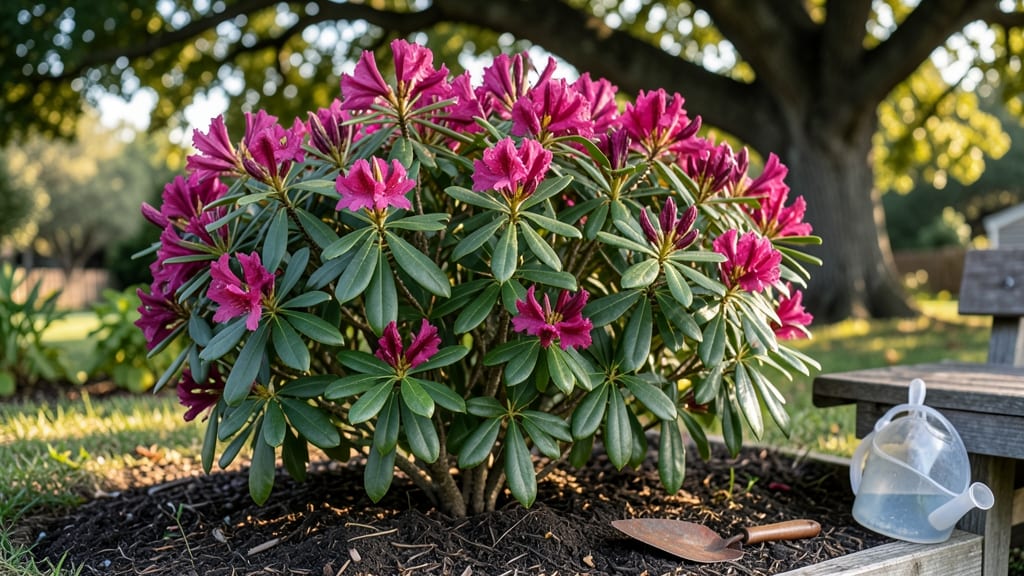
Rhododendrons in full shade grow best with shade-tolerant varieties like Rhododendron maximum (great laurel) or Rhododendron catawbiense (Catawba rhododendron), which flourish in low-light conditions while delivering stunning blooms. For optimal growth, maintain acidic, well-draining soil and keep the roots consistently moist, while shielding them from harsh afternoon sun to avoid leaf damage.
Full shade isn't just tolerable for rhododendrons—it's where many of their best varieties truly shine. 🌿 These plants have evolved to thrive in woodland understories, where they compete for light with trees and shrubs.
The secret lies in their ability to maximize photosynthesis with lower light intensity, though they still need some indirect light to produce vibrant flowers.
I've found that varieties like Rhododendron 'PJM' (a classic shade performer) and Rhododendron 'Catawbiense Grandiflorum' (with large, fragrant blooms) are my go-to choices for dark corners of the garden.
What often surprises gardeners is how much these shade-loving rhododendrons reward proper care. A thick layer of organic mulch helps maintain soil moisture and temperature, while regular pruning encourages bushier growth. The key is to avoid overwatering—these plants prefer their roots to stay damp but not soggy.
For the best results, I recommend planting them where they'll receive morning sun and afternoon shade, which gives them just enough light to fuel their spectacular displays without stressing the foliage.
💡 In This Article
- How Light Levels Affect Rhododendron Growth in Shade
- Top Full-Shade Rhododendron Varieties for Dark Gardens
How light levels affect Rhododendron growth in shade
Rhododendrons have evolved a fascinating adaptation called chlorophyll flexibility, where their leaves can adjust pigment density based on available light. In full shade, these plants develop thicker, darker leaves with higher chlorophyll concentrations to capture every photon of light.
This process, called shade acclimation, allows them to photosynthesize efficiently even with just 10-20% of full sunlight—about what you'd find under a dense canopy of deciduous trees. 🌿 The trade-off?
Their flowering energy gets redirected to leaf production, which is why many shade varieties produce smaller blooms compared to sun-loving cousins like Rhododendron 'Elizabeth' (which needs at least 4-6 hours of morning sun).
The ideal light scenario for most shade-tolerant rhododendrons is dappled light—think of the filtered sunlight that dances through tree leaves. This provides enough light for vibrant blooms while preventing the leaf scorch that comes from direct afternoon sun (when UV intensity peaks at 3:00-5:00 PM).
Varieties like Rhododendron 'PJM' actually perform better with 2-3 hours of morning sun combined with afternoon shade, as this mimics their natural woodland habitat where they receive indirect light through canopy gaps.
The science behind this is their photoperiod sensitivity—they need some light to trigger flowering but can't handle prolonged exposure to intense rays.
What most gardeners don't realize is how soil moisture interacts with light levels. In full shade, rhododendron roots stay cooler, which means they require 20-30% more consistent moisture than sun-exposed plants.
This is because shade reduces transpiration (water loss through leaves), so the soil stays damp longer. 💧 The key is to maintain a pH of 4.5-5.5 in the root zone—acidic conditions help unlock phosphorus, a nutrient crucial for energy transfer during photosynthesis in low-light conditions.
Without proper acidity, even shade-tolerant varieties will struggle to thrive.
There's also a fascinating trade-off between leaf size and light exposure. Shade-grown rhododendrons develop larger, thinner leaves to maximize surface area for light capture, while sun-exposed plants grow smaller, thicker leaves with waxy coatings to reflect excess heat.
This is why Rhododendron maximum (great laurel), a native woodland species, can handle full shade but produces its most spectacular blooms when given partial shade with some morning light.
The larger leaves in shade conditions also make the plant more vulnerable to fungal diseases like petal blight, which thrives in the humid, low-light environments these plants prefer.
For those considering full shade planting, it's worth noting that not all rhododendrons are created equal. Evergreen varieties** like Rhododendron 'Catawbiense Grandiflorum' handle shade better than deciduous types, as they maintain their photosynthetic machinery year-round.
The secret to their success lies in their needle-like leaf structure, which reduces water loss while still allowing light penetration. In contrast, sun-loving varieties like Rhododendron 'Nova Zembla' (with its stunning purple blooms) will struggle in deep shade, often producing sparse foliage and few flowers.
This is because their photosynthetic pathways are optimized for higher light intensities.
One advanced technique I've found effective is stratified light training—gradually acclimating shade-grown rhododendrons to more light over 4-6 weeks in spring. Start by moving potted plants to a location with 50% shade cloth, then reduce the coverage by 10% weekly.
This mimics natural conditions and prevents photoinhibition (light damage) that can occur when shade plants suddenly receive too much sun. The result? Healthier plants that can handle the transition to slightly sunnier spots without stress. 🌱