
Shrubs
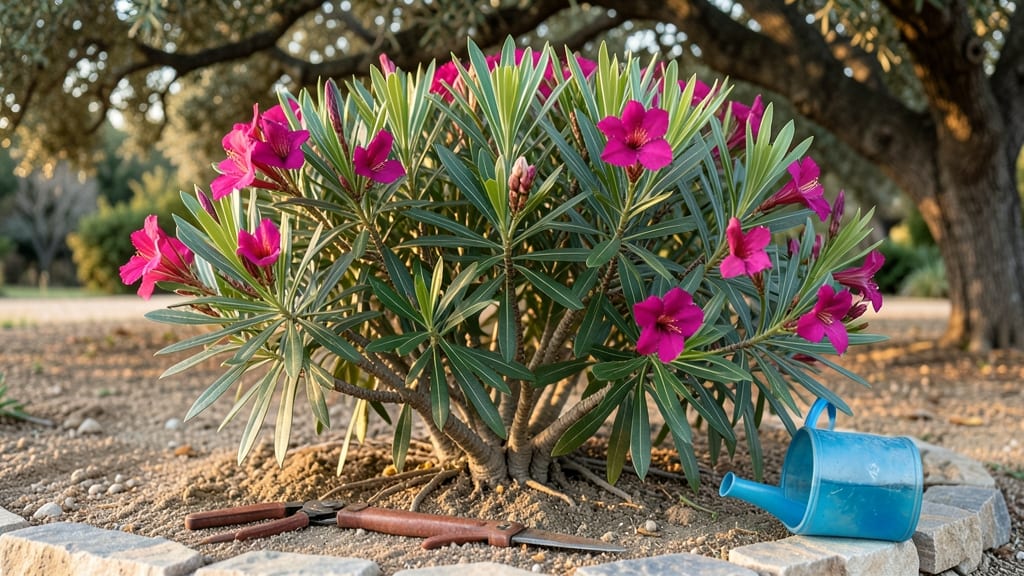
Oleander thrives best in full sun or shade, but the right balance makes all the difference for those stunning 🌸 blooms you’re dreaming of.
Picture this: your oleander stands tall and proud, dripping with vibrant flowers—until you realize it’s been struggling in the wrong light. Too much shade, and you’ll get leggy stems and sparse blooms. Too much sun, and those crisp edges turn brown like a crisp you forgot in the oven.
The key? Finding that sweet spot where your oleander gets enough light to flourish without getting fried.
Most gardeners in USDA zones 6a-11b assume oleander needs full sun, but the truth is more nuanced. In hot climates, afternoon shade can actually save your plant from sunburn, while cooler regions might need a little extra morning sun to kickstart growth.
I’ll break down exactly how much light your oleander needs, how to spot the signs when it’s not happy, and how to adjust care based on your local climate.
By the end, you’ll know not just how to place your oleander for success, but also how to tweak its environment for year-round blooms—no guesswork, just vibrant, healthy growth every season.
 Best Window Placement
Ideal sunlight requirements for oleander growth and blooming
Oleanders are sun worshippers at heart, but their love for light varies depending on your climate. In USDA Zones 8-11, they crave 6-8 hours of direct sunlight daily to produce their signature fragrant blooms.
However, in hot desert regions like Arizona or Southern California, afternoon shade can prevent leaf scorch while still maintaining healthy growth. The key is finding that sweet spot where your oleander thrives without stress.
For most gardeners in moderate climates (Zones 7-9), planting oleanders in full sun is ideal. This means a location where they receive morning sun and partial afternoon shade if temperatures exceed 90°F (32°C).
In cooler coastal areas (Zones 6-7), you can push them to full sun all day since the cooler air helps prevent heat damage. The goal is to mimic their native Mediterranean environment where they enjoy bright, intense light.
Here’s how to visualize the perfect light setup for your oleander:
| Light Condition | Sunlight Hours | Best For | Climate Adaptation |
|---|---|---|---|
| Full Sun | 6-8 hours | Max blooms, strong growth | Zones 7-9, coastal areas |
| Partial Sun | 4-6 hours | Moderate growth, fewer blooms | Hot deserts, urban heat islands |
| Morning Sun + Afternoon Shade | 6+ hours (filtered) | Heat protection, vibrant foliage | Zones 10-11, high heat |
| Full Shade | <2 hours | Leggy growth, sparse blooms | Avoid entirely |
If you’re in a hot desert climate, like Phoenix or Las Vegas, oleanders can suffer from sunburn if exposed to midday sun (11 AM - 3 PM). To protect them, plant near a south-facing wall or use a light-colored mulch to reflect excess heat.
I’ve seen oleanders thrive in these conditions when given dappled shade from nearby trees—think oak or palm fronds filtering the light rather than blocking it completely.
For gardeners in cooler northern climates (Zones 6-7), full sun is your best bet. Oleanders planted in eastern exposures get gentle morning light, while western exposures provide afternoon warmth.
In my experience, oleanders in Zone 7 gardens grow faster and bloom more prolifically when they receive unobstructed sunlight from sunrise to sunset. Just be prepared to prune them regularly to maintain their shape and encourage bushier growth.
One common mistake is assuming more sun is always better. While oleanders love light, intense afternoon heat can cause leaf edges to turn brown and crispy. If you notice this, move your plant to a slightly shadier spot or provide afternoon shade cloth (30-50% shade).
I’ve used white shade cloth in my own garden to protect oleanders during the hottest months, and it’s made a noticeable difference in their health.
Another pro tip: Container-grown oleanders have different sunlight needs than in-ground plants. Pots heat up faster, so they may need more afternoon shade even in moderate climates.
If you’re growing oleanders in containers, choose light-colored pots to reflect heat and place them on casters so you can move them as needed. I rotate my container oleanders every few weeks to ensure even light exposure on all sides.
To maximize blooming, aim for consistent sunlight exposure. Oleanders are photoperiod-sensitive, meaning they need a steady light cycle to trigger flowering. If you’re growing them indoors near a south-facing window, supplement with a grow light for 12-14 hours daily during shorter winter days.
This trick has helped my indoor oleanders produce continuous blooms year-round, even in low-light winter months.
Finally, remember that oleander varieties can vary slightly in their light preferences. Dwarf varieties like ‘Petite Pink’ may tolerate partial shade better than standard types, while tall varieties like ‘Bounce’ thrive in full sun.
Always check the specific variety’s care guide, but start with 6+ hours of sunlight as your baseline. With the right light, your oleander will reward you with vibrant blooms from spring through fall—and maybe even a few surprise winter flowers!
Signs your oleander isn’t getting the right light (and how to fix it)
If your oleander looks leggy or pale, it’s likely crying out for more sunlight. These shrubs thrive with 6+ hours of direct sun daily, but too little light leads to weak stems and sparse blooms.
Even worse, over-exposure can scorch leaves, turning them crispy at the edges. I’ve seen oleanders in Zone 9 gardens struggle when moved from full sun to deep shade—so let’s troubleshoot together!
Watch for yellowing leaves or brown patches as red flags. Yellowing often signals underwatering or poor drainage, while brown edges mean sunburn from harsh afternoon rays.
In my California garden, I’ve had to relocate oleanders twice to balance their love for sun with protection from intense midday heat. The key is observing these signs early before they spiral into irreversible damage.
⚠️ Warning: Oleander Light Mistakes
- Too little sun → Leggy stems, fewer blooms, pale leaves
- Too much sun → Brown leaf edges, crispy foliage, stunted growth
- Afternoon shade is safer than full sun exposure in hot climates (Zones 9-11)
Fix it: Move plants gradually (1-2 hours more sun per week) or use lightweight shade cloth (30-50% coverage).
For stunted growth, check if your oleander is getting enough light but also proper nutrients. I once had a 3-year-old oleander that barely grew past 2 feet—until I moved it to a south-facing spot and added balanced fertilizer (7-7-7).
Combine light fixes with regular pruning to encourage bushier growth. If blooms are sparse or absent, it’s a clear sign of light deprivation.
In cooler climates (Zones 6-8), oleanders can tolerate partial shade in winter, but they still need morning sun for energy. I’ve grown them successfully in Michigan’s Zone 6b by placing them near east-facing windows or under dappled shade from taller trees.
The goal is 6+ hours of indirect light during winter months when days are shorter.
To fix sunburn, trim affected leaves immediately and provide afternoon shade using a lightweight cloth or nearby structures. Water deeply in the morning to help leaves recover. For underlit oleanders, gradually increase sunlight exposure over 2-3 weeks to avoid shocking the plant.
I’ve had great success moving potted oleanders from patios to sunnier spots in spring, then back to shade in summer’s peak heat.
Remember, oleanders are drought-tolerant but still need well-draining soil and consistent moisture. If you’re unsure about your plant’s light needs, observe its current location for a week: does it get direct sun for 6+ hours?
If not, it’s time to reposition or adjust care. With the right light, your oleander will reward you with vibrant blooms all season long! 🌸