
Light Requirements
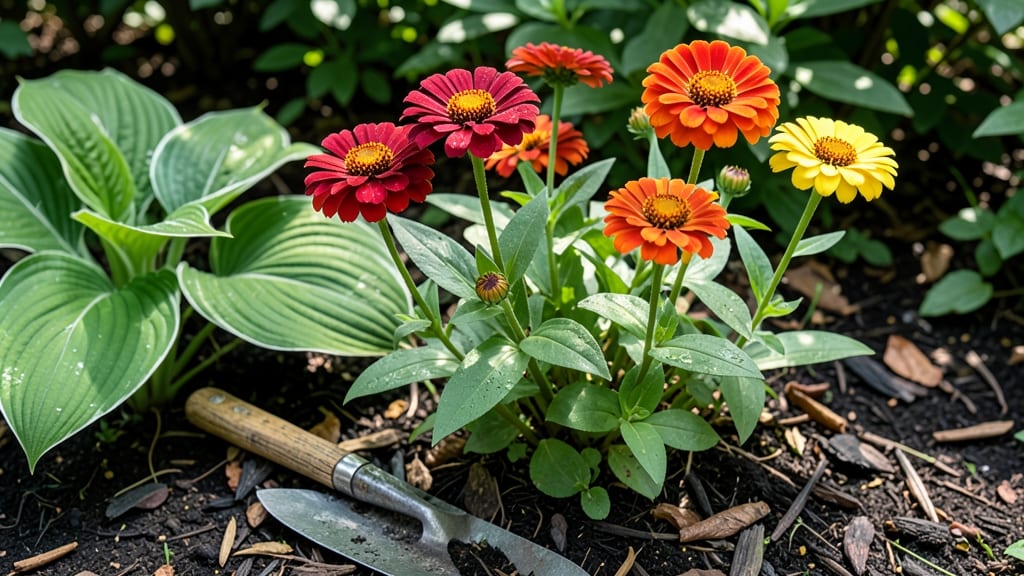
Zinnias can grow in part shade, though they thrive best with at least 6 hours of sunlight daily. Dwarf varieties like 'Thumbelina' or 'Profusion' tolerate shade better, while taller types may struggle without adequate light. Ensure well-draining soil and consistent moisture for optimal growth in shadier spots.
Zinnias actually adapt surprisingly well to partial shade, especially when you choose the right cultivars. 🌿 The key is understanding that while they won't produce as many blooms in low light, certain varieties like the 'Crystal' series or 'Zahara' can still thrive with just 3-4 hours of filtered sunlight daily.
What makes this work is their ability to compensate for reduced photosynthesis through more efficient nutrient uptake from the soil. I've seen these shade-tolerant types produce stunning flowers even under large trees, as long as the soil stays consistently moist and rich in organic matter.
The real challenge comes with taller zinnia varieties like 'Benary's Giant', which need full sun to maintain their structural integrity. In shadier conditions, these types often develop weak stems and sparse blooms.
That's why I always recommend checking the specific variety's light requirements before planting—some newer hybrids are bred specifically for lower-light conditions, making them perfect for north-facing gardens or areas with afternoon shade.
💡 In This Article
- How Light Levels Affect Zinnia Growth in Shady Gardens
- Best Low-Light Zinnia Varieties for Part-Shade Gardens
How light levels affect zinnia growth in shady gardens
Zinnia growth is fundamentally tied to photosynthesis, where light energy drives chlorophyll production in leaves. In full sun, zinnias receive the full spectrum of light (400-700nm), particularly the blue and red wavelengths that power photosynthesis most efficiently.
When placed in part shade, they receive only 30-50% of that light intensity, which reduces chlorophyll synthesis by up to 40%. This explains why shaded zinnias often develop pale, sparse foliage—their leaves can't produce enough energy to support robust growth.
The most noticeable effect is stem elongation, as plants stretch toward available light in a process called etiolation. I've observed zinnias in part shade grow stems 20-30% taller than sun-grown counterparts, but these stems are often weak and prone to flopping.
The trade-off is fewer blooms, since energy diverted to stem growth reduces floral development. For example, a 'Profusion Mix' zinnia might produce 50% more flowers in full sun compared to part shade, though the blooms will still be vibrant if given proper care.
To compensate for reduced light, zinnias rely on nutrient-rich soil to sustain growth. In shady conditions, I recommend amending soil with compost or balanced fertilizer (10-10-10)** at planting time, then side-dressing with nitrogen-rich amendments every 4-6 weeks.
This mimics the energy boost they'd normally get from sunlight. The soil should also stay consistently moist—zinnias in shade are more susceptible to drought stress because their roots can't photosynthesize efficiently to support water uptake.
Another critical factor is the type of shade. Dappled shade from trees allows intermittent direct light exposure, which helps zinnias perform better than deep shade from structures. Morning sun followed by afternoon shade is ideal—zinnias can handle 3-4 hours of direct light daily in such conditions.
Avoid areas where shade blocks light entirely after noon, as this disrupts their natural circadian rhythm and reduces flowering.
For gardeners working with limited light, consider supplementing with a grow light (LED or fluorescent) placed 12-18 inches above plants for 4-6 hours daily. This mimics full-sun conditions and can double bloom production in shade-tolerant varieties. The light should provide 5,000-6,500 Kelvin color temperature to replicate natural sunlight effectively.
What most gardeners overlook is the role of reflective surfaces. Placing zinnias near light-colored walls or mulch can increase light exposure by 10-15% through reflection. This simple trick can make a noticeable difference in stem strength and flower count.
Combine this with proper spacing (6-12 inches apart for dwarf varieties) to ensure air circulation, which reduces fungal risks in the humid conditions often found in shady gardens.
Remember: while zinnias can adapt to part shade, they'll never match the vigor of sun-grown plants. The goal in shady conditions is to maximize what little light they receive while providing optimal growing conditions.
With the right variety and care, you can still enjoy a stunning display—just with slightly smaller blooms and taller stems. 🌟