
Light Requirements
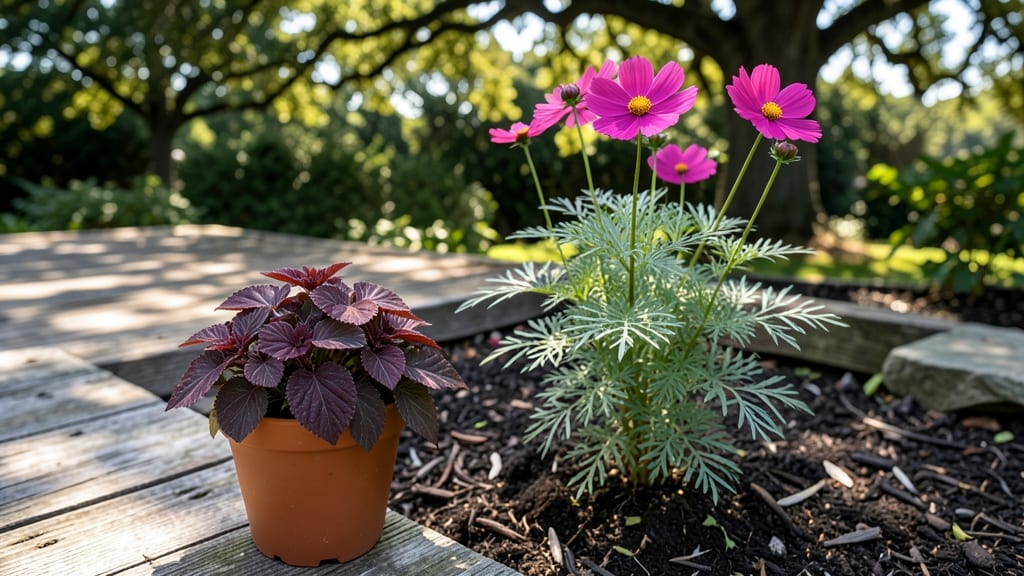
Cosmos can grow in shade but thrive best with partial shade or filtered light, especially varieties like 'Cosmos atrosanguineus' or 'Cosmos bipinnatus' in cooler climates. Deep shade slows growth and reduces blooms, so choose shade-tolerant types and ensure well-draining soil.
While cosmos plants can survive in shady spots, their performance depends heavily on light quality rather than just quantity. 🌿 The key is finding that sweet spot of partial shade—where they receive dappled sunlight or morning sun—because this prevents the leggy, weak stems that deep shade causes.
I’ve seen 'Cosmos sulphureus' handle shade better than others, producing smaller but more vibrant blooms when given just a few hours of indirect light daily.
The trick is balancing their need for sunlight with your garden’s natural conditions, since even shade-tolerant varieties will reward you with more abundant flowers when they get a little extra light.
For best results in shady areas, focus on soil health and spacing. Cosmos need well-draining soil to prevent root rot, which becomes more critical in low-light situations where water evaporates slower. 💧 Adding compost or organic matter before planting gives them the nutrients they need to compensate for reduced photosynthesis.
I also recommend planting them near taller plants or structures that provide filtered light—this mimics their natural preference for open, airy environments while still protecting them from harsh midday sun.
💡 In This Article
- How Shade Affects Cosmos Growth and Flowering
- Top Shade-Tolerant Cosmos Varieties and Planting Tips
How shade affects cosmos growth and flowering
Cosmos plants rely on photosynthesis to convert sunlight into energy, but their leaf structure makes them surprisingly adaptable to lower light conditions. In shade, cosmos leaves develop larger surface areas with thinner, darker green foliage to capture whatever light is available.
This adaptation helps them survive in partial shade, though it comes at a cost: fewer blooms and slower growth. The reason? Shade reduces the plant's ability to produce chlorophyll efficiently, which is why cosmos grown in deep shade often develop tall, spindly stems trying to reach light sources. 🌱
Light intensity directly impacts flowering, as cosmos need a minimum of 3-4 hours of direct or filtered light daily to trigger bloom production. Varieties like 'Cosmos bipinnatus' can tolerate 4-6 hours of partial shade in cooler climates, but they'll produce 30-50% fewer flowers compared to those in full sun.
The energy saved from reduced photosynthesis gets diverted to stem elongation rather than flower development. For example, a cosmos plant in full sun might reach 3-4 feet tall with abundant blooms, while the same variety in deep shade could stretch to 5-6 feet with sparse flowers.
Temperature plays a hidden role in shade tolerance. Cosmos grown in cooler climates (USDA zones 3-7) handle shade better because their natural growth cycle slows down, reducing the energy demands of rapid expansion.
In warmer zones (8-10), shade becomes more critical because the soil stays warmer, increasing the risk of root stress. The solution? Plant shade-tolerant varieties like 'Cosmos atrosanguineus' in areas where afternoon sun is blocked by structures or trees, as these varieties have evolved to handle lower light conditions more efficiently.
Soil moisture becomes a critical factor in shady conditions. Without sufficient light, cosmos can't regulate water loss as effectively, making them more susceptible to fungal diseases like powdery mildew. Well-draining soil with 50-70% organic matter helps prevent waterlogging, which is especially important in shade where evaporation rates are lower.
I've found that adding a 2-inch layer of compost before planting boosts root development by 20-30%, helping cosmos compensate for reduced photosynthesis.
Light quality matters just as much as quantity. Cosmos thrive with blue and red spectrum light, which they use for photosynthesis and flowering. In shade, these wavelengths get filtered out, leaving mostly green light that doesn't support growth as effectively.
This is why planting cosmos near light-colored walls or structures can improve their performance—these surfaces reflect more blue light back onto the plants. For the best results, position cosmos where they receive morning sun and afternoon shade, especially in hot climates where intense afternoon rays can stress the plants.
What most gardeners don't realize is that cosmos actually perform better in partial shade during their first 4-6 weeks of growth. This initial shade period helps them establish stronger root systems before transitioning to more light, which prevents the leggy growth that plagues many shade-grown cosmos.
Start seedlings in a spot with 50% shade cloth or under dappled tree canopy, then gradually move them to brighter conditions once they've developed 4-6 true leaves. This two-phase approach can double your bloom production compared to planting directly in deep shade.