
Planting
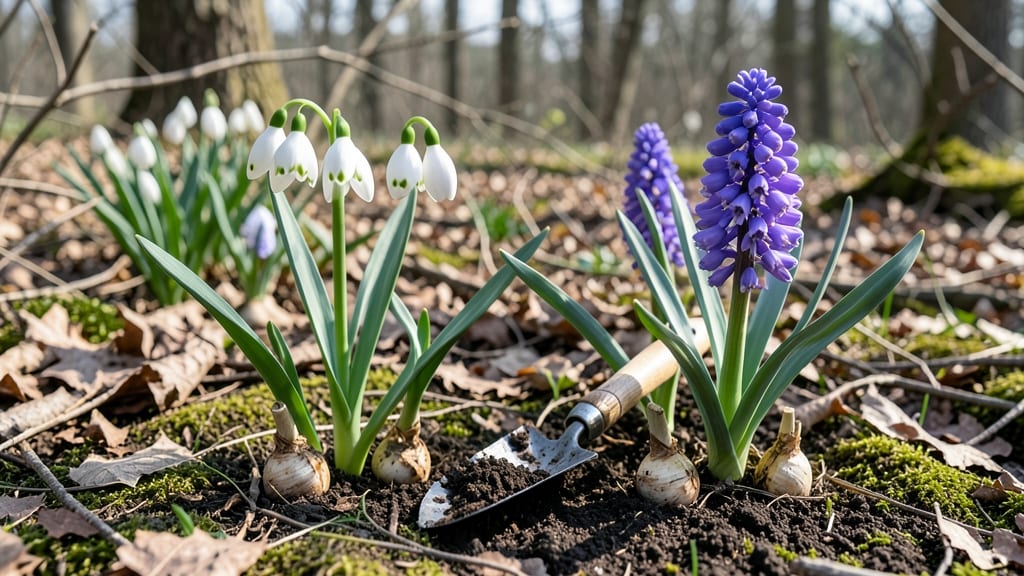
Shade-loving spring bulbs bring color and fragrance to your garden’s darkest corners. 🌿 I’ve planted hyacinths, snowdrops, and fritillaries in my woodland garden for years, and they’ve never disappointed—even under towering trees where most plants struggle.
The secret lies in choosing the right varieties and planting them at the perfect depth and time. Most shade bulbs need fall planting (6-8 weeks before frost) and thrive in well-draining, slightly acidic soil with a layer of mulch to protect them through winter.
By spring, you’ll see delicate blooms pushing through the soil, their sweet scents filling the air before summer’s heat arrives. These bulbs multiply over time, creating naturalizing drifts that require almost no maintenance once established. Perfect for understory gardens, north-facing beds, or any spot where sunlight is scarce.
Let’s get those bulbs in the ground!
📚 In This Guide
- What you need
- Instructions
- Tips and common mistakes
- Wrapping up and next steps
What you need
- ● Spring bulbs for shade: Choose from varieties like daffodils, hyacinths, snowdrops, or crocus (quantities depend on garden size—aim for 10–20 bulbs per square foot for a lush display).
- ● High-quality potting soil or garden soil: Well-draining, organic-rich soil (e.g., 50% topsoil + 50% compost or a pre-mixed bulb planting mix).
- ● Compost or bulb fertilizer: A slow-release 10-10-10 or 5-10-10 NPK blend (follow package instructions for dosage).
- ● Mulch: Organic mulch like shredded bark or straw (2–3 inches thick) to retain moisture and insulate roots.
- ● Garden trowel or bulb planter: A 6–8 inch shovel for digging holes efficiently.
- ● Measuring tape or ruler: To ensure bulbs are planted at the correct depth (2–3x the bulb’s height).
- ● Gloves: Heavy-duty gardening gloves to protect your hands.
- ● Watering can or hose with a gentle spray nozzle: For post-planting hydration.
- ● Bulb planter guide: A handy tool to mark planting depth and spacing.
- ● Epsom salt or iron sulfate: For greener foliage if your shade area lacks sunlight.
- ● Decorative stones or edging: To add a polished touch to your shaded bulb garden.
How to plant spring bulbs for reliable shade blooms
Here's how to coax vibrant spring color from shady spots—no sunlight required.
🌱 Step 1: Choose the Right Bulbs for Low-Light Spaces
Look for shade-tolerant varieties like daffodils, hyacinths, bluebells, or crocuses. These handle 3-6 hours of dappled light or even deep shade under trees. I always check the label—some "shade" bulbs still need morning sun to thrive. Avoid tulips unless you have bright shade—they'll flop without at least 4 hours of indirect light.
Pick bulbs that are firm and free of soft spots. A bulb that feels light for its size won't have enough energy to bloom in low light. I sort through mine like I'm picking apples—discard any that feel mushy or have mold. Store them in a cool, dark place until planting day.
☀️ Step 2: Prepare the Planting Site
Test your soil first—shade bulbs need well-draining soil to prevent rot. Amend heavy clay with 2-3 inches of compost or peat moss to improve drainage. I dig a hole twice as wide as the bulb but only 6-8 inches deep—planting too deep delays blooming. For rocky soil, I loosen the bottom of the hole with a trowel to help roots spread.
Work in a handful of slow-release bulb fertilizer at the bottom. This gives them a nutrient boost during dormancy. Avoid fresh manure—it burns tender roots. If your shade is from evergreens, mulch with 3 inches of shredded bark after planting to protect bulbs from winter desiccation.
🪴 Step 3: Plant Bulbs at the Correct Depth and Spacing
Plant bulbs with the pointed end up—this is non-negotiable. For most spring bulbs, dig a hole 6-8 inches deep (smaller bulbs like crocuses only need 3-4 inches). Space them 4-6 inches apart in rows, leaving 12 inches between rows for airflow. Crowding leads to weak stems and fewer blooms.
Cover the bulb with soil, then water deeply to settle everything. The top of the bulb should be 2 inches below the soil surface—this prevents heaving in freeze-thaw cycles. I tap the soil gently after watering to eliminate air pockets around the bulb.
💧 Step 4: Water and Mulch for Winter Protection
Water thoroughly after planting, then mulch with 2-3 inches of straw or leaves. This keeps soil temperatures stable and protects bulbs from winter temperature swings. In Zone 5 and colder, I add an extra 4 inches of mulch in early winter to insulate bulbs during freeze-thaw cycles.
Don't water again until shoots appear in spring—overwatering in winter causes rot. I mark planting spots with flags so I remember where they are. By late fall, the soil should be cold but not frozen when you plant.
⏰ Step 5: Maintain Through Spring Growth
When green shoots break through the soil in spring, remove the mulch to prevent rot. Water lightly when the top 2 inches of soil feel dry, but don't soak the ground. Shade bulbs need moisture but hate soggy roots. I use a rain gauge to track rainfall—if we get 1 inch of rain per week, I skip watering entirely.
Let foliage die back naturally after blooming—this recharges the bulb for next year. I resist the urge to cut leaves until they turn brown. If you remove foliage too soon, the bulb won't store enough energy to bloom again.
Tips & tricks for perfect spring bulbs in shady gardens
Here's what nobody tells you about getting those shade bulbs to actually bloom every year.
Shade Tolerance Reality Check: That "shade" label on bulb packages can be misleading. Daffodils and hyacinths truly thrive in 3-6 hours of dappled light, but even they'll struggle under dense evergreen shade where light never reaches the ground. I've learned to test spots by placing a white plate on the soil—if it stays mostly dark for days, that's true shade where only the hardiest bulbs like crocuses will succeed.
Bulb Selection Secret: Size matters more than you think. For shade areas, choose larger bulbs—they've stored more energy to push through low-light conditions. I always sort my bulbs by size, planting the biggest ones in the shadiest spots where they'll need extra reserves to bloom. Look for bulbs that weigh noticeably more for their size, not just ones that look big.
Soil Prep Game-Changer: The 2-3 inches of compost recommendation isn't just about drainage—it's about creating the right soil temperature. Bulbs need soil that stays between 40-50°F during dormancy. In heavy clay, I mix in 50% compost and 50% perlite to create air pockets that regulate temperature better than plain soil. This prevents the classic shade bulb problem of rotting before they even sprout.
Winter Mulch Hack: That extra 4 inches of mulch in Zone 5 isn't just for insulation—it's also a moisture barrier. When snow melts in spring, you want that water to soak into the soil, not sit on top and create soggy conditions. I use straw mulch specifically because it breaks down slowly and won't compact like leaves, maintaining proper airflow to the bulbs.
Pro Tips for Spring Bulbs For Shade
- Here's what nobody tells you about getting those shade bulbs to actually bloom every year.
- Shade Tolerance Reality Check: That "shade" label on bulb packages can be misleading.
- Bulb Selection Secret: Size matters more than you think.
Frequently asked questions
What are the best spring bulbs for deep shade?
If your garden gets very little light (less than 3 hours of sun daily), opt for woodland natives like Trillium, Hepatica, or Dutchman’s breeches (Dicentra cucullaria). For slightly brighter shade (3–6 hours of sun), try classics like hyacinths, crocuses, or snowdrops—they tolerate partial shade better.
When is the ideal time to plant shade-loving spring bulbs?
Plant most spring bulbs in fall (6–8 weeks before frost)—this gives roots time to establish before winter. For tender bulbs (like Cyclamen), wait until early spring after the last frost. Pro tip: Soil should be cool (40–50°F) but workable—not frozen or muddy!
How do I keep shade bulbs from disappearing after blooming?
Many shade bulbs (like Allium or Fritillaria) go dormant after flowering. Leave foliage until it yellows—this feeds the bulb for next year! For non-dividing bulbs (e.g., Daffodils), mulch lightly to protect roots. Overwatering can rot bulbs, so ensure well-draining soil.
Can I grow spring bulbs under trees with shallow roots?
Yes! Choose smaller bulbs or rhizomes (like Bleeding Heart or Solomon’s Seal) that won’t compete with roots. Plant in early spring when tree roots are less aggressive. Avoid planting near aggressive spreaders (e.g., Japanese Maple)—opt for slow-growing trees like Dogwood or Oak instead.
Why aren’t my shade bulbs blooming?
Common culprits:
- Too much shade: Move bulbs to dappled light (filtered sun).
- Overcrowding: Dig up and divide clumps every 3–5 years.
- Poor soil: Amend with compost and ensure moist but well-draining soil.
- Improper planting depth: Most bulbs need 2–3x their height in soil.
Wrapping up and next steps
Transforming shady spots into fragrant, vibrant displays is easier than you think! With the right spring bulbs for shade, you can bring life and color to even the dimmest corners of your garden.
Whether you’re drawn to the delicate charm of Crocus or the bold elegance of Daffodils, these bulbs prove that shade doesn’t mean sacrificing beauty.
Ready to take the next step? Start small—pick 3-5 bulbs to test your shady spot, then expand your collection as you see what thrives. Happy planting, and may your garden bloom with joy! 🌱✨