
Shrubs
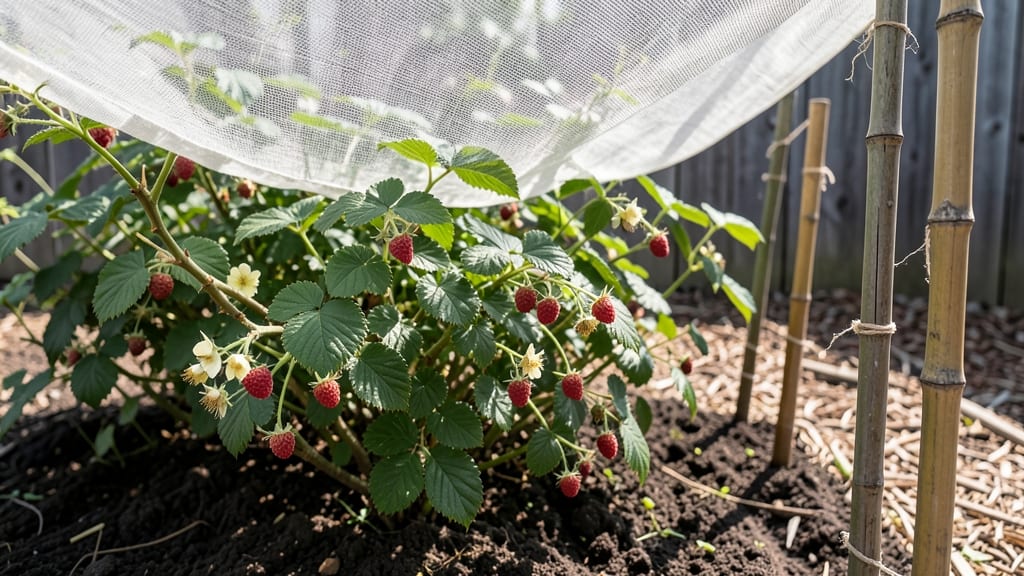
My raspberries went from tart to shockingly sweet after draping 30% shade cloth over them last summer. 🌿 The secret isn't hiding them from light—it's protecting them from the harsh midday sun that burns leaves and saps energy from fruit development.
I used a lightweight mesh that filters just enough sunlight to keep berries juicy and flavorful while preventing heat stress that turns them mealy.
You'll need 30-50% shade cloth (30% for cooler climates, 50% for hot summers) and some sturdy hoops or trellis supports to keep it 2-3 feet above the canes.
Install it when daytime temps hit consistently above 85°F, usually in late spring or early summer, and remove it before harvest to let berries fully ripen in the sun. The cloth also cuts down on sunburned leaves and makes plants less attractive to spider mites.
What you end up with is richer color, thicker skins, and berries that burst with sweetness instead of sourness. My neighbors' unprotected canes produced small, seedy berries, while mine yielded pint-sized clusters that had everyone asking for seconds.
The cloth lasts years, and with proper care, you'll see the same results every season.
Works for both summer-bearing and fall-bearing varieties, and you can adapt the timing based on your local heat waves. Here's how to set it up without turning your raspberry patch into a greenhouse—just the right amount of protection for peak flavor.
📚 In This Guide
- What you need
- Instructions
- Tips and common mistakes
- Wrapping up and next steps
What you need
- ● Shade cloth: Choose a 30-50% density (for partial sun) or 50-70% density (for full sun protection). Measure your garden area and buy enough to cover it with 1-2 feet of overhang on all sides. Common sizes: 10’ x 20’ or 10’ x 100’ rolls.
- ● Support structure: T-posts or metal stakes (1 per 4–6 ft of row, 6–8 ft tall for full coverage).
- ● Wire or nylon twine (16-gauge, 100–200 ft for a standard 10’ x 20’ setup).
- ● Bungee cords or zip ties (for securing cloth to stakes).
- ● Fasteners: Heavy-duty staples or clips (for attaching cloth to wire frames).
- ● Measuring tape (for precise cloth sizing).
- ● Scissors or utility knife (for cutting cloth to size).
- ● Hammer or mallet (to drive in stakes).
- ● Pliers (for bending wire or tightening twine).
- ● Ladder (if your raspberry patch is tall).
- ● Ground anchors (to weigh down edges in windy areas).
- ● Reflective tape (for scaring off pests like birds).
- ● Adjustable shade cloth hoops (for easy removal/rolling up).
- ● Thermometer (to monitor temperature under shade—ideal range: 70–85°F).
How to use shade cloth to protect raspberry canes and improve berry flavor
Here's the method I use to shield raspberries from harsh sun while keeping berries sweeter and plants healthier.
🌿 Step 1: Choose the Right Shade Cloth and Timing
Select 30-50% shade cloth—this range blocks enough sun to prevent sunscald while still allowing light for photosynthesis. I opt for 40% coverage in hot climates where raspberries struggle with afternoon sun. Install the cloth early in the season (late spring) before berries begin to ripen, as summer heat causes the most stress.
Measure your raspberry patch and cut the shade cloth to fit, leaving 6-12 inches of extra fabric on all sides for secure fastening. Avoid plastic or low-quality fabrics—they trap heat and can scorch leaves. Look for breathable, UV-stabilized cloth rated for outdoor use. This ensures your berries stay protected without overheating the plants.
✂️ Step 2: Install the Shade Cloth Properly
Set up a support frame using T-posts or PVC pipes around your raspberry patch, about 4-5 feet high—tall enough to cover the canes but not so tall that it blocks airflow. I use galvanized zip ties to secure the cloth to the frame, starting at the top and working downward to prevent sagging. Leave the bottom edges loose to allow air circulation at the base, which prevents fungal issues.
Drape the cloth evenly over the canes, ensuring full coverage but not so tight that it restricts growth. If you're using a hoop system, space hoops 3-4 feet apart and secure the cloth with clips or staples (avoid nails—they can tear the fabric). Test the tension by gently pulling the cloth; it should hold its shape without stretching.
☀️ Step 3: Monitor and Adjust for Optimal Sun Protection
Check the shade cloth weekly to ensure it’s still providing even coverage. Raspberries need morning sun for energy but benefit from afternoon shade in hot climates. If you notice yellowing leaves or sunburned tips, adjust the cloth to block more direct sun—especially during peak heat hours (11 AM–3 PM). You’ll see healthier green leaves within a few days of proper shading.
Remove the shade cloth gradually in late summer (around mid-August) to harden off the plants. Start by rolling up the sides for a few hours a day, then fully remove it 2-3 weeks before the first frost. This slow transition prevents shock and allows the canes to adjust to cooler temperatures. Watch for new growth signals—if canes start producing fresh leaves, they’re ready for full sun again.
💧 Step 4: Maintain Plant Health Under Shade Cloth
Shade cloth reduces evaporation, so water less frequently—about 25-30% less than you would without it. Water deeply at the base (1-2 inches per week) rather than overhead to prevent fungal diseases. I use drip irrigation under the cloth to keep foliage dry, which cuts down on mildew risks. Mulch with 2-3 inches of straw or wood chips to retain moisture and regulate soil temperature.
Fertilize lightly under shade cloth—raspberries need less nitrogen when shaded. Use a balanced 10-10-10 fertilizer every 6-8 weeks during the growing season. Over-fertilizing can lead to weak, leggy canes, so follow the package rates closely. You’ll know you’re on track when berries develop rich color and sweetness instead of sour, watery fruit.
Tips & tricks for perfect raspberry sun protection
A few simple adjustments can make all the difference when using shade cloth for your raspberries. Here's what I've learned after years of testing different setups.
Cloth Quality Matters: The 30-50% shade range is perfect, but not all fabrics are created equal. Look for UV-stabilized cloth with a breathable weave—this prevents heat buildup that can actually stress your plants. I've seen cheap plastic-like fabrics cause leaf scorch despite the right percentage. Test the fabric by holding it up to sunlight—if it feels hot to touch after a few minutes, it's trapping too much heat.
Frame Height Strategy: The 4-5 foot frame height mentioned in Step 2 is ideal, but here's the thing: taller frames work better in windy areas. If you're in a breezy location, add stakes at 6-foot intervals along the perimeter to prevent flapping. I've seen shade cloth rip free from frames during summer storms—securing the corners with heavy-duty landscape staples (not nails) makes all the difference.
Adjusting for Peak Heat: Those afternoon hours (11 AM-3 PM) are critical, but the solution depends on your climate. In extremely hot zones, consider a two-tier system: full shade during peak heat, then partial shade in late afternoon. You can achieve this by rolling up the top half of the cloth during cooler afternoons while keeping the bottom half in place. This gives your plants morning sun while protecting them when it matters most.
Watering Wisdom: The 25-30% reduction in watering frequency is spot-on, but timing matters just as much. Water early morning (before 8 AM) when the cloth is dry—this prevents water from sitting on the fabric and creating fungal conditions. I've had success using soaker hoses placed under the cloth edges to deliver water directly to the soil without wetting the leaves.
Pro Tips for Shade Cloth For Raspberries
- A few simple adjustments can make all the difference when using shade cloth for your raspberries.
- Cloth Quality Matters: The 30-50% shade range is perfect, but not all fabrics are created equal.
- Frame Height Strategy: The 4-5 foot frame height mentioned in Step 2 is ideal, but here's the thing: taller frames work better in windy areas.
Frequently asked questions
Got questions about using shade cloth for raspberries?
You’re not alone! Here are answers to the most common concerns—from setup to troubleshooting—so you can grow sweeter, healthier berries with confidence.
What percentage of shade cloth should I use for raspberries?
For raspberries, 30-50% shade cloth is ideal—especially in hot climates. 30% reduces sun intensity while allowing enough light for photosynthesis, while 50% offers stronger protection during peak summer heat. Adjust based on your local sun exposure and raspberry variety (some, like heritage types, tolerate more sun).
When is the best time to install shade cloth for raspberries?
Install shade cloth before the hottest months (late spring or early summer, depending on your zone). Raspberries benefit from gradual acclimation, so avoid sudden full shade. Pro tip: If using removable frames, set them up once daytime temps consistently hit 85°F+ (29°C+) to prevent stress on new canes.
Is shade cloth worth it if I’m growing raspberries in partial shade already?
Yes! Even if your raspberries get some natural shade (e.g., from trees or a fence), cloth adds consistent protection against afternoon sunburn and heat stress. Think of it as a backup plan—especially useful during heatwaves or in areas with intense afternoon sun. For partial shade, 30% cloth is often sufficient.
How do I clean or maintain shade cloth between seasons?
Shake off debris and hose down cloth with water to remove dust or mold. For stubborn grime, use a mild soap solution and a soft brush. Store it dry in a cool, dark place to prevent mildew. Pro tip: Fold cloth loosely to avoid creases, which can trap moisture. Inspect frames for rust or wear before reinstalling each season.
Will shade cloth reduce raspberry yield or size?
Not if used correctly! Shade cloth protects berries from sunburn and extends the growing season by reducing heat stress. However, too much shade (60%+) can limit fruit production. Balance is key: aim for 3-5 hours of direct sun daily even with cloth. Varieties like ‘Boyne’ or ‘Heritage’ thrive under light shade and may even develop richer flavors.
What should I do if my raspberries look stressed despite having shade cloth?
Check these first:
- Airflow: Ensure cloth isn’t too tight—raspberries need ventilation to prevent fungal diseases like botrytis.
- Watering: Shade can increase humidity; water deeply but less frequently to avoid root rot.
- Nutrients: Shade-stressed plants may need extra phosphorus (for fruiting) or calcium.
- Timing: If installed too late, remove cloth gradually over 1-2 weeks to re-acclimate plants to full sun.
Wrapping up and next steps
Using shade cloth for raspberries is a game-changer for gardeners aiming for sweeter, healthier berries while protecting their plants from harsh sun and heat. Whether you're dealing with intense summer rays or unpredictable weather, the right shade solution can dramatically improve yield and flavor—without sacrificing growth.
With the right materials, installation tips, and maintenance know-how, you’re already equipped to transform your raspberry patch into a thriving, sun-smart sanctuary. 🌿
Ready to put your newfound knowledge into action? Start by choosing your shade cloth and setting up your first row this season—your future berry harvest will thank you! For extra confidence, jot down notes on your plant’s progress and adjust as needed. Happy gardening! 🍓✨