
Light Requirements
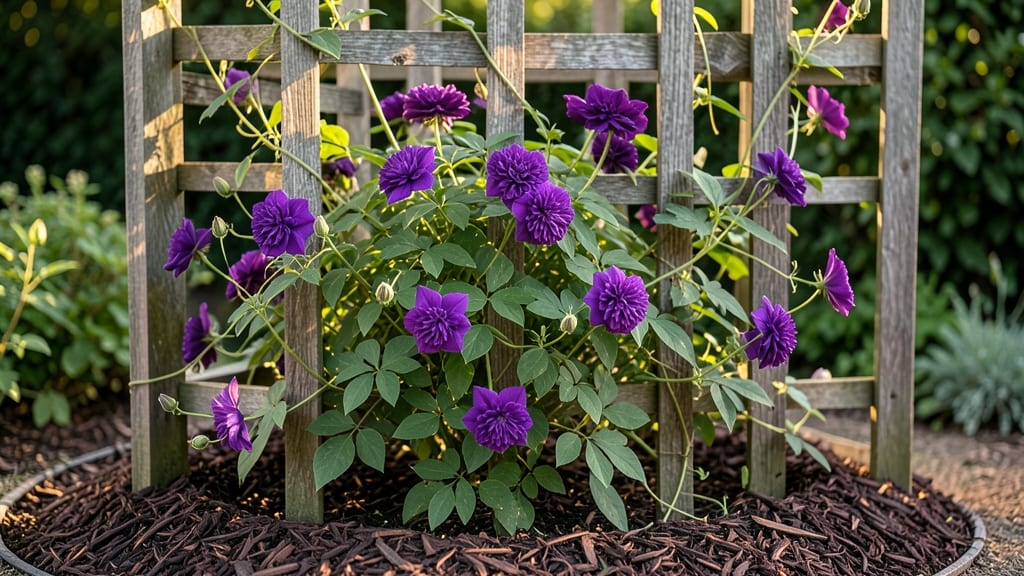
Growing a partial shade clematis vine that bursts with blooms feels like unlocking a secret garden. 🌿 I've watched my own vine transform from a struggling sapling to a lush, flowering powerhouse—all while basking in just 3-6 hours of morning sun.
The key isn’t forcing sunlight but working with the shade to create a thriving vine that neighbors will envy.
Start with well-draining soil rich in organic matter—think compost mixed into the planting hole. Clematis roots crave moisture but hate soggy feet, so amend heavy clay with sand or perlite if needed.
Water deeply once a week (more in summer heat), focusing on the root zone rather than wetting the foliage. Pruning comes next: cut back last year’s stems in early spring to encourage fresh growth, and deadhead spent blooms to prolong flowering.
Here’s the magic: partial shade actually protects your clematis from scorching afternoon sun while keeping foliage vibrant. Expect larger, longer-lasting blooms than sun-blasted vines, though you might see slightly fewer flowers.
Pair it with hostas, ferns, or astilbes for a shade-loving support system that thrives alongside it. The result? A vine that’s hardy, lush, and full of surprises—even in tricky light.
When problems pop up—like yellow leaves or slow growth—check for overwatering or compacted soil. A light mulch layer helps retain moisture without smothering roots. With patience, your clematis will reward you with season-long color, proving that shade isn’t a limitation—it’s a garden advantage.
📚 In This Guide
- What you need
- Instructions
- Tips and common mistakes
- Wrapping up and next steps
What you need
- ● Clematis Vine: 1-3 plants (depending on desired coverage; Clematis montana, Clematis armandii, or Clematis viticella varieties thrive in partial shade).
- ● Choose hardiness zone-appropriate varieties for your climate (e.g., Zones 4-9 for most types).
- ● Soil: 5-10 gallons of well-draining, organic-rich soil (mix garden soil with compost or peat moss).
- ○ Optional: Perlite or sand (1-2 cups per plant) to improve drainage.
- ● Fertilizer: Balanced fertilizer (10-10-10 or 20-20-20, 5-10 tbsp per plant).
- ● Bone meal or phosphorus-rich fertilizer (1 tbsp per plant) to encourage root growth.
- ● Gardening tools: 1 trowel or hand shovel
- ● 1 pair of pruning shears (sterilized with rubbing alcohol)
- ● 1 garden fork (for loosening soil)
- ● 1 watering can or hose with a gentle spray nozzle
- ● Support structure: 1 trellis, arbor, or fence (at least 6-8 feet tall for climbing varieties).
- ○ Optional: Twine or soft plant ties to secure vines initially.
- ● Mulch: 2-3 inches of organic mulch (e.g., wood chips, shredded bark, or straw).
- ● Location: A spot with 3-6 hours of dappled sunlight (e.g., near trees, north-facing walls, or under pergolas).
- ● Moisture: Ensure the area stays consistently moist but not waterlogged (clematis roots need hydration!).
- ● pH Level: Aim for 6.0-7.0 (test soil with a kit if unsure).
- ○ Companion Plants: Optional but helpful: low-growing perennials or shrubs (e.g., hostas, ferns, or heuchera) to shade the base.
How to cultivate a thriving partial shade clematis vine
Here's how I've mastered growing these stunning vines in lower light—key adjustments make all the difference.
🪴 Step 1: Select the Right Variety and Planting Location
Not all clematis thrive in partial shade, so choose varieties like 'Jackmanii', 'Nelly Moser', or 'Vyvyan Pennell'—these tolerate 3-6 hours of morning sun with afternoon shade. Avoid heavy shade varieties like 'Alionushka' that require full sun.
Plant near a sturdy trellis, arbor, or fence where vines can climb 8-12 feet high. The root system needs 6-8 hours of indirect light, so position where dappled sunlight filters through nearby trees. I always test the spot for at least 3 hours of direct light—this is non-negotiable for flowering.
🌱 Step 2: Prepare the Soil and Planting Site
Clematis roots crave well-draining, slightly alkaline soil (pH 6.5-7.5). Amend native soil with 3 inches of compost and 1 inch of coarse sand to prevent waterlogging. I dig a hole twice as wide as the root ball but only as deep—planting too deep suffocates the crown.
Create a 12-inch deep soil mound around the planting hole. This raises the crown 2-3 inches above grade, protecting it from rot while keeping roots cool. Mix 1 cup of bonemeal into the backfill for phosphorus—critical for strong root development and future blooms.
☀️ Step 3: Provide Support and Prune for Partial Shade Growth
Install a 5-6 foot tall trellis immediately after planting. Clematis vines grow 6-8 feet per season in partial shade, but without support, they flop and struggle to reach light. Use flexible twine or wire to gently weave new growth upward—never force stems.
Prune strategically: Group 1 (early bloomers) get minimal pruning, while Group 2-3 (late bloomers) need annual hard pruning in late winter. In partial shade, I remove only dead or crossing stems—never more than 1/3 of the plant. Watch for new shoots emerging from the base—these are your future blooms.
💧 Step 4: Water and Fertilize for Partial Shade Success
Water deeply twice weekly until roots establish (4-6 weeks), then taper to once weekly—partial shade means less evaporation, but roots still need consistent moisture. Check soil 2 inches down; if dry, water until it's damp but not soggy. Mulch with 3 inches of wood chips to retain moisture and regulate temperature.
Fertilize twice yearly: Apply balanced 10-10-10 in early spring (when new growth starts) and low-phosphorus 5-10-10 after flowering. I avoid high-nitrogen feeds—these promote leafy growth at the expense of blooms. Look for new shoots with 3-4 leaves as your cue to fertilize.
✂️ Step 5: Maintain and Encourage Flowering in Low Light
Deadhead spent blooms immediately to redirect energy to new flowers. In partial shade, clematis produce fewer but larger blooms, so preservation matters. I also trim any leggy growth that stretches toward light—this signals the plant to focus on strength, not just reach.
Watch for yellowing leaves, a sign of either overwatering or nutrient deficiency. Adjust care: if soil feels soggy, reduce watering; if leaves lack vigor, apply seaweed extract for micronutrients. By mid-summer, your vine should show healthy green foliage with 3-5 buds per stem—proof you're on the right track.
Tips & tricks for cultivating partial shade clematis vines
Growing clematis in partial shade requires thoughtful adjustments—here’s how to maximize their potential without common pitfalls.
Variety Selection Matters: While 'Jackmanii' and 'Nelly Moser' are excellent choices, don't overlook 'Comtesse de Bouchaud'—its delicate flowers thrive in partial shade and bloom prolifically. For maximum impact, pair these varieties with a sturdy trellis that reaches 8-12 feet high; this ensures vines can stretch toward any available light while maintaining structural integrity. I’ve found that positioning the trellis near an east-facing window or under deciduous trees creates ideal conditions.
Soil Preparation Is Non-Negotiable: The 12-inch deep soil mound technique isn’t just about drainage—it’s about creating a microclimate that keeps roots cool and crowns dry. When mixing 1 cup of bonemeal into the backfill, don’t skimp: phosphorus deficiency is a silent killer of blooms. I’ve seen vines with perfect foliage but zero flowers because of this oversight. Test your soil’s pH before planting; if it’s below 6.5, add lime to raise it gradually over a few weeks.
Pruning Strategy for Partial Shade: In Step 3, when pruning late bloomers, focus on removing stems that grow toward the light source—this encourages bushier growth with more buds. I’ve learned the hard way that cutting back too aggressively in partial shade can leave your vine struggling to recover. For Group 2-3 varieties, limit pruning to 1/3 of the plant and always leave at least 3-4 leaves on each stem to ensure photosynthesis continues. Watch for new shoots emerging from the base; these are your plant’s way of adapting to lower light conditions.
Watering Wisdom: The deeply twice weekly watering schedule works best when paired with a soaker hose or drip irrigation system. Surface watering can lead to fungal issues, especially in partial shade where humidity lingers. After the initial 4-6 weeks of establishment, I reduce to once weekly but always check soil 2 inches down—if it’s dry, water until moisture reaches 6 inches deep. Mulching with 3 inches of wood chips isn’t just about moisture retention; it also regulates soil temperature, which is crucial for root health in fluctuating shade conditions.
Pro Tips for Partial Shade Clematis Vine
- Growing clematis in partial shade requires thoughtful adjustments—here’s how to maximize their potential without common pitfalls.
- Variety Selection Matters: While 'Jackmanii' and 'Nelly Moser' are excellent choices, don't overlook 'Comtesse de Bouchaud'—its delicate flowers thrive in partial shade and bloom prolifically.
- Soil Preparation Is Non-Negotiable: The 12-inch deep soil mound technique isn’t just about drainage—it’s about creating a microclimate that keeps roots cool and crowns dry.
Frequently asked questions
about growing partial shade clematis vine—because even the most stunning climbers need a little guidance! Here are answers to the most common queries to help you cultivate a thriving vine with ease.What’s the ideal balance of sun and shade for partial shade clematis?
Most clematis varieties in partial shade thrive with 3–6 hours of morning sun and dappled or filtered afternoon shade (especially in hot climates). Avoid harsh afternoon sun, which can scorch leaves. East-facing walls or locations under trees with sparse canopies are perfect! Pro tip: Observe your vine’s leaves—yellowing or wilting signals too much sun.
When is the best time to plant clematis in partial shade?
Plant clematis in early spring or early fall when soil is workable but not frozen. This gives roots time to establish before extreme heat or cold. Avoid summer planting—heat stress can stunt growth. If planting in containers, use well-draining soil and keep them consistently moist until roots settle.
Can clematis grow in full shade? What are my alternatives?
While some clematis (like Clematis montana) tolerate full shade, most need at least 3 hours of light daily to bloom well. For full-shade spots, consider alternatives like:
- Honeysuckle (fast-growing, fragrant)
- Ivy (hardy, evergreen)
- Climbing roses (some varieties like ‘New Dawn’ adapt better)
Why isn’t my partial shade clematis blooming? Troubleshooting tips!
If your vine is leafy but not flowering, check these fixes:
- Pruning mistakes: Prune after blooming (for most types) or before (for early bloomers like Clematis montana).
- Nutrient deficiency: Feed with high-phosphorus fertilizer (like 5-10-5) in early spring.
- Overcrowding: Ensure roots have space—clematis needs 12–18 inches of soil depth and room to spread.
- Too much shade: Gradually acclimate it to more light if possible.
How do I protect my clematis from pests or diseases in partial shade?
Partial shade can reduce some pests (like aphids), but watch for:
- Powdery mildew: Improve airflow and water at the base (not leaves). Use neem oil if needed.
- Clematis wilt (fungus): Remove infected stems immediately and avoid overhead watering.
- Slugs/snails: Set up beer traps or use organic slug pellets in humid conditions.
Wrapping up and next steps
Growing a partial shade clematis vine is a rewarding way to add vibrant color and vertical charm to your garden—even in less sunny spots! 🌿 With the right variety, soil prep, and care, these resilient climbers can thrive where others might struggle.
Whether you’re a beginner or a seasoned gardener, the key is patience and observation, letting your clematis guide you toward its happiest, most blooming self.
Ready to watch your garden transform? Start by selecting your clematis variety and give it the love it deserves—your future blooms will thank you! 🌸