
Shrubs
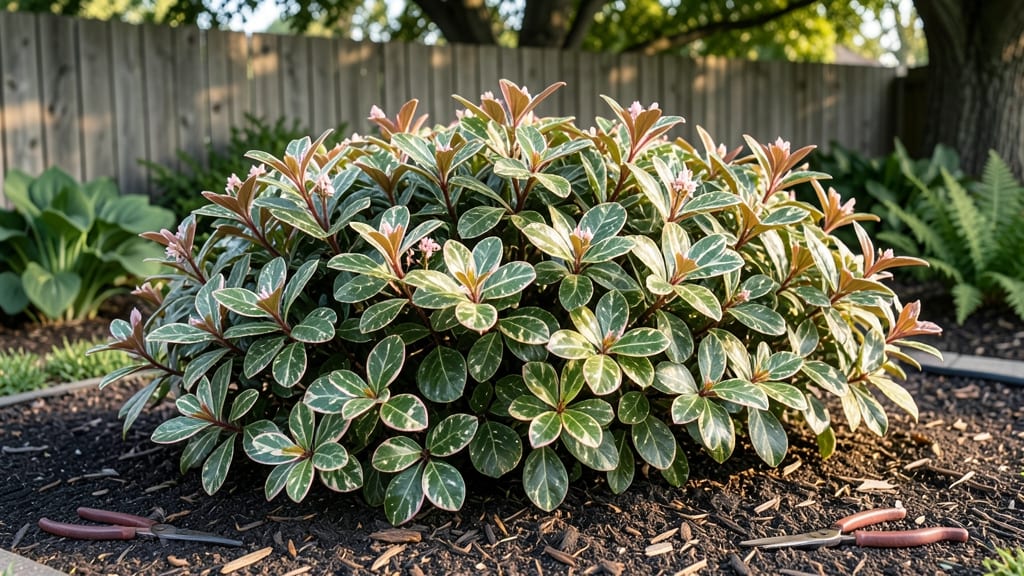
For euonymus to thrive in shade, plant cold-hardy, low-light varieties like Euonymus fortunei or Euonymus alatus, which need well-draining soil, regular watering, and shelter from strong winds while avoiding soggy roots.
Shade-loving euonymus varieties adapt by developing thicker leaves and deeper root systems to capture limited light efficiently. 🌿 Unlike sun-loving shrubs, these plants grow slower but produce denser foliage when given consistent moisture and protection from drying winds.
I've found that Euonymus fortunei handles deep shade best, while Euonymus alatus tolerates partial shade with occasional sun exposure. The key is mimicking their natural understory habitat—think dappled light under tall trees rather than dark corners.
Your soil mix matters more than you might think. Amend heavy clay with compost to improve drainage, and top with 2-3 inches of mulch to retain moisture. In winter, add a layer of straw or pine needles to shield roots from freezing temperatures.
Prune lightly in late winter to shape growth before new shoots emerge—this prevents overcrowding that can stress shade-adapted plants.
💡 In This Article
- How Light Levels Affect Euonymus Growth in Shaded Areas
- Shade-Specific Care Guide for Euonymus Plants
How light levels affect euonymus growth in shaded areas
Euonymus plants have evolved remarkable physiological adaptations to thrive in low-light conditions. Their leaves contain higher concentrations of chlorophyll b (up to 30% more than sun-loving varieties), which helps capture the blue-green wavelengths (450-500nm) that dominate shaded environments.
This adaptation allows them to photosynthesize efficiently even when receiving only 20-30% of full sunlight—similar to the light conditions found under dense tree canopies. The leaves themselves develop a thicker, waxier cuticle that reduces water loss while still allowing sufficient gas exchange for respiration.
The root systems of shade-tolerant euonymus varieties grow more extensively horizontally rather than vertically, creating a wider network to absorb moisture and nutrients from larger soil volumes.
This adaptation compensates for their reduced photosynthetic capacity by maximizing water and nutrient uptake. 🌱 In my experience, Euonymus fortunei develops roots that spread 1-2 feet wider than its canopy width, while Euonymus alatus roots extend slightly deeper to access moisture in drier subsoil layers.
The trade-off is slower growth—these varieties typically grow 6-12 inches per year compared to sun-loving euonymus that can grow 18-24 inches annually.
Assessing shade intensity is crucial for success. Use this simple light measurement guide: Dappled shade (filtering sun through leaves) provides 30-50% sunlight—ideal for euonymus, while deep shade (under evergreens) offers less than 20% sunlight and may require more frequent watering.
Place a white piece of paper in your planting spot at midday—if you can barely see your shadow, it's likely deep shade. For partial shade areas (morning sun with afternoon shade), consider Euonymus alatus which handles brief sun exposure better than Euonymus fortunei.
What most gardeners overlook is how light quality changes with shade depth. Shaded areas receive more far-red light (700-750nm), which triggers shade-avoidance responses in many plants but euonymus has adapted to ignore this signal.
This is why they don't stretch unnaturally like many shade-intolerant species. The key is maintaining consistent moisture—shade reduces evaporation but also slows photosynthesis, so plants need steady water to maintain cellular turgor pressure.
Consider these light spectrum comparisons for euonymus growth:
- Full sun: 100% sunlight (400-700nm spectrum), ideal for sun-loving varieties but causes leaf scorch in shade types
- Partial shade: 30-50% sunlight, best for Euonymus alatus with filtered morning light
- Deep shade: <20% sunlight, requires Euonymus fortunei with supplemental moisture
The most critical period is early spring when new growth emerges. Young leaves are particularly sensitive to sudden light changes—if you move a potted euonymus from deep shade to partial shade too quickly, you'll see leaf bleaching within 7-10 days as the chlorophyll breaks down.
Gradual acclimation over 2-3 weeks prevents this stress response. 🌿