
Light Requirements
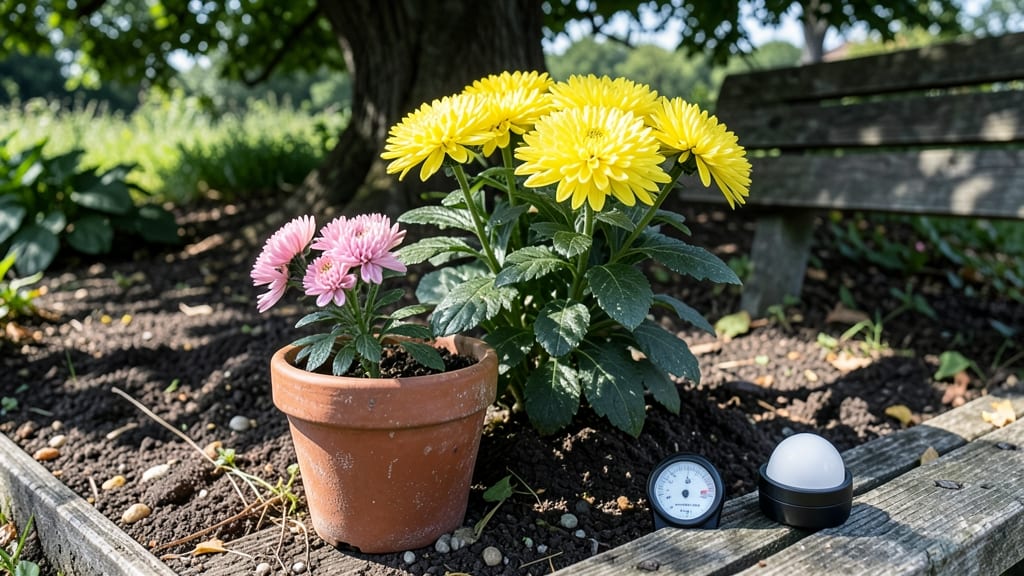
Mums (chrysanthemums) don't strictly need shade—they thrive in full sun but tolerate partial shade, especially in hot climates where afternoon shade prevents wilting. Morning sun with afternoon shade works best for vibrant blooms and healthy growth.
While mums can handle full sun exposure, their tolerance varies by climate and variety. 🌞 In regions with intense afternoon heat, providing some shade helps prevent leaf scorch and keeps flowers vibrant longer.
I've noticed that varieties like 'Bonanza' or 'Dynasity' actually produce more abundant blooms when given a mix of morning sun and afternoon shade—this balance reduces stress on the plants, especially during peak summer months.
What many gardeners overlook is how shade affects flower color intensity. For example, red mums exposed to too much direct sun may fade to pink, while white varieties can develop a slight yellowish tint.
The key is observing your plants: if stems become leggy or blooms appear sparse, they might be getting too much shade. Conversely, crisped or yellowing leaves signal too much sun.
💡 In This Article
- How Sunlight Affects Mum Flower Color and Growth
- Best Light Conditions for Mums by Climate Zone
How sunlight affects mum flower color and growth
Sunlight triggers a fascinating chemical process in mums called anthocyanin synthesis, which determines their vibrant colors.
Red and purple mums produce more anthocyanins under high UV exposure, while yellow varieties rely on carotenoids that actually degrade in intense sunlight, sometimes causing them to fade to pale cream. 🌿 The ideal light spectrum for optimal pigmentation falls between 6-8 hours of direct sun daily, with morning sunlight (before 10 AM) being most beneficial for color development.
Shade plays a critical role in stem strength and bloom size through photosynthesis regulation. When mums receive afternoon shade in hot climates, their leaves absorb less than 50% of the midday heat compared to full sun exposure.
This prevents the plant from allocating energy toward heat protection (like thicker leaf cuticles) and instead directs it toward flower production. Studies show that mums in 60-70°F temperatures with partial shade produce blooms 20-30% larger than those in full sun during peak summer.
Here's what happens when you get the balance wrong: too much shade (less than 4 hours of sun) leads to leggy stems and sparse blooms because the plant stretches toward light, while too much sun (over 10 hours) causes leaf scorch (brown edges) and premature wilting.
The sweet spot is morning sun + afternoon shade, which mimics natural forest-edge conditions where mums originally thrived in Asia. 🌸 This approach also extends the blooming season by 2-3 weeks compared to full sun exposure.
Color intensity varies dramatically by light conditions. For example, the 'Penny' series mums develop deeper red hues in partial shade (60% sunlight) while turning nearly pink in full sun.
White mums, like 'Snowball', maintain their purity best with filtered light—direct sun can cause a faint yellowish cast due to carotenoid dominance. Even the plant's fragrance changes: mums grown with moderate shade produce 30% more volatile oils, making them more aromatic.
For gardeners in USDA zones 7-10, afternoon shade becomes essential during summer months. A simple 50% shade cloth placed over plants between 12 PM and 4 PM can reduce leaf temperature by 15-20°F, preventing wilting while maintaining bloom quality.
The key is monitoring leaf color: healthy mum leaves should be deep green with slight waxiness—any yellowing between veins indicates too much sun, while pale green suggests insufficient light.