
Light Requirements
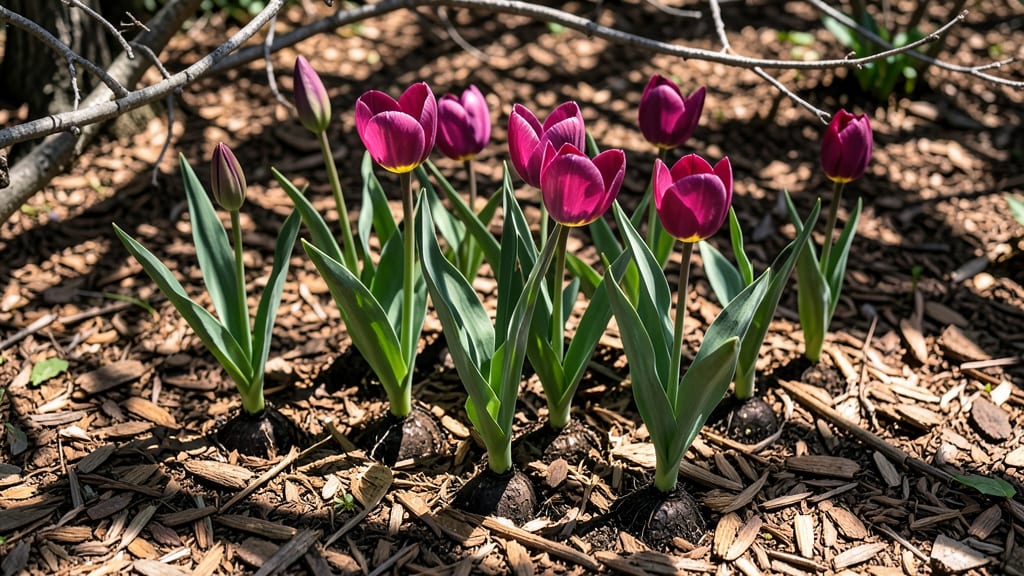
Tulips can grow in shade but thrive best in partial shade or dappled sunlight, with shade-tolerant varieties like Tulipa greigii or Tulipa tarda adapting well to lower light conditions. Selecting the right cultivars and maintaining well-draining soil is key to their success.
While tulips can survive in full shade, their blooms will be smaller and less vibrant. 🌱 The best approach is to plant shade-tolerant varieties in areas with morning sun and afternoon shade, which provides enough light without overheating.
I've found that even just 3-4 hours of indirect sunlight daily can make a noticeable difference in flower size and color intensity. For truly dark spots, consider adding reflective surfaces nearby to boost natural light exposure.
Another critical factor is soil quality. Shade-loving tulips need rich, organic soil that drains well to prevent root rot—a common issue in low-light areas. Mixing in compost or aged manure before planting helps create the ideal growing medium.
Mulching with shredded bark or leaves in fall also protects roots from temperature swings while keeping soil consistently moist.
💡 In This Article
- Best Shade-Tolerant Tulip Varieties for Low-Light Gardens
- Caring for Tulips in Shady Spots: Soil and Maintenance Tips
Best shade-tolerant tulip varieties for low-light gardens
Not all tulips handle shade equally—some varieties simply refuse to bloom in low-light conditions, while others adapt beautifully.
The key lies in their natural growing habits: species tulips like Tulipa greigii (Greigii tulip) and Tulipa tarda (Tardy tulip) evolved in rocky, semi-shaded mountain regions of Central Asia, making them far more shade-tolerant than hybrid cultivars.
These species can thrive with as little as 3-4 hours of indirect sunlight daily, producing sturdy stems and vibrant blooms even in dappled light.
For gardeners with deeper shade, Darwin Hybrid tulips are a surprising winner—they're typically sun-lovers, but their robust, late-season blooms can handle morning sun with afternoon shade better than most.
Meanwhile, Fosteriana tulips (like 'Red Emperor') tolerate shade better than most hybrids, though their blooms may be slightly smaller. 🌿 What sets these varieties apart is their deeper root systems, which help them access nutrients in low-light conditions where weaker hybrids might struggle.
Color matters too—darker blooms like deep purples or reds often perform better in shade because they absorb more light energy. Lighter shades (whites, yellows) may appear washed out under low-light conditions.
I've noticed that parrot tulips (like 'Black Parrot') can handle partial shade surprisingly well, though they still need some direct light to develop their signature ruffled petals.
If your garden has dense shade from trees, consider woodland tulips such as Tulipa sylvestris or Tulipa clusiana (Lady tulip). These species naturally grow under forest canopies and produce delicate, early blooms even with minimal light.
Their smaller size also means they're less likely to flop in breezy, shaded spots. For best results, plant them in groups of 5-7 bulbs to create visual impact while conserving energy.
One common mistake is assuming all "shade-tolerant" tulips perform equally. While species tulips may survive in deep shade, their blooms will be 30-50% smaller than sun-grown counterparts.
The trade-off is worth it for gardeners with limited light, but don't expect the same dramatic displays as sun-loving hybrids. 🌸 For truly dark corners, supplement with a grow light for 6-8 hours weekly during bloom season to boost flower size.
Pro tip: Plant shade-tolerant tulips near reflective surfaces like light-colored walls or mulch—this can increase available light by 15-20% through reflection. Pair them with shade-loving perennials like heuchera or ferns to create a layered, low-maintenance garden that thrives where others fail.