
Light Requirements
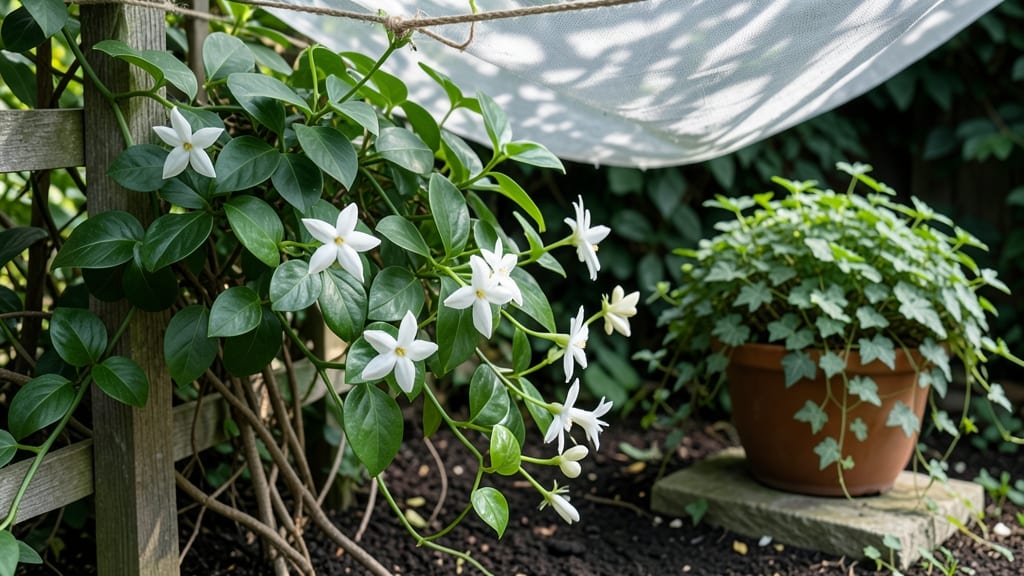
Star jasmine can grow in shade, thriving in partial shade with 4-6 hours of filtered light daily, though it may produce fewer flowers in deep shade. Ensure well-draining soil and consistent moisture for optimal growth.
Star jasmine adapts surprisingly well to shaded environments, but its performance depends heavily on light quality rather than quantity. 🌿 In dappled sunlight or near northern-facing windows, you'll see lush foliage and occasional blooms, while dense shade can turn leaves pale and reduce flowering.
The key is balancing indirect light with proper care—think of it like a compromise between full sun and deep shade, where the plant remains healthy but may prioritize growth over blooms.
For best results in low-light areas, focus on well-draining soil mixed with organic matter and avoid overwatering, which can stress the roots. I've found that pruning lightly after flowering encourages denser growth, and companion plants like ferns or hostas can help shade the roots while keeping the canopy airy.
The trade-off? You might enjoy more foliage than flowers, but the fragrant leaves alone make it worth growing.
💡 In This Article
- Star Jasmine’s Light Requirements Explained
- Maximizing Star Jasmine Growth in Low-Light Spaces
Star jasmine’s light requirements explained
Star jasmine (Trachelospermum jasminoides) thrives in partial shade because its leaves have adapted to capture diffuse light efficiently through a process called chlorophyll adaptation.
In low-light conditions, the plant produces more chlorophyll to maximize photosynthesis, which is why you’ll often see darker, richer green leaves in shaded areas. However, this adaptation comes at a cost: the plant diverts energy toward leaf production rather than flower development, which requires more intense light.
The ideal light spectrum for blooming includes blue and red wavelengths (400-500nm and 600-700nm), which trigger flowering hormones. In deep shade, these wavelengths are filtered out, reducing flower production by up to 70% compared to partial shade.
Think of it like a trade-off: the plant stays alive and grows foliage, but its energy shifts away from producing those fragrant white blooms that give star jasmine its charm. 🌿
Photosynthesis efficiency drops in deep shade because the plant’s stomata (pores) on leaves close more frequently to conserve moisture, reducing CO₂ intake. This slows growth and weakens the plant’s ability to store nutrients for blooming.
In contrast, partial shade allows enough light for moderate photosynthesis while keeping the plant’s metabolic processes balanced—similar to how humans thrive in moderate lighting rather than complete darkness.
Leaf color changes are a dead giveaway: pale or yellowing leaves signal insufficient light, while deep green indicates the plant is adapting but struggling to bloom. The ideal light range for star jasmine is 4-6 hours of filtered sunlight daily, such as through sheer curtains or dappled forest light.
This mimics its natural habitat in understory environments where it competes with taller trees for indirect light.
For those with east-facing windows, morning light provides gentle, warm rays that support growth without overheating the plant. Avoid south-facing windows in hot climates, as direct afternoon sun can scorch leaves even if the plant is shade-tolerant.
The key is consistency—star jasmine responds poorly to erratic light exposure, which can confuse its internal clock and disrupt flowering cycles.
In urban settings, consider artificial grow lights (LED or fluorescent) for 12-14 hours daily if natural light is scarce. These lights can supplement the missing blue and red wavelengths, encouraging blooms even in basements or shaded patios.
Just ensure the light source is 12-18 inches away to avoid leaf burn from heat.