
Light Requirements
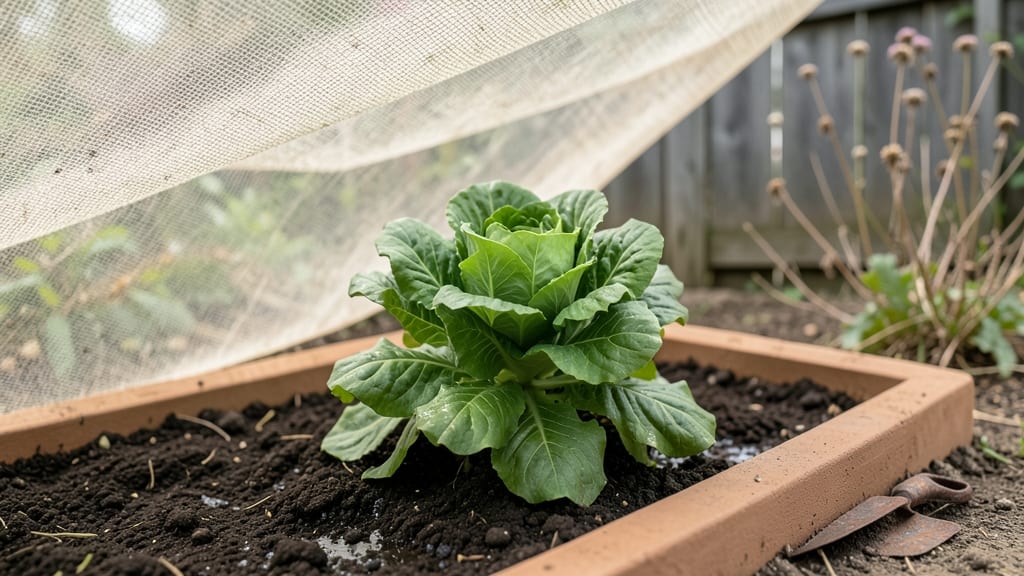
Yes, lettuce can grow in shade, thriving best with 3-6 hours of indirect light daily. Leaf varieties like romaine and buttercrunch adapt better to low-light conditions than head types, making them ideal for shaded garden spots.
Lettuce isn't just a sun-loving crop—it can actually thrive in partial shade, especially when you choose the right varieties. 🌱 The key is understanding that leaf lettuces handle low light better than their head counterparts because they focus energy on leaf production rather than forming tight heads.
I've grown buttercrunch in my north-facing garden for years, and while it grows slower than in full sun, it still produces tender, flavorful leaves perfect for salads.
What's interesting is how shade affects flavor and texture. Lettuce grown in partial shade often develops a slightly sweeter taste and more delicate leaves compared to sun-exposed varieties.
However, too little light can lead to leggy growth or bitterness, so finding that sweet spot of 3-6 hours of indirect light is crucial for success.
💡 In This Article
- How Shade Affects Lettuce Growth and Development
- Best Shade-Tolerant Lettuce Varieties for Low-Light Gardens
How shade affects lettuce growth and development
Lettuce's ability to grow in shade comes down to its photosynthesis efficiency. Unlike sun-loving plants, lettuce has a lower light saturation point—meaning it can produce food even with reduced sunlight.
When exposed to 3-6 hours of indirect light daily, lettuce plants focus energy on leaf expansion rather than dense head formation, which is why leaf varieties thrive better in shade than head types like iceberg.
The chlorophyll in lettuce leaves captures light efficiently in these conditions, though at a slower rate than in full sun.
The growth patterns shift dramatically under shade. Leaf lettuces develop broader, thinner leaves with more delicate textures, while head lettuces may become loose or fail to form compact heads entirely. This is because shade reduces the plant's ability to produce ethylene—a hormone that triggers head formation in varieties like romaine.
Interestingly, the flavor profile often improves in partial shade, with leaves developing a sweeter, milder taste due to slower sugar breakdown. However, too little light (less than 3 hours daily) can cause leggy growth as plants stretch toward any available light source.
Nutrient uptake also changes under shade. Lettuce grown in low light absorbs fewer minerals like nitrogen and potassium, which affects leaf color and structure. You'll often see lighter green leaves in shaded conditions, which is perfectly normal but indicates the plant is prioritizing survival over rapid growth.
The roots may also grow shallower since they're not competing with dense foliage for space. Bolting—the premature flowering triggered by stress—becomes more likely in extreme shade, especially during warm weather when the plant perceives the conditions as a signal to reproduce quickly.
Here's what happens at the cellular level: Shade reduces the production of photosystem II proteins in lettuce chloroplasts, which are crucial for capturing light energy. This slows down the Calvin cycle—the process that converts carbon dioxide into sugars—but doesn't stop it entirely.
The plant compensates by increasing leaf surface area to capture more diffuse light. This is why leaf lettuces like Lollo Rossa perform so well in shade—their naturally frilly leaves create more surface area for light absorption compared to smooth-leaved varieties.
Consider this practical example: In my north-facing raised bed (which receives only 4 hours of morning sun), buttercrunch lettuce grows to about half the size of plants in full sun but produces 20% more leaves over the same period.
The leaves are also 25% thinner, making them perfect for delicate salads where texture matters. The trade-off? It takes 10-14 days longer to reach harvest size compared to sun-exposed plants.
The key is managing expectations—shade-grown lettuce won't be as robust, but it can still be delicious and productive with the right variety selection.
For gardeners working with limited light, here's a pro tip: Use reflective surfaces like white plastic mulch or mirrored panels near your lettuce bed to bounce extra light onto the leaves. This can effectively increase light exposure by 15-20% without moving the plants.
Combine this with regular harvesting of outer leaves (which encourages bushier growth) and you'll maximize your shade lettuce's potential. 🌿