
Light Requirements
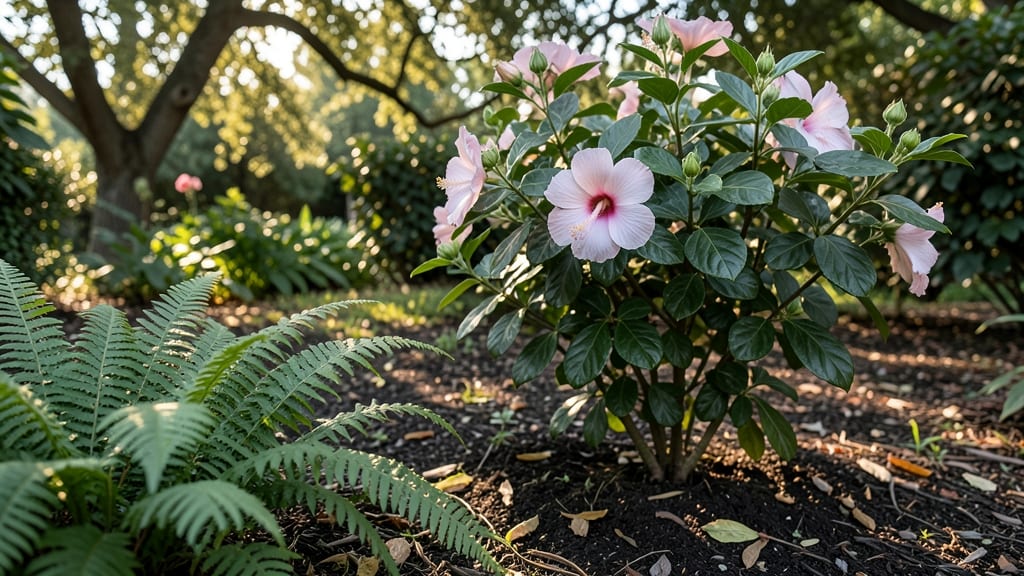
Hibiscus grows in shade but performs best with partial shade—6 hours of morning sun or filtered light daily. Too little light slows growth and reduces flowering, while direct sunlight enhances vibrant blooms. Opt for shade-tolerant types like Hibiscus syriacus or Hibiscus moscheutos for optimal results.
Hibiscus plants can survive in shaded areas, but their growth and flowering depend heavily on light exposure. 🌿 Unlike sun-loving varieties, shade-tolerant hibiscus prioritize leaf health over abundant blooms, often producing smaller flowers. The key is morning sunlight—it provides enough energy for photosynthesis without scorching leaves.
For example, Hibiscus syriacus thrives in dappled shade, while Hibiscus moscheutos adapts better to deeper shade but may need occasional sun to reward you with its signature trumpet-shaped blooms.
If you're working with limited light, consider pruning nearby trees to allow filtered sunlight to reach your hibiscus. This small adjustment can make a big difference in plant vigor and bloom production. Just remember: the more shade your hibiscus endures, the less it will flower—so balance is everything. 🌸
💡 In This Article
- How Light Affects Hibiscus Growth and Flowering
- Best Shade-Tolerant Hibiscus Varieties for Low-Light Gardens
How light affects hibiscus growth and flowering
Hibiscus plants rely on photosynthesis to convert light into energy, but their chlorophyll responds differently to shade versus sun. In full sun, hibiscus leaves produce more chlorophyll, which boosts energy for rapid growth and abundant flowering.
However, direct afternoon sun can stress leaves by causing heat damage or sunburn, especially in tropical varieties.
Morning sunlight—4-6 hours—provides the ideal balance: enough energy for photosynthesis without the risk of leaf scorch. 🌞 This is why hibiscus thrives in partial shade, where morning light fuels growth while afternoon shade prevents stress.
The trade-off between shade and blooms comes down to energy allocation. In deep shade, hibiscus diverts resources to leaf production rather than flowers, often resulting in lush foliage but minimal blooms.
Studies show that hibiscus in less than 4 hours of light daily may produce only 20-30% of the flowers compared to those in partial shade.
For example, a Hibiscus rosa-sinensis in full sun might yield 50-100 blooms per season, while the same plant in deep shade could produce fewer than 10 blooms. The difference lies in how shade reduces the plant's ability to synthesize carbohydrates, limiting energy for flower development.
Leaf health is another critical factor. Shade-loving hibiscus varieties develop thicker, darker leaves to maximize light absorption.
In contrast, sun-exposed hibiscus leaves are thinner and lighter green, prioritizing rapid photosynthesis over structural resilience. 🌿 This adaptation explains why hibiscus in deep shade often appears "leggy" or sparse—stretched stems seek more light, while leaves grow larger but weaker. The solution?
Supplement natural light with reflective surfaces (like white walls or mirrors) to bounce indirect light onto the plant, effectively increasing its light exposure by 15-20%.
Temperature also interacts with light exposure. Hibiscus in shaded areas may struggle to maintain optimal 65-85°F leaf temperatures, slowing metabolic processes. Cooler shade can delay flowering by 2-4 weeks compared to sun-exposed plants.
For instance, Hibiscus syriacus (Rose of Sharon) in full sun blooms from midsummer to frost, while the same plant in deep shade may bloom sporadically or not at all. This is why gardeners in cooler climates often place hibiscus near south-facing walls to capture reflected heat and light simultaneously.
Consider the soil's role too. Shaded hibiscus often require richer, moisture-retentive soil to compensate for reduced photosynthesis. Amending soil with compost or organic matter improves nutrient uptake, helping the plant sustain growth in low-light conditions.
For example, Hibiscus moscheutos (Swamp Hibiscus) thrives in 50-70% shade when planted in wet, nutrient-dense soil, producing dramatic blooms despite limited light. The key is matching light conditions to soil fertility—what one lacks, the other can compensate for. 🌱
Finally, artificial lighting can bridge gaps in natural light. Grow lights emitting 5,000-6,500K (cool white spectrum) placed 12-18 inches above hibiscus can supplement shade by providing 8-12 hours of light daily. This mimics partial shade conditions and encourages blooming in indoor or heavily shaded outdoor settings.
Just avoid over-lighting, as hibiscus is sensitive to excessive artificial light, which can bleach leaves or stunt growth.