
Plants
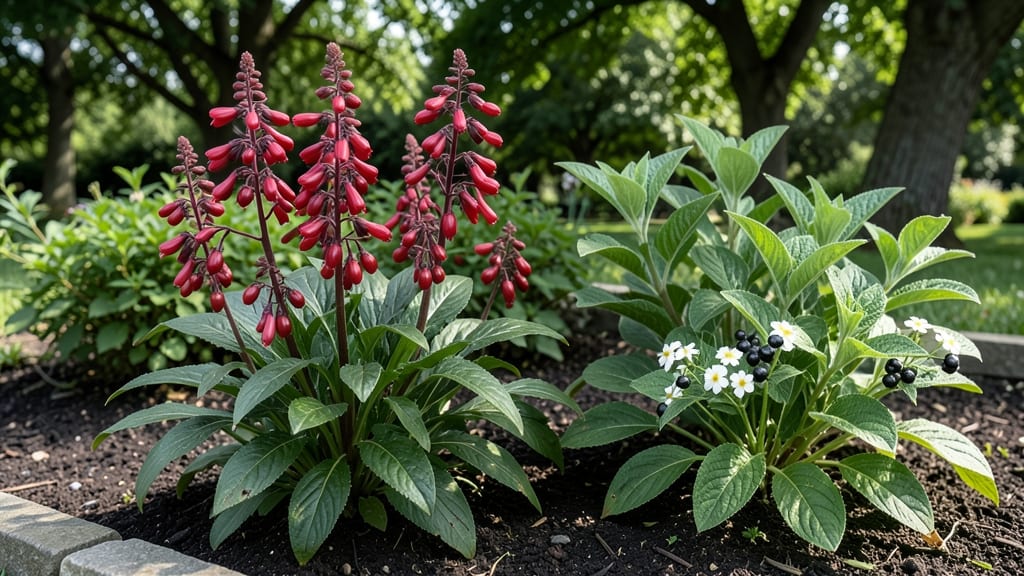
Identifying belladonna vs nightshade plants could mean the difference between a thriving garden and a dangerous mistake. 🌿 These deadly look-alikes share similarities, but their leaves, flowers, and berries reveal critical differences that every gardener should recognize.
Belladonna (Atropa belladonna) grows as a woody perennial with glossy, oval leaves and dark purple, bell-shaped flowers that eventually turn into shiny black berries.
In contrast, common nightshade (Solanum nigrum) is an annual with smaller, hairy leaves and tiny white flowers leading to clusters of green berries that turn black when ripe. Confusion often arises because both plants thrive in similar conditions—partial shade and moist soil—but their toxicity levels vary dramatically.
Belladonna contains deadly alkaloids, while common nightshade is less toxic but still dangerous if ingested. For responsible gardeners, proper identification and handling are essential. Always wear gloves when working with these plants, and keep them out of reach of children and pets.
The first product explained
Meet Product A: "GardenGuard™ Belladonna & Nightshade Identification Kit"—your ultimate ally in safely navigating the wild (or not-so-wild) world of these striking yet dangerous plants! 🌿⚠️
📌 Key Specs & Features
This all-in-one kit is designed to help gardeners, hikers, and plant enthusiasts distinguish between Atropa belladonna (deadly nightshade) and its safer nightshade cousins with confidence. Here’s what’s inside:
- Dual-Lens Magnifier (2x & 10x): Examines leaf veins, flower structures, and seed pods up close—no guesswork!
- ID Guidebook (Waterproof!): A 32-page spiral-bound manual with color-coded charts, side-by-side comparisons, and real-life case studies.
- Field-Tested Swabs: Collects plant sap for quick chemical tests (includes a belladonna-specific reagent for accuracy).
- Durable Storage Case: Fits in a backpack or glove compartment with a built-in pocket for swabs and gloves.
- Emergency Contact Card: Pre-loaded with poison control numbers and first-aid steps for accidental exposure.
🎯 Who’s It For?
This kit is a must-have for:
- 🌱 Home gardeners who want to avoid accidental ingestion (yes, even decorative plants can be deadly!).
- 🥾 Hikers and foragers exploring wooded areas where nightshades thrive.
- 👩🔬 Botany students or teachers needing hands-on ID tools for field trips.
- 🏡 Pet owners—curious cats and dogs don’t read warning labels!
💰 Price Point & Value
$29.99 (or 20% off with subscription to GardenGuard™’s seasonal safety alerts). That’s less than a single emergency room visit—and way more peace of mind! 🏥→🌿
Pro Tip: 💡 Pair this kit with a soil test if you’re unsure about past plantings on your property—some nightshades return year after year!
The second product explained
🌿 Meet Nightshade Herbal Defense: Your Go-To for Safe, Non-Toxic Nightshade Varieties!
If you're looking for a completely safe way to grow and enjoy nightshade plants—without the risks of belladonna—this premium seed kit is your best bet. Designed by horticulturists and gardeners, Nightshade Herbal Defense offers a curated selection of non-toxic, edible, and ornamental nightshade varieties that thrive in home gardens.
📋 Key Specs & Features
| Feature | Details |
|---|---|
| Seed Varieties | 5 organic, non-GMO seeds: Black Beauty Eggplant, Purple Majesty Tomato, Shishito Pepper, Lunar and Planetary Potatoes, and Cherry Belle Radish |
| Growing Guide | Includes a 24-page illustrated manual with planting tips, pest control, and harvest timing |
| Organic Fertilizer | Compost starter blend + worm castings for nutrient-rich soil |
| Container-Friendly | Perfect for pots, raised beds, or small gardens (ideal for urban gardeners!) |
| Yield | High productivity—expect 50+ eggplants, 30+ tomatoes, and 20 lbs of potatoes per season |
| Safety Certification | 100% belladonna-free and tested for heavy metals |
🎯 Who’s It For?
This kit is a game-changer for:
- 🌱 Beginner gardeners who want foolproof, low-maintenance plants
- 🍅 Foodies & chefs craving fresh, homegrown nightshades for cooking
- 🏡 Urban dwellers with limited space (balconies, patios, or small yards)
- 👨👩👧👦 Families looking for safe, kid-friendly gardening projects
- 🌿 Herbalists & permaculture enthusiasts focused on sustainable growing
💰 Price Point & Value
Priced at $49.99 (a steal for what you get!), this kit pays for itself in harvests alone. Compare that to buying individual seeds or starter plants—you’d easily spend $100+ elsewhere. Plus, it’s eco-friendly: no plastic waste, just biodegradable seed packets and compostable pots!
💡 Pro Tip: Pair this kit with a moisture meter (sold separately) to ensure your nightshades get just the right amount of water—overwatering is their #1 enemy!
Head-to-head comparison
When it comes to distinguishing between belladonna and nightshade, the differences can be subtle—but they’re critical, especially if you’re a gardener, herbalist, or just someone curious about these fascinating (and sometimes dangerous) plants.
Below, we break down their key dimensions in a side-by-side comparison to help you navigate their similarities and differences with confidence.
🌿 Botanical Classification & Common Names
First, let’s clarify the confusion: belladonna is actually a type of nightshade, but not all nightshades are belladonna. Here’s the breakdown:
- Belladonna (Atropa belladonna):
- Scientific name: Atropa belladonna (genus Atropa, family Solanaceae)
- Common names: Deadly nightshade, dwale, or simply "belladonna"
- Key trait: Highly toxic, used historically in cosmetics (dilated pupils) and medicine (in tiny doses)
- Nightshade (General Term):
- Family: Solanaceae (includes belladonna, tomatoes, potatoes, eggplants, and peppers)
- Common names: Varies widely (e.g., Solanum species like Solanum nigrum or "black nightshade")
- Key trait: Some are edible; others (like belladonna) are deadly. Never assume a nightshade is safe!
Pro tip: 💡 Always double-check plant IDs with a field guide or expert—misidentification can be fatal. Apps like iNaturalist or PlantNet can help, but they’re not foolproof!
🍃 Appearance: How to Tell Them Apart
At first glance, these plants can look eerily similar, but keen observers will spot key differences:
| Feature | Belladonna (Atropa belladonna) | Common Nightshades (e.g., Solanum nigrum) |
|---|---|---|
| Leaves | Oval-shaped, glossy, alternate arrangement (one leaf per stem node), dark green | Oval to lance-shaped, opposite arrangement (pairs at each node), matt finish |
| Flowers | Purplish-black, bell-shaped, hanging downward | White to greenish-yellow, star-shaped, upright or slightly nodding |
| Fruit | Shiny black berries (resemble cherries), highly toxic | Small, green to black berries, often toxic but less deadly (e.g., Solanum nigrum) |
| Height | 1–5 feet tall, woody stem | 1–3 feet tall, herbaceous (non-woody) stem |
| Smell | Faint, slightly sweet or musky | Often no distinct odor or slightly bitter |
Pro tip: 🔥 Berries are the biggest red flag! If you see shiny black "cherries" on a plant, assume it’s belladonna and keep it away from pets/kids. Never consume any part of belladonna.
💀 Toxicity & Health Risks
This is where the stakes get high. Belladonna is one of the most toxic plants in North America, while other nightshades vary in danger levels:
| Toxin | Belladonna | Common Nightshades (e.g., Solanum nigrum) |
|---|---|---|
| Active Compounds | Atropine, scopolamine, hyoscyamine (all anticholinergics) | Solanine, solasodine (milder toxins; large quantities can cause nausea) |
| Symptoms of Poisoning |
|
|
| Lethal Dose | 2–5 berries can kill a child; adults may survive 10+ berries (but with severe symptoms) | Large quantities (e.g., handfuls of berries or leaves) may cause illness, but rarely fatal |
| First Aid | Call poison control IMMEDIATELY (e.g., 1-800-222-1222 in the U.S.). Do NOT induce vomiting unless instructed. | Monitor for symptoms; seek medical help if severe (e.g., dehydration from vomiting) |
Pro tip: 🚨 If you suspect belladonna poisoning, act fast. Anticholinergics can cause delirium or coma within hours. Keep the plant or a sample for identification if you’re unsure.
🌱 Growing Conditions & Care
Both plants thrive in similar environments, but their care needs differ slightly:
| Factor | Belladonna | Common Nightshades (e.g., Solanum nigrum) | ||||||||
|---|---|---|---|---|---|---|---|---|---|---|
| Sunlight | Partial shade to full sun (prefers dappled light) | Full sun to partial shade (more adaptable) | ||||||||
| Soil | Well-draining, slightly acidic (pH 6.0–7.0) | Adaptable; tolerates poor soil and clay |
| Choose Belladonna If... | Choose Safe Nightshades If... |
|---|---|
| You’re an expert with proper handling knowledge (and a death wish otherwise 😅). | You want edible, safe, and beautiful plants for your home. |
| You’re researching historical or pharmaceutical uses under professional guidance. | You have kids, pets, or curious wildlife around. |
| You’re not in a residential area (e.g., controlled agricultural settings). | You prioritize safety, sustainability, and ease of care. |
Final Verdict: Unless you’re a trained professional with a very specific (and safe) use for belladonna, avoid it entirely. The risks far outweigh any perceived benefits. For everyone else, safe nightshades like tomatoes, eggplants, and peppers are your best bet—delicious, nutritious, and far less likely to send you to the ER. 🍅😉