
Size
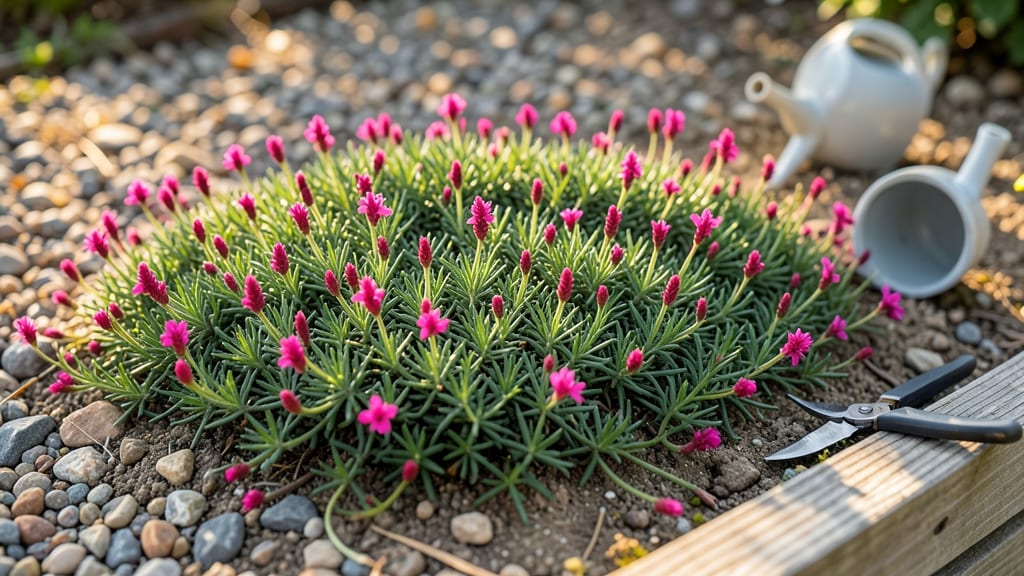
Red creeping thyme can grow in shade, but it performs best with 4-6 hours of sunlight daily. While it survives in low-light conditions, its signature red hue dulls and growth becomes sparse without adequate light.
This hardy ground cover adapts surprisingly well to shady spots, though its survival mode kicks in—producing less vibrant foliage and stretching toward any available light. 🌿 The key is maintaining consistent moisture, as shade reduces photosynthesis efficiency.
I've seen it thrive in dappled woodland settings where other herbs would struggle, proving its versatility for gardeners with limited sun exposure.
For optimal results, aim for partial shade scenarios like morning sun with afternoon shade. This balance preserves the plant's characteristic color while preventing the leggy growth often seen in deep shade conditions.
The trade-off is worth it for gardeners who want to incorporate this low-maintenance plant into shadier corners of their landscape.
💡 In This Article
- Light Requirements for Optimal Red Creeping Thyme Growth
- Shade-Tolerant Planting Tips for Red Creeping Thyme
Light requirements for optimal red creeping thyme growth
The vibrant red color of creeping thyme comes from anthocyanin pigments, which are light-sensitive compounds that actually increase in production when exposed to moderate sunlight. In full sun (6+ hours), these pigments develop fully, creating that signature deep crimson hue while maintaining compact, dense growth.
Without sufficient light, the plant shifts energy toward chlorophyll production instead, resulting in greenish stems and less vibrant foliage. 🔥 This color shift happens because shade reduces the plant's ability to perform photosynthesis efficiently, forcing it into a survival mode where it prioritizes basic growth over pigment production.
Red creeping thyme's photosynthesis efficiency drops significantly below 4 hours of sunlight daily. Studies show that plants in deep shade (less than 2 hours of light) can experience up to a 40% reduction in photosynthetic activity, leading to slower growth and weaker stems.
The plant's natural adaptation in low light is to elongate stems (a condition called "legginess") in search of light, which makes it look sparse and less attractive. Interestingly, the roots remain surprisingly resilient, allowing the plant to persist even when the foliage looks lackluster.
Here's what's happening at the cellular level: Chloroplasts in shaded leaves become less efficient at capturing light, while the plant's energy reserves are diverted toward maintaining basic metabolic functions rather than pigment production.
This explains why thyme grown in deep shade often develops a more muted, almost purple-green color rather than the rich red we associate with the variety.
The good news is that even in shade, the plant's essential oils (which give thyme its aromatic qualities) continue to develop, though at a reduced rate. 💫
For gardeners working with limited light, the key is creating a "partial shade" environment where the plant receives dappled sunlight throughout the day.
This can be achieved by planting near trees with high canopies that allow filtered light to reach the ground, or by positioning thyme where it gets morning sun and afternoon shade.
The ideal light spectrum for anthocyanin production falls between 450-550 nanometers (blue-green light), which is why even brief periods of direct sunlight can make a noticeable difference in color intensity.
Seasonal light variations also play a role. In winter, when daylight hours are shorter, red creeping thyme naturally grows more slowly and may appear less vibrant. This is why many gardeners report their thyme looking "revived" in spring when longer daylight hours return.
The plant's ability to adapt to these changing light conditions is one reason it's considered so hardy—though it will always perform best when given at least some direct sunlight. ✨
Consider this comparison: In full sun, a healthy thyme plant might spread 12-18 inches per year with vibrant red foliage, while in deep shade, the same plant might only spread 6-10 inches with greenish stems.
The difference isn't just aesthetic—shaded plants are also more susceptible to fungal issues due to increased moisture retention in their less dense growth structure. This makes proper light exposure crucial for both the plant's health and its ornamental value.