
Light Requirements
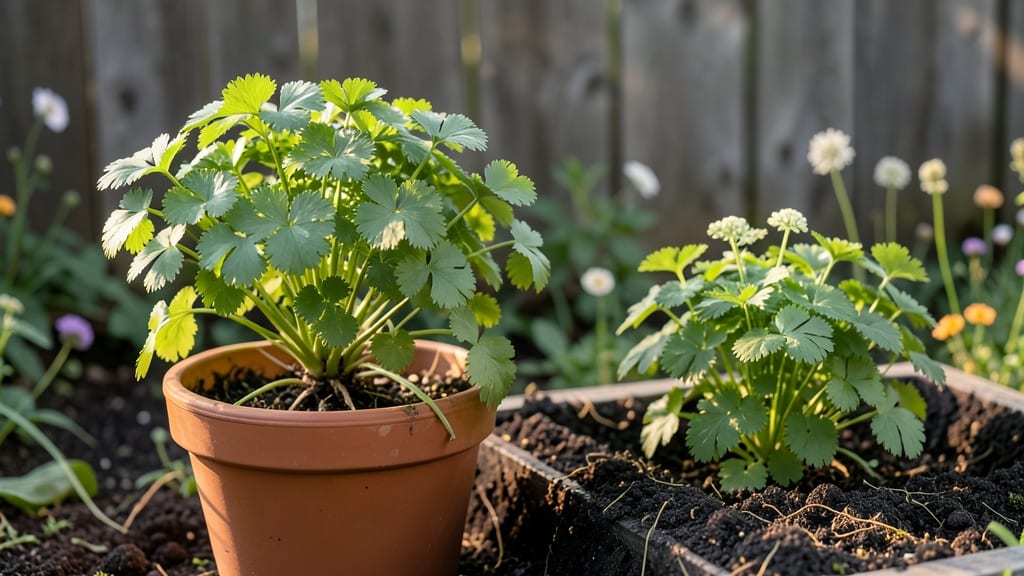
Cilantro thrives best in partial shade, especially in hot climates where full sun turns its leaves bitter and causes rapid bolting. 🌿 I’ve grown cilantro in everything from deep shade to full sun, and the difference in flavor and growth is night and day—literally.
In cooler zones, it handles more sun, but even then, afternoon shade keeps it lush and productive.
The secret lies in temperature and intensity: cilantro bolts (goes to seed) when stressed by heat or long daylight. In zones 8-10, morning sun with afternoon shade is ideal, while zones 4-7 can tolerate more sun as long as soil stays consistently moist.
Leggy growth? That’s usually a sign of too much light or not enough water.
For containers, place cilantro where it gets 3-6 hours of sun—morning light works best. If your garden is shady, no problem: cilantro grows fine with just filtered light, though flavor may be milder.
The key is consistency: sudden heat spikes or dry soil will send it bolting faster than you can say "salsa."
Troubleshooting tip: If your cilantro tastes soapy or bolts early, move it to a cooler, shadier spot immediately. And here’s a pro move—successive planting in 2-week intervals ensures fresh cilantro all season, no matter your climate. Worth the effort for that bright, citrusy flavor!
📚 In This Guide
- What you need
- Instructions
- Tips and common mistakes
- Wrapping up and next steps
What you need
- ● Cilantro seeds – 1 packet (approx. 1,000 seeds) (organic or heirloom varieties like ‘Santo’ or ‘Calypso’ work best!).
- ● Potting soil or garden soil – 1 bag (1 cubic foot) (well-draining, organic-rich mix for containers or garden beds).
- ● Containers or garden plot – For containers: 3–5 pots (5–6 inches deep) with drainage holes.
- ● For garden beds: 6–12 inches of loose soil (avoid compacted clay).
- ● Watering can or hose with a gentle spray nozzle – To keep soil moist without overwatering.
- ○ Fertilizer (optional but helpful) – Balanced organic fertilizer (5-5-5 or 10-10-10) – 1 tbsp per plant at planting.
- ● Compost or worm castings – ½ cup per pot or square foot for nutrient boost.
- ● Hand trowel – For digging small holes (2x seed depth).
- ● Mulch (straw or shredded leaves) – 1–2 inches to retain moisture and suppress weeds.
- ● Pruning shears – To harvest stems cleanly and encourage bushier growth.
- ● Shade cloth (30–50%) – If growing in hot full sun (to prevent bolting).
- ● pH testing kit – Ideal soil pH for cilantro: 6.2–6.8.
- ● Sunlight assessment – Know your space: 6+ hours of sun = full sun; 2–4 hours = partial shade.
- ● Consistent moisture – Cilantro hates dry soil; check moisture daily in hot weather.
- ● Patience – Seeds germinate in 7–14 days (slower in cooler temps!).
Step-by-step guide to growing cilantro in any light condition
This is how I grow cilantro successfully whether it bakes in full sun or thrives in shade.
🌱 Step 1: Choose Your Planting Location Based on Climate
Cilantro handles both full sun and partial shade, but the approach differs by region. In hot climates like Arizona or Texas, plant cilantro in morning sun with afternoon shade—this prevents bolting (flowering too early). You'll know it's getting too hot when leaves start yellowing at the edges.
In cooler climates like the Pacific Northwest or Northeast, cilantro thrives in full sun (6+ hours daily). Watch for leaf color: deep green means it's happy; pale or yellowing means it needs more light. If growing in containers, move them to a sunnier spot if leaves stretch toward the light.
💧 Step 2: Prepare Soil and Plant Seeds Correctly
Cilantro prefers well-draining soil rich in organic matter. Mix 2 inches of compost into the top 6 inches of soil before planting. The soil should feel like a damp sponge—not soggy, not dry. Press seeds ¼ inch deep, spacing them 12 inches apart in rows 18 inches apart for proper airflow.
Don't cover seeds too deeply—they need light to germinate. After planting, water gently until the soil surface looks evenly moist but not wet. Use a fine mist to avoid displacing seeds. Germination takes 7-14 days, so keep the soil consistently moist during this time.
☀️ Step 3: Manage Light and Water for Optimal Growth
Once seedlings emerge, thin them to 6 inches apart to reduce competition. If growing in full sun, water daily in hot weather to keep soil consistently moist—cilantro wilts easily when thirsty. You'll see wilting leaves by midday if it needs water; they perk up within an hour of a deep drink.
In partial shade, water every other day unless it rains. Check soil moisture by sticking your finger 1 inch deep—if it feels dry, water thoroughly. Avoid overhead watering to prevent fungal diseases like powdery mildew, which appears as white spots on leaves.
✂️ Step 4: Harvest Regularly to Encourage Bushier Growth
Start harvesting cilantro when plants reach 4-6 inches tall. Snip leaves from the outer edges first, leaving the center to regrow. This prevents the plant from bolting (flowering) too quickly. Harvest in the morning when oils are most concentrated for best flavor.
If the plant starts flowering (bolting), cut the entire stem at the base. While the leaves may taste bitter, the seeds (called coriander) can still be harvested for cooking. Bolting happens faster in hot weather or long daylight hours—plant successive crops every 2-3 weeks for a continuous harvest.
🌿 Step 5: Extend the Season with Smart Techniques
To grow cilantro in hot summers, use shade cloth (30-50% coverage) or plant in containers that can be moved to shaded spots. In cool seasons, protect plants from frost by covering them with row fabric or bringing containers indoors overnight.
For a second crop, sow seeds in late summer for a fall harvest. Cilantro grows best in cool weather (60-70°F). If temperatures rise above 80°F, expect bolting within 2-3 weeks. Succession planting ensures you always have fresh cilantro ready for tacos, salads, and salsas.
Tips & tricks for perfect cilantro growth in any light
Mastering cilantro growth in different light conditions takes just a few smart adjustments—here's what I've learned from years of trial and error.
Light Management: In hot climates, morning sun with afternoon shade is non-negotiable. I've seen cilantro bolt within days when exposed to full afternoon sun—those yellowing leaf edges are your first warning sign. For cooler regions, aim for that full 6+ hours of sunlight, but watch for leaves stretching toward light, which means they're hungry for more. Containers give you flexibility to move plants as needed.
Soil Preparation: That 2 inches of compost in the top 6 inches of soil isn't just decoration—it's what makes the difference between thriving cilantro and struggling plants. I test soil moisture by squeezing a handful; it should hold together but not be dripping wet. Overly soggy soil leads to root rot, while bone-dry soil causes wilting. Think "damp sponge" consistency.
Watering Strategy: The daily watering in full sun might seem excessive, but cilantro's shallow roots can't handle thirst. I check midday wilting as my guide—if leaves perk up within an hour of watering, you're doing it right. In partial shade, every-other-day watering works, but always check that 1-inch deep moisture level. The key is consistency, not frequency.
Harvesting Technique: Snipping from the outer edges first preserves the plant's growth center, which is where new leaves emerge. I harvest in the morning because that's when the essential oils are most concentrated—your salsa will thank you. And if bolting happens, don't toss the whole plant! Those seeds are coriander, perfect for spice blends or baking.
Pro Tips for Cilantro Full Sun Or Shade
- Mastering cilantro growth in different light conditions takes just a few smart adjustments—here's what I've learned from years of trial and error.
- Light Management: In hot climates, morning sun with afternoon shade is non-negotiable.
- Soil Preparation: That 2 inches of compost in the top 6 inches of soil isn't just decoration—it's what makes the difference between thriving cilantro and struggling plants.
Frequently asked questions
Got questions about growing cilantro in full sun or shade?
Here are answers to the most common ones—so you can keep your herb thriving without the guesswork!
Can cilantro survive in full sun?
Yes, but with caution! Cilantro prefers partial shade (4–6 hours of sun daily) to prevent bolting (flowering too soon). In hot climates, morning sun + afternoon shade works best. If you must grow it in full sun, keep soil moist and mulch to retain coolness.
How much shade is too much for cilantro?
Cilantro needs at least 4–6 hours of sunlight to grow well. Too little light (e.g., deep shade under trees) leads to leggy, sparse leaves. If your space is shady, opt for a sunny windowsill or grow lights instead.
Why does my cilantro bolt in full sun?
Bolting (shooting up flowers) happens when cilantro gets too much heat or light. To delay it:
- Plant in early spring or fall (avoid peak summer).
- Use shade cloth (30–50%) if temps exceed 75°F (24°C).
- Harvest leaves frequently to encourage bushier growth.
Can I grow cilantro indoors without sunlight?
Yes! Place it near a south-facing window (6+ hours of light) or use a grow light (12–16 hours/day). LED bulbs (cool white or full spectrum) work best. Rotate the pot weekly for even growth.
What’s a good alternative if cilantro hates my climate?
Try these sun-tolerant herbs instead:
- Parsley – Thrives in full sun and cooler weather.
- Dill – Handles more sun but may also bolt.
- Basil – Loves full sun and heat (great for pesto!).
Wrapping up and next steps
Growing cilantro doesn’t have to be a guessing game—whether you opt for full sun or partial shade, the key is understanding your plant’s needs and adapting to your climate. With the right balance of light, water, and soil, you’ll be harvesting fresh, vibrant cilantro in no time! 🌱
Ready to take the next step? Start small—try a few pots or a dedicated garden bed—and experiment with light conditions to see what works best in your space. Soon, you’ll be enjoying homegrown cilantro in your favorite dishes, all thanks to your newfound growing confidence!