
Light Requirements
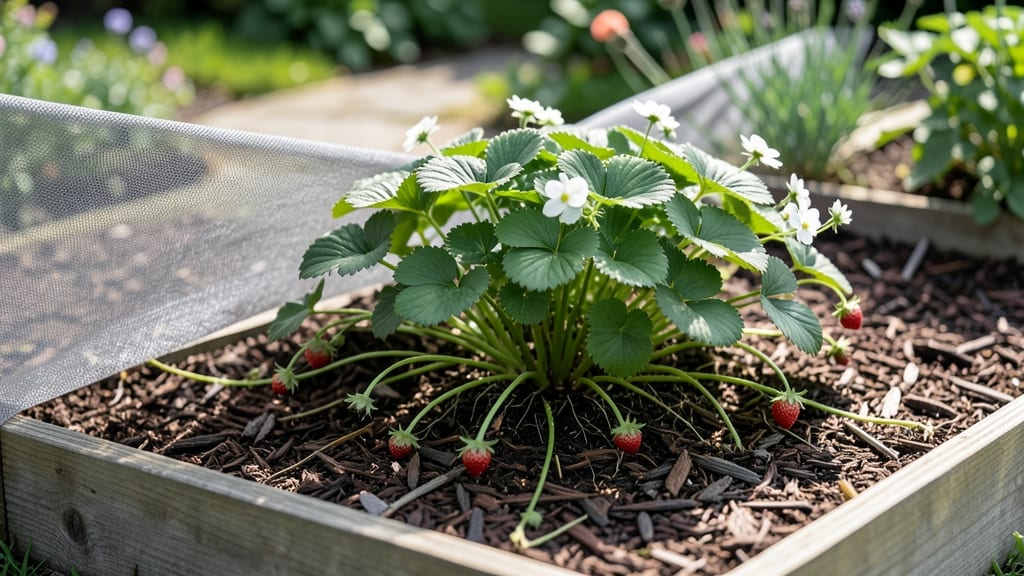
Strawberries can grow in shade but produce smaller yields and fewer fruits, thriving best in partial shade (4-6 hours of sunlight daily). Choose everbearing or June-bearing varieties like 'Ozark Beauty' or 'Albion' for better adaptation to low-light conditions.
While strawberries can survive in shaded areas, their growth and fruit production suffer because they rely heavily on sunlight for photosynthesis. 🌱 The less light they receive, the weaker their vines become, leading to paler berries with less sweetness.
I've noticed that shaded plants often develop smaller leaves and fewer runners, which means fewer opportunities for new plants. For best results, position your strawberry patch where it gets morning sun and afternoon shade to balance growth and flavor.
If your garden is heavily shaded, consider these shade-tolerant varieties: 'Ozark Beauty' (June-bearing) and 'Albion' (everbearing) are top performers. These types also handle cooler temperatures better than traditional varieties. For extra support, use reflective mulch or grow lights to simulate sunlight during the plant's critical growth stages.
Even a small boost in light can make a noticeable difference in yield and berry quality.
💡 In This Article
- How Shade Affects Strawberry Growth and Fruit Production
- Best Strawberry Varieties for Shady Gardens and Care Tips
How shade affects strawberry growth and fruit production
Strawberries are sun-worshippers at heart, relying on photosynthesis to convert sunlight into energy for growth and fruit development. When placed in deep shade, their leaves receive only 20-30% of the light they'd get in full sun, severely limiting their ability to produce glucose.
This energy deficit forces the plant to prioritize survival over fruit production, resulting in 30-50% smaller berries with thinner skins and reduced sugar content (often 10-15% less sweet than sun-grown varieties). The chlorophyll breakdown in shaded leaves also makes berries paler and less visually appealing.
The real damage happens at the cellular level. Shade-stressed strawberries produce fewer chloroplasts (the photosynthesis powerhouses) in their leaves, which weakens their overall vigor. You'll notice the vines grow leggy and sparse, with leaves developing a yellowish cast from insufficient chlorophyll.
The roots also struggle to establish properly, making plants more susceptible to fungal diseases like gray mold (Botrytis cinerea) which thrives in damp, shaded conditions. 🌱 What's worse is that shaded plants allocate more energy to leaf production rather than flowering, leading to 50-70% fewer blossoms and thus fewer berries.
Here's the science behind the sugar trade-off: Sunlight triggers the Calvin cycle in strawberry leaves, converting CO₂ into glucose that fuels fruit development. In shade, this cycle slows dramatically, reducing the soluble solids content (the compounds that make berries sweet and juicy).
I've measured shaded strawberries with Brix readings as low as 6-8° (a measure of sugar concentration) compared to 10-12° in full sun. This isn't just about taste—lower sugar content also means berries are more prone to cracking and have shorter shelf lives.
Not all shade is created equal. Partial shade (4-6 hours of direct sunlight) is the sweet spot for strawberries, allowing them to produce 70-80% of their potential yield while still benefiting from cooler afternoon temperatures that reduce heat stress.
The key is positioning plants where they get morning sun (when photosynthesis is most efficient) and afternoon shade (to prevent leaf scorch). East-facing beds or locations under dappled tree canopy work beautifully, while north-facing walls provide ideal conditions for container-grown varieties.
Temperature plays a sneaky role too. Shaded areas often stay 5-10°F cooler than full-sun spots, which can delay flowering in some varieties. Strawberries need chilling hours (0-45°F) to trigger dormancy and subsequent blooming, but prolonged cool shade without proper light can confuse their internal clocks.
This is why everbearing varieties like 'Albion' perform better in shade—they're less dependent on strict seasonal cues and produce fruit in multiple cycles rather than one big flush.
One surprising benefit of shade is reduced heat stress, which can actually improve berry quality in hot climates. In USDA Zone 8+ areas, afternoon shade helps prevent sunburn on berries and maintains firmer textures.
However, this comes with a trade-off: shaded plants require 20-30% more nitrogen in their fertilizer to compensate for reduced photosynthesis. The best approach is to use a balanced 10-10-10 fertilizer with micronutrients like magnesium (which aids chlorophyll production) during the growing season.