
Shrubs
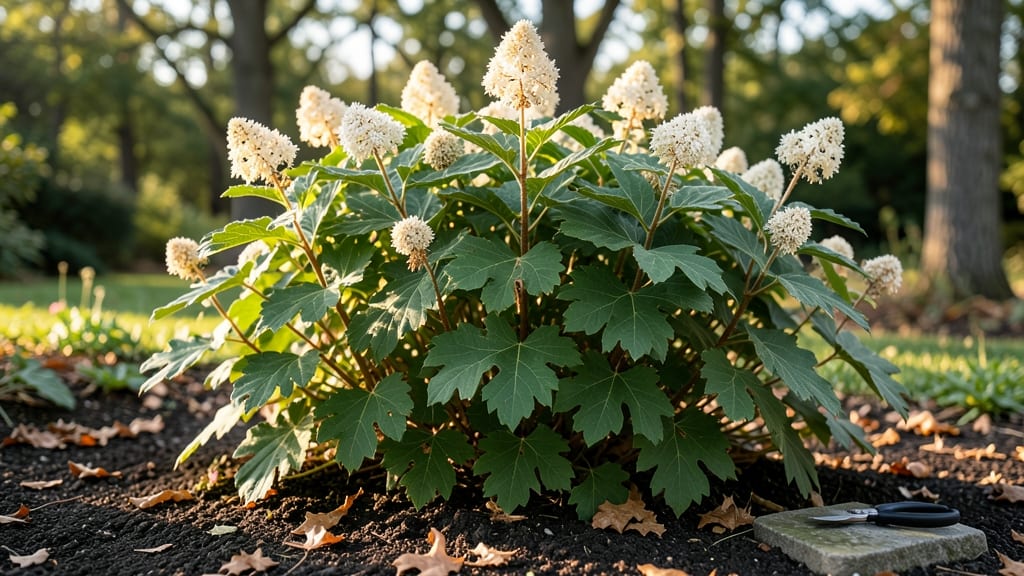
My oakleaf hydrangea thrives where most plants give up—deep shade under towering pines where sunlight barely reaches. 🌿 What makes this shrub special isn’t just its stunning fall foliage or summer blooms, but its ability to transform forgotten corners into lush, ever-changing focal points.
Unlike fussy hydrangeas that demand full sun, this variety drinks up shade like it’s a summer cocktail hour.
The secret starts with soil that drains well but stays moist—think rich, organic matter mixed with compost to keep roots happy without waterlogging. Mulch heavily to protect roots from temperature swings, and choose a spot where the canopy filters light rather than blocks it completely.
Even in low light, these plants reward you with vibrant green leaves in spring, creamy white blooms in summer, and fiery red-orange foliage by fall.
Pruning feels counterintuitive in shade: focus on opening the center to improve airflow, but avoid cutting back hard—this shrub blooms on old wood. Water consistently the first year to establish roots, then let nature take over.
The payoff? A low-maintenance shrub that stays lush, blooms reliably, and turns your darkest corner into the garden’s showstopper.
Works equally well in city yards, woodland gardens, or under eaves where sun never touches. Just avoid spots with damp, compacted soil—that’s where root rot hides. Here’s how to set it up right from day one.
📚 In This Guide
- What you need
- Instructions
- Tips and common mistakes
- Wrapping up and next steps
What you need
- ● Oakleaf hydrangea plants: Choose between: 1–3 Hydrangea quercifolia nursery plants (mature size: 3–6 ft tall, 3–5 ft wide)
- ● OR seeds (slower to establish; requires stratification)
- ● Well-draining soil: Mix 2 parts native soil + 1 part compost or peat moss (pH 5.0–6.0 for best blooms)
- ● Mulch: 2–3 inches of pine straw, wood chips, or shredded leaves (retains moisture, mimics natural habitat)
- ● Organic fertilizer: Balanced 10-10-10 or acid-loving plant food (e.g., Miracle-Gro Azalea/Camellia)
- ● Watering can or hose: With a gentle spray nozzle (avoids disturbing roots)
- ● Garden trowel or spade (for digging holes 2x wider than root ball)
- ● Gloves (to protect hands from thorns and soil)
- ● Pruners (sterilized, sharp; for shaping after planting)
- ● Measuring tape (to space plants 5–8 ft apart for airflow)
- ○ Optional but helpful: Soil pH test kit (to confirm acidity)
- ● Drip irrigation system (for consistent moisture)
- ● Shade cloth (if planting in partial shade; 30–50% coverage)
How to plant and care for oakleaf hydrangeas in shade
This shade-loving beauty thrives where others struggle—here’s how to plant and nurture it for four-season color.
🌱 Step 1: Choose the Perfect Shady Spot
Oakleaf hydrangeas love partial to full shade, but they need at least 4-6 hours of dappled sunlight daily to prevent leaf scorch in hotter climates. Look for a location with morning sun and afternoon shade—this mimics their natural woodland habitat. Avoid deep, dark corners where humidity lingers; poor air circulation invites fungal diseases.
Test the spot by observing how sunlight moves through the area over a week. If the ground stays dry and warm, it’s too exposed. If it’s damp and cool, it’s ideal. The plant’s large leaves will thank you by staying vibrant instead of crisping at the edges.
🪴 Step 2: Dig and Amend the Soil
Dig a hole twice as wide as the root ball but only as deep—planting too deep suffocates the roots. Oakleaf hydrangeas prefer rich, acidic soil with a pH between 5.0 and 6.0. If your soil is heavy clay or sandy, mix in 2-3 inches of compost and a handful of sulfur-based amendment (like aluminum sulfate) to lower the pH naturally.
Loosen the sides of the hole with a garden fork to encourage root spread. Avoid compacting the soil around the roots later—gentle pressure is enough. Water the hole deeply before planting to settle the soil and eliminate air pockets.
☀️ Step 3: Plant and Water for Establishment
Remove the hydrangea from its container and tease the roots gently if they’re circling. Place it in the hole so the top of the root ball sits level with the surrounding soil—never bury the stem. Backfill with native soil mixed with a 50/50 blend of compost, then water thoroughly until moisture seeps 6 inches deep. Mulch with 3 inches of shredded bark to retain moisture and regulate soil temperature.
Water deeply 2-3 times per week for the first month, then taper to once a week once new growth appears. Oakleaf hydrangeas hate soggy roots but also can’t tolerate drought—check soil moisture by sticking your finger 2 inches down. If it’s dry, water; if damp, wait.
✂️ Step 4: Prune for Shape and Seasonal Interest
Prune in late winter or early spring before buds swell, removing dead or crossing branches first. Oakleaf hydrangeas bloom on old and new wood, so avoid heavy pruning—just shape by cutting back 1-2 inches above a bud on leggy stems. Their stunning fall foliage comes from leaves, not flowers, so never prune after mid-July.
Fertilize lightly in early spring with a balanced, slow-release formula (10-10-10) to encourage lush foliage. Too much nitrogen makes leaves soft and prone to pests. Watch for aphids or powdery mildew—spray with neem oil at the first sign, and improve airflow by thinning dense branches.
🌿 Step 5: Maintain for Year-Round Beauty
In fall, rake away fallen leaves to prevent fungal buildup, but leave mulch in place—it insulates roots during winter. Oakleaf hydrangeas are hardy to USDA Zone 5, but young plants may need winter protection in colder areas. Wrap the base with burlap or mound extra mulch around the stem.
Adjust watering in summer—hydrangeas in shade need consistent moisture but hate sitting in wet soil. If the soil feels dry 1 inch down, water deeply. Their deep green leaves and burgundy fall foliage are your reward for patience; with proper care, they’ll thrive for decades with minimal fuss.
Tips & tricks for perfect oakleaf hydrangea planting and care
These simple strategies will help your oakleaf hydrangea thrive in shade and reward you with stunning seasonal color.
Location Intelligence: The 4-6 hours of dappled sunlight mentioned in Step 1 is crucial—this mimics their woodland habitat. If your yard has no natural dappled light, consider planting near a sheer curtain or lattice that filters sunlight. I've seen oakleaf hydrangeas struggle in deep shade, so if you're unsure, test the spot for a week first by observing how sunlight moves through the area. Morning sun with afternoon shade creates the perfect balance.
Soil Science: When amending your soil in Step 2, don't just focus on pH—also consider soil texture. For heavy clay soils, mix in 2-3 inches of perlite along with the compost to improve drainage. In sandy soils, add 1 inch of peat moss to help retain moisture. The goal is to create a well-draining, moisture-retentive environment that mimics their natural forest floor. I've found that adding a handful of worm castings (optional) boosts microbial activity, which helps roots absorb nutrients more efficiently.
Watering Wisdom: The 2-inch moisture check in Step 3 is your best friend. For container-grown hydrangeas, water when the top inch of soil feels dry—containers dry out faster than in-ground plantings. In extreme heat, you might need to water daily, but always check before watering. I've learned the hard way that soggy roots lead to root rot, so if your soil stays damp more than 24 hours after watering, you're overdoing it. A moisture meter is a worthwhile investment for perfect watering.
Pruning Precision: The late winter pruning window in Step 4 is non-negotiable for oakleaf hydrangeas. Their fall foliage comes from leaves, not flowers, so avoid heavy pruning after mid-July. When shaping, always cut just above a bud—this ensures new growth emerges in the right direction. I've found that using clean, sharp pruners and making cuts at a 45-degree angle (optional) helps prevent disease entry points. Remove any branches that cross or rub against each other to improve airflow and reduce disease risk.
Pro Tips for Oakleaf Hydrangea Shade
- These simple strategies will help your oakleaf hydrangea thrive in shade and reward you with stunning seasonal color.
- Location Intelligence: The 4-6 hours of dappled sunlight mentioned in Step 1 is crucial—this mimics their woodland habitat.
- Soil Science: When amending your soil in Step 2, don't just focus on pH—also consider soil texture.
Frequently asked questions
Got questions about growing oakleaf hydrangeas in shade? You’re not alone! Here are answers to the most common concerns—from planting to care—so you can keep your dark corners blooming beautifully.
How much shade can oakleaf hydrangeas tolerate?
Oakleaf hydrangeas thrive in partial to full shade, especially in hot climates. They handle morning sun with afternoon shade or dappled sunlight under trees. In cooler regions, they can even tolerate full shade, though blooms may be fewer. Just avoid deep, dense shade where they struggle to photosynthesize.
When is the best time to plant oakleaf hydrangeas?
Plant in early spring or fall for the best results. Spring gives roots time to establish before summer heat, while fall allows them to settle before winter dormancy. Avoid planting in mid-summer—the heat can stress young shrubs.
Do oakleaf hydrangeas need extra water in shade?
Yes! Shade can slow evaporation, but consistent moisture is key. Water deeply 1-2 times per week (more in extreme heat). Mulch around the base to retain moisture and protect roots. Yellowing leaves? Often a sign of underwatering or poor drainage.
Why aren’t my oakleaf hydrangea leaves turning red/purple in fall?
Color intensity depends on sun exposure, temperature swings, and nutrients. If your shrub isn’t blushing, try:
- Moving it to a sunnier spot for a few hours daily.
- Adding a balanced fertilizer in early summer (look for one with iron).
- Ensuring cool nights (below 50°F) trigger fall color.
What are good shade-loving alternatives if oakleaf hydrangeas struggle?
If oakleaf hydrangeas don’t thrive in your shade, try these low-maintenance, colorful options:
Plant
Shade Tolerance
Bonus Traits
Pieris japonica (Andromeda)
Partial to full shade
Spring blooms + evergreen foliage
Hellebore (Lenten Rose)
Full shade
Early blooms, deer-resistant
Japanese Maple (Acer palmatum)
Partial shade
Stunning fall color, compact sizes
Wrapping up and next steps
Transforming your shady spots into vibrant, low-maintenance havens is easier than you think with oakleaf hydrangeas! 🌿 Their lush foliage and year-round charm make them the perfect shade-loving superstar for any garden.
Whether you're a seasoned gardener or just starting, this hardy shrub offers effortless beauty—so roll up your sleeves and give it a try!
Ready to bring color to your dark corners? Start by selecting the right variety and planting it in well-draining soil with partial to full shade. Before you know it, your garden will be bursting with life—no sunny spot required!