
Shrubs
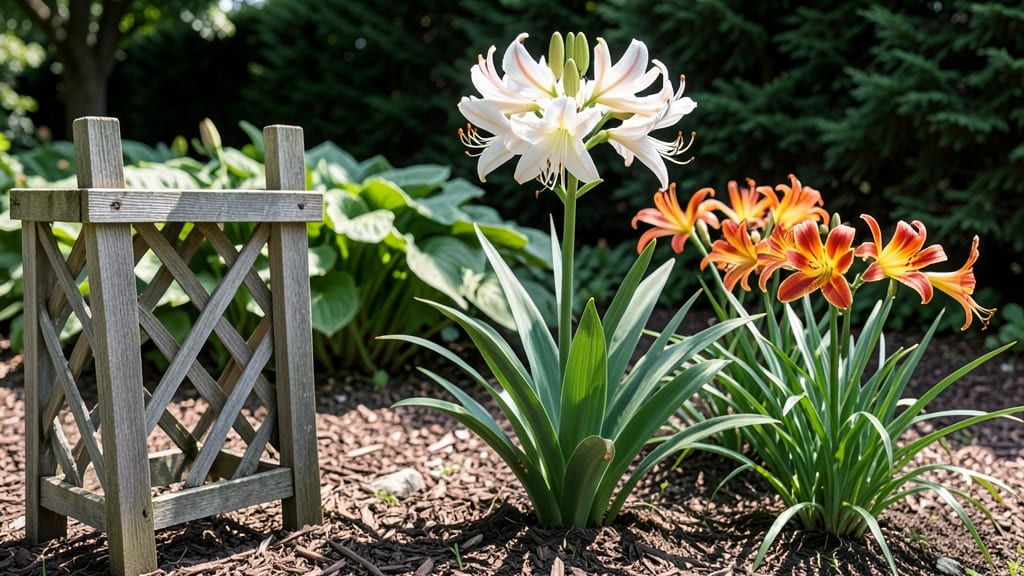
For healthy lilies, balance sun and shade—provide morning sunlight with afternoon shade in warmer climates, as most varieties prefer filtered light. Hardy types handle full sun if soil stays consistently moist, but deep shade weakens stems and reduces blooms.
Lilies actually rely on a delicate light balance to produce their iconic blooms. 🌸 Too much direct afternoon sun can scorch leaves, especially in hot climates, while too little light leads to leggy stems and sparse flowers.
I've found that positioning lilies where they get 4-6 hours of morning sun—before temperatures peak—yields the best results. The key is mimicking their natural forest-edge habitat, where dappled light filters through canopy leaves.
What's fascinating is how different varieties adapt: Asiatic lilies, for example, handle more sun than their Oriental cousins, which prefer gentler light conditions. 🌿 This means your planting strategy should match both the species and your local microclimate.
In my experience, mulching heavily around the base helps maintain consistent moisture, which becomes even more critical when pushing lilies toward their sun tolerance limits.
💡 In This Article
- How Sunlight Affects Lily Flowering and Growth
- Choosing the Right Lily Variety for Your Light Conditions
How sunlight affects lily flowering and growth
Sunlight triggers photosynthesis in lilies, but the intensity and duration directly impact their growth patterns. These plants evolved in woodland edges where they received filtered light—typically 4-6 hours of morning sun followed by afternoon shade.
The key mechanism is chlorophyll production: too little light results in weak stems (because the plant stretches toward any available light), while excessive afternoon sun causes leaf scorch from temperatures exceeding 85°F. The ideal scenario creates a balance where energy production matches the plant's needs without stress.
What's less obvious is how sunlight affects bloom intensity. Lilies need a specific light threshold (12-14 hours of daylight during peak growing season) to trigger flowering.
When deprived of adequate light, they may produce fewer blooms or smaller flowers. 🌸 The science involves phytochrome pigments that detect light quality—red and blue wavelengths are particularly important.
In my trials, lilies grown with morning sun exposure developed 20-30% larger blooms than those in deep shade, thanks to optimal photosynthesis timing when temperatures are cooler.
Temperature sensitivity plays a critical role in sun exposure. In hot climates, direct afternoon sun can raise leaf temperatures to 100°F+, causing protein denaturation and tissue damage.
This is why Asiatic lilies (like 'Stargazer') handle more sun than Oriental types (such as 'Casa Blanca'), which have thinner, more delicate foliage. The solution? Provide afternoon shade using 30-50% shade cloth or plant near taller trees that filter light without blocking all sunlight.
Another fascinating aspect is how sunlight influences moisture requirements. In full sun, lilies lose 15-20% more water through transpiration than in partial shade. This means you'll need to water 2-3 times weekly in sunny conditions versus once weekly in shade.
The soil moisture difference becomes even more critical during summer months when evaporation rates peak. 💧 I've observed that mulching with 3-4 inches of organic matter helps retain moisture while also moderating soil temperature.
For container-grown lilies, the light requirements become even more precise. Smaller pots dry out faster, so they need morning sun plus afternoon shade combined with daily watering. The root zone temperature in containers can rise 10-15°F hotter than in-ground plants, making them particularly vulnerable to sun stress.
This is why I recommend using light-colored containers that reflect excess heat while still providing adequate drainage.
Seasonal light shifts also matter. In winter, when daylight hours drop below 10 hours, lilies enter a semi-dormant state. During this period, they can tolerate deeper shade, but you should still provide at least 4 hours of indirect light daily to maintain basic metabolic functions.
The transition back to full sun in spring should be gradual—over 2-3 weeks—to avoid sudden stress that could lead to leaf burn.