
Shrubs
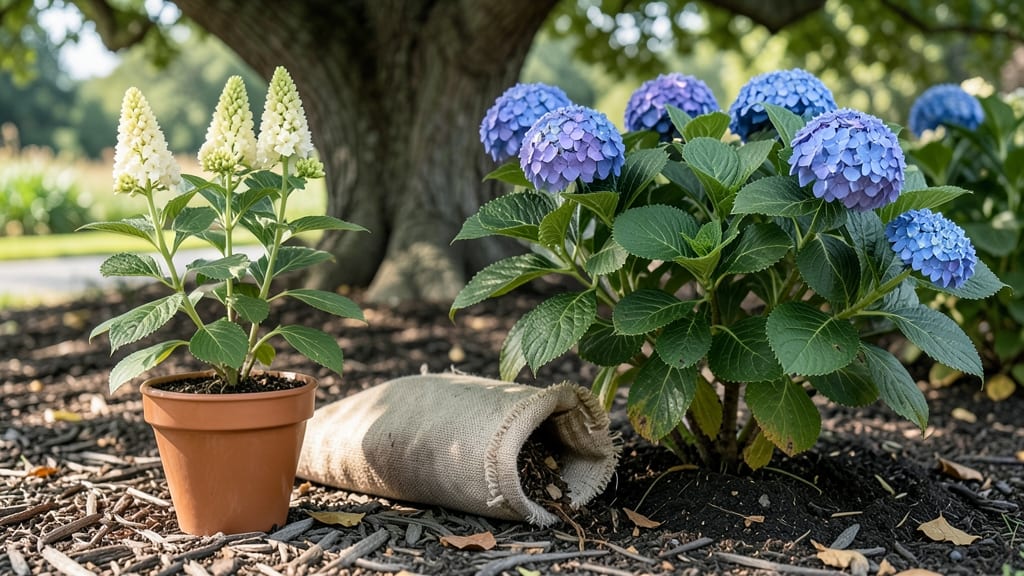
Growing hydrangeas as perennials in sun or shade means choosing the right variety for your garden’s light conditions to ensure vibrant blooms year after year.
If your hydrangeas 🌸 look stressed—wilting in the heat or producing sparse flowers—it could be a light mismatch. The wrong exposure leads to leaf scorch, stunted growth, or even no blooms at all.
But here’s the good news: with the right variety and a few simple adjustments, you can turn your garden into a hydrangea paradise, whether it’s sun-drenched or shaded.
Sun-loving varieties like panicle hydrangeas thrive in full sun, while shade-tolerant types such as bigleaf hydrangeas flourish in dappled light. I’ll break down the best options for each scenario, plus tips to transition plants safely if you’re changing their light exposure.
By the end, you’ll know exactly which hydrangeas to plant, how to care for them based on sunlight, and how to troubleshoot common issues like leaf burn or poor blooming. Let’s get those hydrangeas looking their best!
 Best Window Placement
Best Hydrangea varieties for full sun gardens
If you love the dramatic blooms of hydrangeas but struggle with shade-loving varieties, don’t worry—there are sun-tolerant perennials that thrive under 6+ hours of sunlight while still delivering stunning flowers. The key is choosing the right Hydrangea paniculata or Hydrangea arborescens varieties, which handle heat better than their shade-dependent cousins.
These types not only survive but flourish in full sun with the right care, producing bold blooms from summer through fall.
Full-sun hydrangeas need well-draining soil and consistent moisture to prevent leaf scorch or wilting. Unlike shade varieties, they often reward you with larger blooms and longer flowering seasons when given the right conditions.
My top picks focus on heat tolerance, drought resistance, and minimal stress—perfect for hot, sunny gardens.
⚠️ CRITICAL NOTE: Always mulch heavily (3-4 inches) to retain moisture and water deeply (1-2 inches per week) to keep roots cool. Without these steps, even sun-loving hydrangeas can struggle in intense heat.
'Limelight' is my top recommendation for full-sun gardens because it handles heat exceptionally well while producing vibrant lime-green blooms that fade to soft pink. It’s also drought-tolerant once established, making it ideal for low-maintenance landscapes.
For smaller spaces, 'Little Lime' offers the same sun tolerance in a compact 3-5 ft package, perfect for containers or foundation plantings.
If you’re after classic white blooms, 'Annabelle' is a heat-resistant powerhouse that thrives in full sun and even reblooms if pruned correctly in late winter. Its large, rounded flowers make it a standout in summer borders or as a specimen plant.
Just be sure to mulch deeply and water consistently during dry spells to prevent stress.
For taller gardens, 'Grandiflora' reaches 8-10 feet with arching stems that support large conical blooms. It’s perfect for privacy screens or backyard hedges because it tolerates full sun
Top shade-tolerant hydrangeas for low-light spots
If your garden has shady spots where sunlight barely reaches, don’t despair—hydrangeas can still thrive! Shade-tolerant varieties like Hydrangea macrophylla (bigleaf hydrangea) and Hydrangea quercifolia (oakleaf hydrangea) are perfect for these areas.
These beauties not only survive but produce stunning blooms with the right care, making them ideal for woodland gardens, north-facing yards, or spots under trees.
For vibrant blooms in shade, focus on soil moisture and acidic soil conditions. Unlike sun-loving varieties, shade hydrangeas prioritize root health over leaf exposure. A mulch layer (2-3 inches) helps retain moisture while keeping roots cool.
I’ve found that evergreen mulch, like pine straw, works best for maintaining consistent soil temps.
Now, let’s weigh the pros and cons of growing shade-tolerant hydrangeas to help you decide which variety fits your space best.
Shade-Tolerant Hydrangeas: Pros & Cons
✅ Pros
- Thrives in low light: Perfect for woodland gardens or north-facing yards.
- Vibrant blooms: H. macrophylla produces blue or pink flowers even in shade.
- Low maintenance: Requires less pruning than sun varieties.
- Adaptable soil: Tolerates acidic or neutral soil with proper amendments.
❌ Cons
- Slower growth: May take 2-3 years to reach full size.
- Pruning timing: Must prune after flowering to avoid cutting off next year’s blooms.
- Soil sensitivity: Needs consistent moisture; drought stress causes leaf drop.
- Color shifts: Blue blooms may turn pink in alkaline soil.
When planting shade-loving hydrangeas, choose a spot with at least 4 hours of dappled light for best results. Hydrangea quercifolia, for example, loves morning sun and afternoon shade, while H. macrophylla can handle full shade in cooler climates.
I recommend testing your soil’s pH level—aim for 5.5-6.2 for blue blooms or 6.5-7.0 for pink.
Pruning is key for shade hydrangeas. Unlike sun varieties, you should never prune in late winter—wait until late spring or early summer after blooms fade. This ensures you don’t cut off next year’s flower buds.
I’ve seen gardeners accidentally prune too early, leading to bare stems for months. Use clean, sharp shears and remove dead or crossing branches first.
For extra lush foliage, feed your shade hydrangeas with a balanced fertilizer (like 10-10-10) in early spring. Avoid heavy nitrogen—it promotes leafy growth over blooms.
I’ve also had success with compost tea to boost root health without risking over-fertilization. Pair this with regular mulching to keep roots cool and moist.
With the right shade-tolerant variety, soil care, and pruning strategy, your hydrangeas will reward you with year-round interest—whether it’s oakleaf’s fiery fall foliage or bigleaf’s long-lasting blooms. Even in the shadiest corner, these hydrangeas prove that beauty thrives where others struggle! 🌿