
Light Requirements
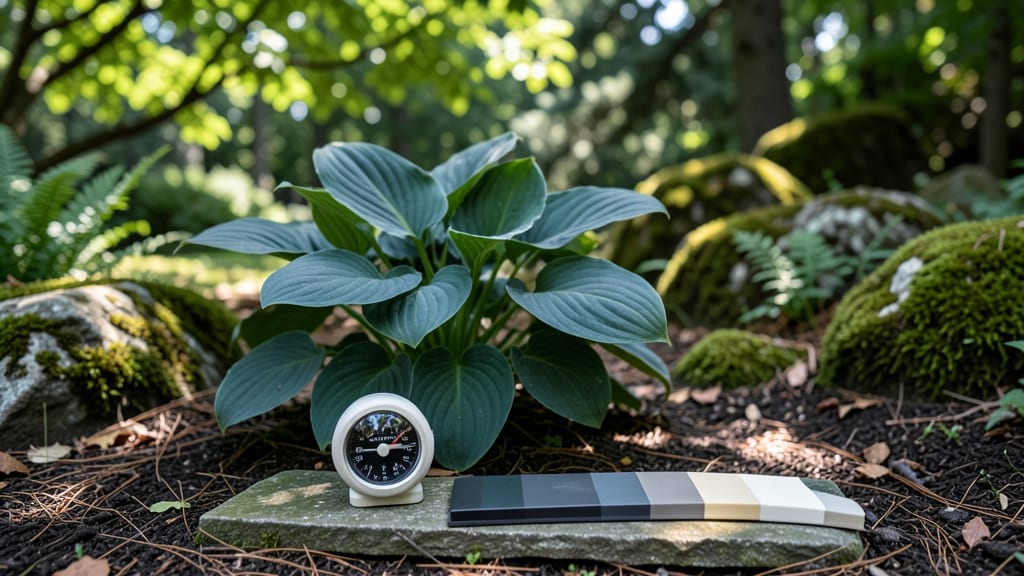
Partial shade provides 3 to 6 hours of direct sunlight per day, with the rest of the daylight diffused through foliage or structures. This light exposure supports moderate plant growth while protecting delicate foliage from harsh sun.
This range of sunlight creates the perfect balance for plants that can't handle full sun but also need more light than full shade provides. 🌿 The key is understanding how your local climate affects these hours—summer sun behaves differently than winter sun, even in the same location.
For example, a spot with 4 hours of morning sun might qualify as partial shade, while the same spot with 4 hours of afternoon sun could push plants toward full sun exposure. The angle of the sun changes throughout the year, so what works in June might not in December.
When selecting plants for partial shade, focus on species that thrive in this middle ground, like hostas, ferns, and impatiens. These plants have adapted to avoid the stress of too much direct light while still benefiting from enough energy to grow well.
Adjusting your care routine—like using organic compost and avoiding heavy fertilizers—can also help these plants make the most of their partial shade environment.
💡 In This Article
- How Sunlight Hours Define Partial Shade for Plant Growth
- Best Plants for 3–6 Hours of Sunlight and Care Tips
How sunlight hours define partial shade for plant growth
Partial shade isn't just about counting hours—it's about the interplay between light intensity and duration. Plants experience photosynthesis most efficiently when light intensity stays below 50% of full sun, which occurs naturally when sunlight filters through tree canopies or building overhangs.
During those 3 to 6 hours of direct exposure, plants receive enough energy for moderate growth, but the remaining daylight arrives as softer, diffused light that prevents leaf scorch.
This balance is crucial because prolonged exposure to direct sunlight (especially between 10 AM and 4 PM) can damage chlorophyll, leading to bleached or crispy leaf edges.
The angle of the sun dramatically alters how these hours translate into plant stress. In summer, when the sun sits higher in the sky, even 3 hours of morning sun might provide more intense light than the same duration in winter.
For example, a northern-facing garden in the U.S. might receive 4 hours of filtered sun in July but only 2 hours of weaker light in December due to the sun's lower trajectory.
This seasonal variation means partial shade spots can fluctuate between ideal and stressful conditions without obvious changes in light duration. 🌞
At the cellular level, partial shade triggers plants to develop larger, thinner leaves with more surface area for capturing diffused light—a trait called "shade acclimation." Unlike full-sun plants that evolve thick, waxy cuticles to retain moisture, shade-adapted species like hostas or astilbes prioritize light absorption over heat protection.
This adaptation explains why these plants thrive in partial shade but often struggle when moved to sunnier locations, where their leaves can't dissipate excess heat efficiently.
Climate plays a hidden role too. In humid regions, partial shade reduces water loss through transpiration, while in dry climates, the same light conditions might stress plants by increasing evaporation rates.
For instance, a 3-hour sun exposure in Florida's 90% humidity might be ideal for ferns, but the same duration in Arizona's dry air could push them toward drought stress.
This is why local microclimates matter—what qualifies as partial shade in one garden may not in another just a few miles away.
Even within a single day, light quality shifts. Morning sun delivers cooler, blue-rich light that plants use for growth, while afternoon sun contains more heat-inducing red wavelengths.
A plant receiving 3 hours of morning sun and 3 hours of afternoon sun experiences two entirely different physiological stresses—morning light fuels photosynthesis, while afternoon light risks overheating. This daily rhythm explains why some gardeners prefer east-facing partial shade spots, where morning light dominates and afternoon heat is minimized.
Understanding these nuances helps explain why some plants labeled "partial shade" still struggle in certain gardens. For example, heucheras might thrive with 4 hours of dappled sun in the Pacific Northwest but develop brown leaf edges with the same exposure in the desert Southwest.
The solution? Monitor your plants' response and adjust by pruning nearby trees or using shade cloth to fine-tune light exposure throughout the growing season. 🌱