
Size
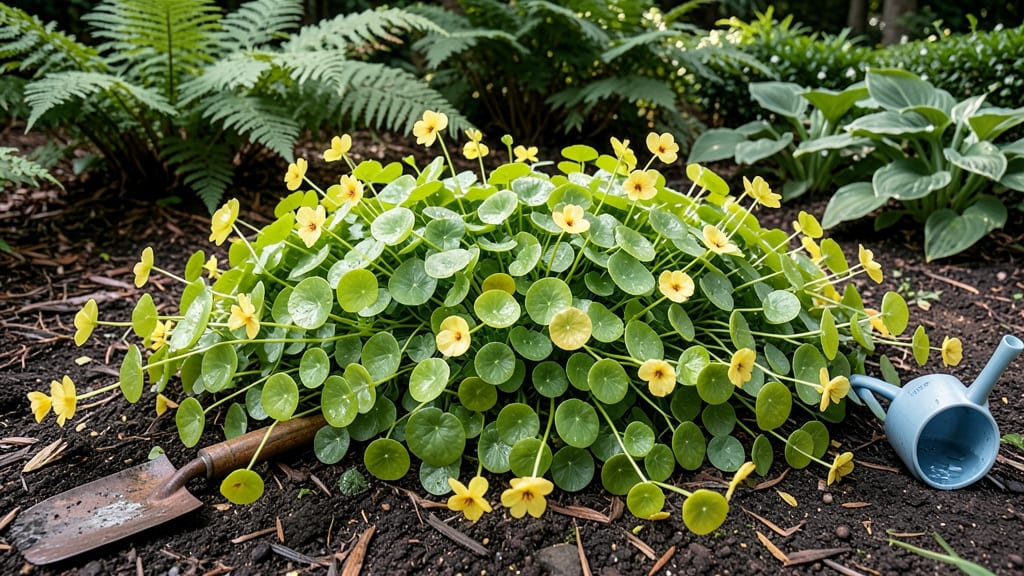
Creeping Jenny grows in shade but thrives best in partial shade to full sun, tolerating low light though growth may slow and color intensity may fade without adequate sunlight. Ensure well-draining soil and consistent moisture for optimal results.
Creeping Jenny's ability to thrive in shade makes it a favorite for low-light gardens, but its performance varies dramatically based on light exposure. 🌿 In dim conditions, expect slower growth and less vibrant golden foliage—especially in green varieties—which rely on sunlight to maintain their signature hue.
The plant's natural spread may also become more sparse under heavy shade, though it won't die outright. For best results, aim for filtered light or dappled shade where it can still access some direct sunlight during peak hours.
What sets Creeping Jenny apart is its adaptability—it can survive in nearly any light condition, but that doesn't mean it will flourish. The plant's bright yellow-green leaves develop their richest colors when exposed to at least 4-6 hours of indirect sunlight daily.
In deeper shade, the foliage often reverts to a more muted green, losing the striking contrast gardeners love. For indoor growing, place it near east-facing windows where it can bask in gentle morning light without harsh afternoon rays.
💡 In This Article
- Creeping Jenny’s Light Requirements Explained
- Best Shade Conditions for Creeping Jenny Growth
Creeping Jenny’s light requirements explained
Creeping Jenny (Lysimachia nummularia) thrives in shade thanks to its ability to photosynthesize efficiently under low light conditions. However, its growth rate and foliage color depend heavily on light exposure. The plant's leaves contain chlorophyll, but they also produce carotenoids that give golden varieties their vibrant hue.
In deep shade, chlorophyll dominates, suppressing carotenoid production and turning leaves a duller green. This is why golden Creeping Jenny often reverts to green under heavy shade—it's not dying, but its genetic color expression weakens.
The science behind this involves photosynthesis efficiency. Creeping Jenny can survive with as little as 2-3 hours of indirect light daily, but growth slows significantly. For example, in a fully shaded garden spot, stems may stretch (etiolation) and leaves become sparse.
In contrast, 4-6 hours of filtered light, like under a dappled canopy, supports lush, compact growth with brighter colors. The plant's natural spread—typically 6-12 inches per season—may shrink to just 3-6 inches, if light is insufficient. 🌿
Light deprivation also affects the plant's vigor. Without adequate sunlight, Creeping Jenny produces fewer flowers (if at all) and may become more susceptible to fungal issues due to slower drying of foliage. The golden varieties, in particular, rely on sunlight to maintain their striking appearance.
For instance, 'Aurea' variety loses its golden edge in deep shade, while 'Green' varieties remain more consistent but grow less vigorously. This is why gardeners often use Creeping Jenny as a ground cover in partial shade—it balances adaptability with visual appeal.
Here’s how light affects different varieties:
- Golden varieties: Need at least 4 hours of light, to retain color intensity
- Green varieties: Tolerate 2-3 hours of light, but growth slows
- Variegated types: Require 6+ hours, to maintain pattern clarity
Seasonal light changes also play a role. In winter, shorter daylight hours naturally reduce growth, but Creeping Jenny remains resilient. If grown indoors, place it near a south-facing window, where it can access the longest daylight exposure.
Outdoor plants in shaded areas benefit from reflective surfaces (like light-colored walls) that bounce extra light onto the foliage, mimicking natural conditions. 💫
For optimal results, aim for partial shade*,** where the plant gets morning sun and afternoon shade. This balance supports steady growth while preserving color and texture. In denser shade, supplement with grow lights (12-14 hours daily) if vibrant growth is the goal.