
Size
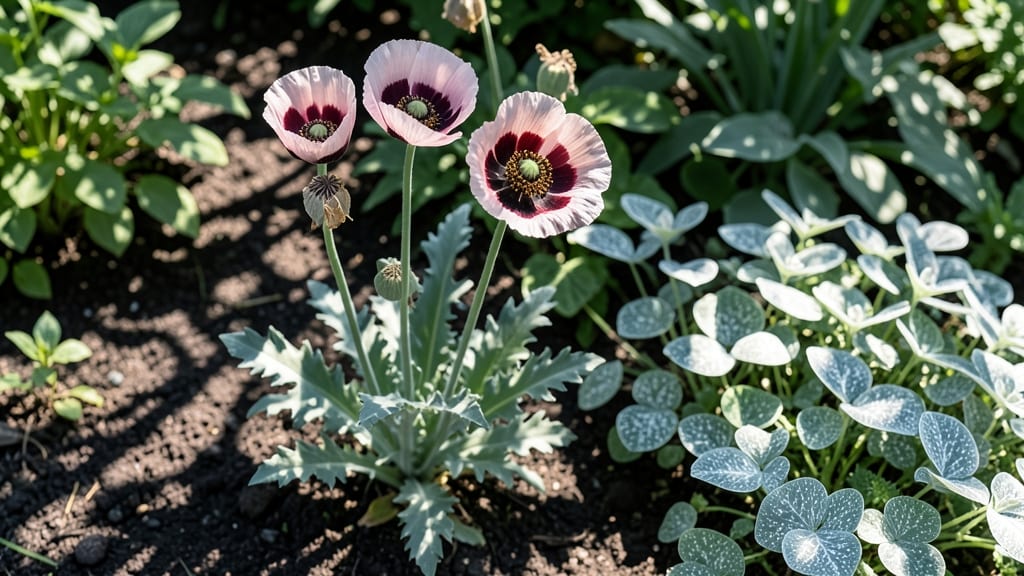
Most poppies are sun-lovers, but some varieties handle shade better than others. 🌿 The key difference lies in their native habitats—Iceland poppies thrive in cooler, northern climates where sunlight is less intense, while oriental poppies can tolerate partial shade but still need at least 4-6 hours of light daily.
For optimal growth, I recommend testing your garden's light conditions first: if your spot gets morning sun and afternoon shade, it's perfect for shade-tolerant poppies.
What really makes a difference is soil quality. Poppies in low-light situations need well-aerated, nutrient-rich soil to compensate for reduced photosynthesis. Adding compost or perlite can help, and I've found that spacing plants 12-18 inches apart prevents overcrowding, which can stress shade-grown poppies further.
The trade-off is always fewer blooms, but with the right care, you can still enjoy their delicate beauty.
💡 In This Article
- Light Requirements for Different Poppy Species
- Shade-Gardening Tips for Growing Poppies in Low Light
Light requirements for different poppy species
Poppies vary dramatically in their light needs, with annual varieties like the California poppy (Eschscholzia californica) requiring full sun (6+ hours daily) to thrive, while perennials like the oriental poppy (Papaver orientale) can tolerate partial shade (4-6 hours of light).
The difference comes down to their natural habitats: California poppies evolved in Mediterranean climates with intense sunlight, while oriental poppies grow in cooler, mountainous regions where light is less direct. 🌞
What's fascinating is how light directly impacts flower production. In low-light conditions, poppies allocate more energy to leaf growth rather than blooms, which is why shade-grown oriental poppies might produce 30-50% fewer flowers than sun-exposed plants. The stems also become weaker—supporting them with small stakes can help prevent flopping.
For example, an Iceland poppy in full sun can reach 12-18 inches tall with sturdy stems, while the same variety in partial shade may only grow 8-12 inches and require extra support.
Color intensity is another light-dependent factor. Poppies grown in partial shade often develop duller, less vibrant blooms because chlorophyll production increases in low light, diluting pigment concentration. This is why professional growers often use supplemental lighting for high-value poppy cultivars—it maintains the rich, saturated colors that make them so desirable.
If you're growing poppies in shade, expect softer hues and slightly smaller flowers, but the trade-off can be worth it for the right garden aesthetic.
For annual poppies like the corn poppy (Papaver rhoeas), shade tolerance is minimal—these species need at least 5 hours of direct sunlight to set seed and reproduce. Their shallow root systems struggle in low-light conditions, making them poor candidates for shaded gardens.
In contrast, perennial poppies like the Iceland poppy have deeper roots that can better access nutrients in shaded soil, giving them a slight edge in partial shade scenarios.
Here's a quick comparison of light needs:
- Full Sun Lovers (6+ hours): California poppy, corn poppy, Shirley poppy
- Partial Shade Tolerant (4-6 hours): Oriental poppy, Iceland poppy, Welsh poppy
- Shade Intolerant (avoid): Deep shade (<3 hours of light)
The key takeaway is that while some poppies can adapt to partial shade, they'll never perform as well as their sun-loving cousins. Think of shade-tolerant varieties as the "Goldilocks" of poppies—not too extreme, but requiring careful balance to thrive. 🌱