
Shrubs
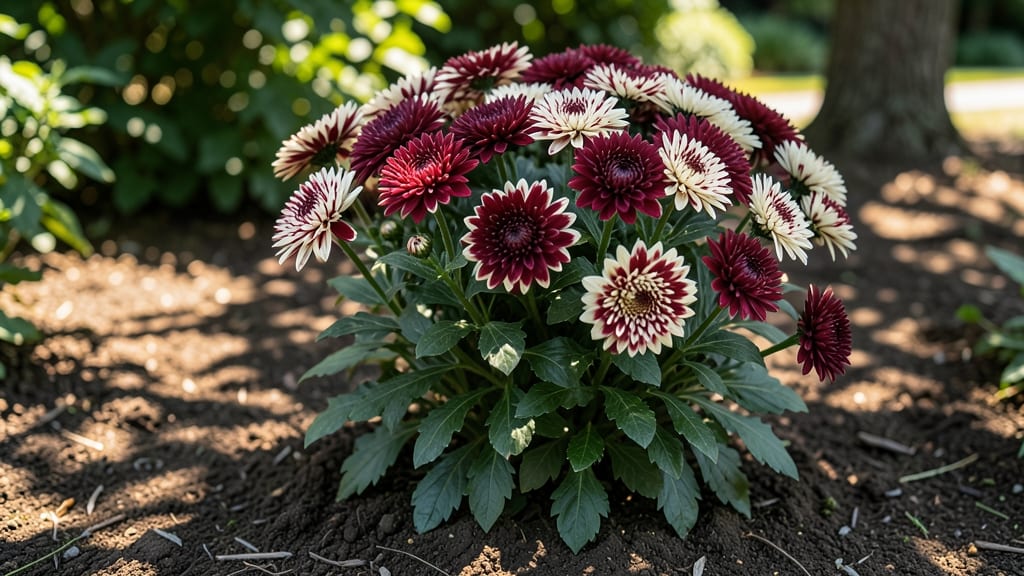
While mums are famously shade-tolerant, their blooming potential depends heavily on light exposure. 🌿 Without adequate light, plants focus energy on leaf growth instead of flower production, often resulting in sparse or smaller blooms.
I've noticed that varieties like 'Bonanza' or 'Penny' adapt better to low-light conditions than others, making them excellent choices for shaded gardens. The key is finding that sweet spot—enough shade to prevent leaf scorch while still providing sufficient light for photosynthesis and flowering.
For optimal results, consider planting mums under deciduous trees that offer dappled sunlight, or use shade cloths to filter harsh afternoon rays. Amending the soil with compost can also help compensate for reduced light by improving nutrient uptake.
Remember, even shade-loving mums benefit from a little direct sunlight to produce their signature vibrant blooms.
💡 In This Article
- How Shade Affects Mum Flower Production and Growth
- Best Shade Solutions for Growing Healthy Mums
How shade affects mum flower production and growth
Shade impacts mums primarily through photosynthesis and hormone regulation. When exposed to deep shade, these plants produce less chlorophyll, which limits their ability to convert light into energy.
This energy deficit forces the plant to prioritize leaf growth over flower buds, often resulting in lush foliage but sparse blooms. 🌿 The hormone florigen, responsible for triggering flowering, requires light exposure to activate properly—without sufficient light, mum plants may never initiate bloom formation.
Comparing full sun to partial shade reveals dramatic differences. Mums in full sun (6+ hours direct light) develop vibrant, abundant blooms with sturdy stems, while those in deep shade (<2 hours light) may produce only 10-30% of their potential flowers.
The leaf color shifts too: full sun mums have deep green foliage, whereas shade-grown plants develop lighter, almost yellowish leaves due to reduced chlorophyll production. Stem strength also weakens in low light, making plants more prone to flopping.
Partial shade—especially morning sun with afternoon shade—creates the ideal balance. Morning sunlight provides the 4-6 hours of light needed for photosynthesis while avoiding the stress of intense afternoon rays. This setup allows mums to produce 70-90% of their maximum blooms while maintaining strong stems and rich foliage.
The trade-off is clear: more shade means fewer flowers, but complete darkness will stunt growth entirely.
Light quality matters just as much as quantity. Shade structures like trees filter blue and red light wavelengths, which are critical for photosynthesis and flowering.
Without these wavelengths, mum plants struggle to produce the energy needed for vibrant blooms. 🌞 This is why dappled shade—where light filters through leaves—often works better than dense shade from solid structures.
Seasonal light changes also play a role. In summer, longer daylight hours compensate for shade, while winter's reduced light forces mums to rely even more on stored energy.
This is why shade-tolerant varieties like 'Penny' or 'Bonanza' thrive in low-light conditions—they've adapted to store more energy in their roots during peak light periods for winter survival.
For gardeners, understanding these mechanisms means strategically placing mums where they receive filtered light for most of the day, such as under high-canopy trees or on north-facing porches. This approach maximizes blooms while minimizing stress, proving that shade tolerance doesn't mean sacrificing beauty—just smart placement.