
Light Requirements
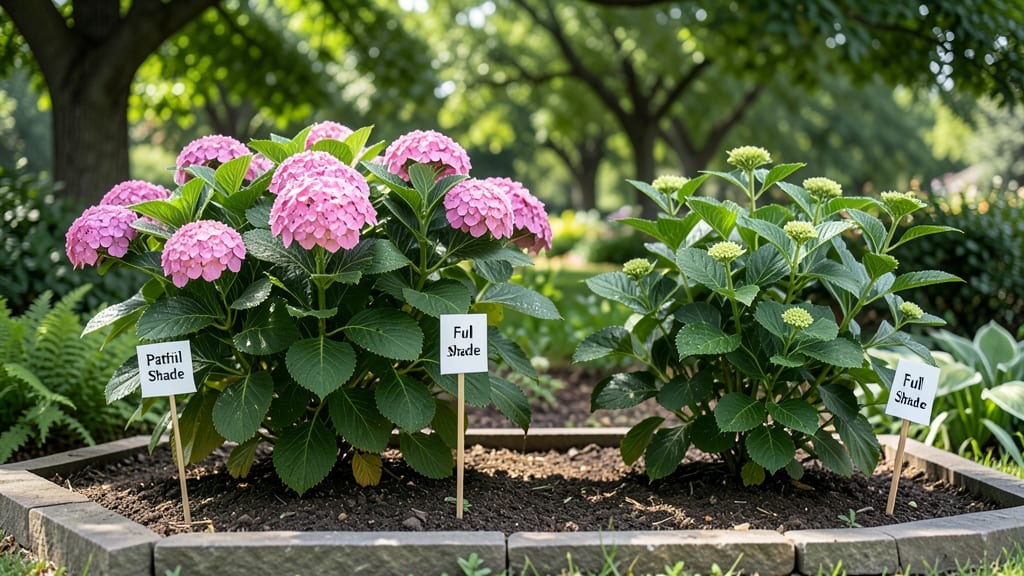
Wondering do hydrangeas need shade? They thrive with partial shade—about 4 to 6 hours of sunlight daily—to keep their blooms vibrant and foliage lush 🌸.
Struggling to keep your hydrangeas blooming? The battle between sun and shade might be the key to their success—or failure. Too much direct sun can scorch leaves, while too little light weakens stems and reduces flowers.
Most gardeners assume these showstopper shrubs need shade, but the truth is more nuanced. Varieties like mophead and lacecap actually prefer morning sun and afternoon shade, especially in hot climates.
In this guide, I’ll break down how to balance sunlight for healthier blooms, spot signs of light stress, and adjust care based on your region—so you can enjoy those iconic hydrangea clusters year after year.
 Best Window Placement
How much sunlight do hydrangeas tolerate for optimal blooms?
Hydrangeas are beloved for their bold blooms and lush foliage, but getting their sunlight just right can feel like a guessing game. Too much sun causes leaf scorch, while too little shade can lead to sparse flowers.
The key is understanding each variety’s needs—because not all hydrangeas are created equal when it comes to sunlight tolerance.
Most hydrangeas thrive in partial shade, which means 4-6 hours of sunlight daily, ideally with morning sun and afternoon shade. However, some varieties handle more sun than others. Let’s break down the sunlight needs by type and how to avoid common mistakes that stunt blooms or damage foliage.
Mophead hydrangeas (like the classic 'Endless Summer') are the most shade-tolerant, while lacecap hydrangeas and oakleaf varieties can handle slightly more sun—though they still need protection from harsh afternoon rays. Regional climate also plays a role: Southern gardeners need more shade, while cooler Northern zones can push the limits.
| Variety | Ideal Sunlight | Max Sun Tolerance | Signs of Too Much Sun |
|---|---|---|---|
| Mophead (e.g., 'Endless Summer') | Morning sun, afternoon shade | 4-6 hours (filter afternoon sun) | Brown leaf edges, crispy foliage |
| Lacecap (e.g., 'Limelight') | Partial shade to morning sun | 5-6 hours (tolerates more sun) | Yellowing leaves, fewer blooms |
| Oakleaf (e.g., 'Snow Queen') | Partial shade to dappled light | 6 hours (with afternoon shade) | Leaf burn, stunted growth |
| Panicle (e.g., 'Little Lime') | Full sun to partial shade | 6-8 hours (most sun-tolerant) | Drooping leaves, pale flowers |
If you’re in a hot, dry climate (like USDA Zones 8-10), hydrangeas need afternoon shade to prevent leaf scorch. In cooler regions (Zones 3-6), they can handle more sun, but morning sunlight is still ideal to avoid stress.
For example, a mophead hydrangea in Arizona might thrive under a patio umbrella, while the same plant in Maine could bloom beautifully in a sunny border with afternoon shade.
One common myth is that all hydrangeas need shade. While they do prefer filtered light, panicle hydrangeas are the exception—they can handle full sun and often produce more blooms in sunnier spots.
The trick is to observe your plant’s reaction: if leaves turn crispy or flowers fade, it’s getting too much sun. If growth is leggy with few blooms, it needs more light.
To adjust sunlight for your hydrangeas, start by pruning nearby trees to thin their canopy or add a shade cloth (30-50% block) during peak afternoon heat. For container-grown hydrangeas, move pots to east-facing windows or a spot that gets morning light.
Mulching around the base also helps regulate soil temperature, reducing heat stress on roots.
Another pro tip: Blue hydrangeas (like 'Nikko Blue') often need slightly more shade to maintain their vibrant color, while pink varieties (like 'Annabelle') can handle a bit more sun. Soil pH also interacts with sunlight—acidic soil (pH 5.5-6.0) enhances blue blooms, while alkaline soil (pH 6.0-7.0) promotes pink.
Test your soil and adjust with sulfur or lime as needed.
For gardeners in urban areas, creative solutions like planting near evergreen trees (which provide natural shade) or using reflective surfaces (like white walls) to bounce light can help.
If your hydrangea is struggling, try gradual adjustments: move it to a slightly shadier spot over a few weeks rather than all at once. This gives the plant time to adapt without shock.
Remember, hydrangeas are flexible plants, and with the right sunlight balance, they’ll reward you with vibrant blooms from summer through fall. Experiment with placement, monitor their response, and don’t be afraid to tweak their environment. Your hydrangeas will thank you with lush foliage and showstopping flowers! 🌸
Signs your hydrangeas aren’t getting the right light exposure
If your hydrangeas look more sad than showstopping, light exposure might be the culprit. These beauties thrive in partial shade, but too much sun or too little can send them into a decline. Watch for these visual red flags that reveal their sunlight struggles.
First, check for leaf curling or yellowing edges—classic signs your hydrangea is either scorched by too much sun or starving for light. In extreme cases, leaves may develop brown, crispy patches, especially on the edges, signaling sunburn. These symptoms often appear after hot afternoons.
⚠️ callout warning
Hydrangeas planted in full sun (6+ hours of direct light) in hot climates will struggle to bloom and may develop leaf scorch. Their delicate petals can also bleach out under intense sunlight. If your plant is in a south-facing spot, it’s likely getting too much sun.
✅ Fix: Move to morning sun + afternoon shade or use 50% shade cloth during peak hours.
Another clue? Sparse or small blooms despite proper care. Hydrangeas need balanced light to produce their signature fluffy flowers.
If they’re tucked in deep shade (less than 4 hours of light), they’ll focus energy on leaves over flowers, leaving you with a lush but flowerless shrub.
Look for stunted growth or weak stems—another sign your hydrangea isn’t getting enough light. While they tolerate shade, deep shade (like under dense trees) can weaken their structure, making them more prone to flopping or breaking in storms.
To troubleshoot, observe your hydrangea’s location throughout the day. If it’s in afternoon sun (1 PM–5 PM), it’s likely getting too much heat. Try pruning nearby branches or adding mulch to protect roots. For under-exposed plants, gradually introduce more light over 2–3 weeks to avoid shocking the plant.
With the right light adjustments, your hydrangeas can bounce back—just give them that sweet spot of partial shade they crave! 🌿