
Plants
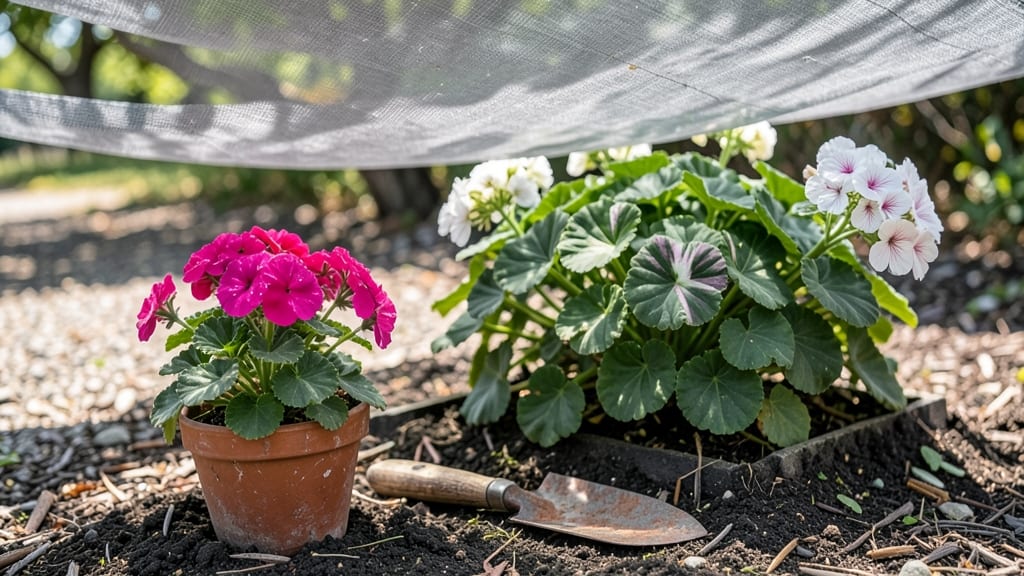
Geraniums do not like shade—they thrive in full sun and only tolerate light shade, as excessive shade weakens growth, reduces blooming, and increases disease risk. Give them at least 6 hours of direct sunlight daily for vibrant flowers and healthy plants.
Geraniums are sun-lovers, and their flowering depends on light intensity.
Too little light means fewer blooms and leggy stems, while full sun boosts photosynthesis and keeps them compact. 🌞 If you must grow them in shade, choose varieties like Ivy Geraniums (Pelargonium peltatum), which handle partial shade better than others.
Rotate containers seasonally to follow the sun's path, and avoid deep shade where moisture lingers—this prevents fungal issues.
For best results, place geraniums near south- or west-facing windows or use reflective surfaces like white walls to bounce extra light. Even in partial shade, aim for at least 4 hours of bright indirect light daily.
The trade-off? Shade-tolerant geraniums may bloom less vibrantly, but they’ll survive where sun-loving varieties would struggle.
💡 In This Article
- How Sunlight Affects Geranium Growth and Flowering
- Best Shade Solutions for Geraniums in Low-Light Areas
How sunlight affects geranium growth and flowering
Geraniums rely on sunlight to power their photosynthesis, a process where chlorophyll absorbs light energy to convert carbon dioxide and water into glucose and oxygen.
In full sun (6+ hours of direct light), geraniums produce up to 30% more chlorophyll than in shade, which translates to faster growth and more robust stems. The extra energy also fuels the production of anthocyanins, the pigments responsible for their vibrant red, pink, and purple blooms.
Without sufficient light, these pigments don’t develop, leading to pale, less attractive flowers.
The key mechanism here is the phytochrome response, a light-sensitive protein that regulates flowering. In low-light conditions, phytochrome remains in its inactive form, signaling the plant to prioritize leafy growth over flower production.
This is why geraniums in shade often grow tall and leggy with sparse blooms—what you’re seeing is the plant stretching toward any available light. 🌿 For example, a geranium in full sun might produce 2-3 times more flowers than one in partial shade, with blooms lasting 3-4 weeks longer due to higher energy reserves.
Temperature also plays a role. Geraniums thrive in 65-75°F ranges, and full sun helps maintain this ideal temperature by preventing moisture buildup on leaves (which can lead to fungal diseases).
In shade, cooler temperatures and higher humidity create the perfect conditions for powdery mildew, a common issue that weakens the plant. The trade-off? While shade can reduce water needs slightly, the risk of disease and poor flowering almost always outweighs this minor benefit.
Consider this comparison: A geranium in full sun grows 12-18 inches tall with compact, bushy foliage, while one in deep shade may stretch to 24 inches or more with sparse leaves and few blooms.
The difference isn’t just aesthetic—it’s biological. Shade-stressed geraniums allocate energy to survival rather than reproduction, which is why they’re more prone to pests and slower to recover from damage.
Even partial shade (4-6 hours of light) affects geraniums differently depending on the variety. Zonal geraniums (like Pelargonium zonale) are the most sun-dependent, while Ivy geraniums (Pelargonium peltatum) tolerate slightly more shade but still require bright indirect light to thrive.
The rule of thumb? If your geranium’s leaves are dark green and glossy with long stems, it’s begging for more sun.
One final insight: The angle of sunlight matters too. Morning sun (cooler and less intense) is gentler than afternoon sun, which can scorch leaves. However, geraniums prefer at least 4 hours of direct afternoon sun to trigger their flowering hormones.
Without it, you’ll notice blooms appearing later in the season—or not at all.