
Light Requirements
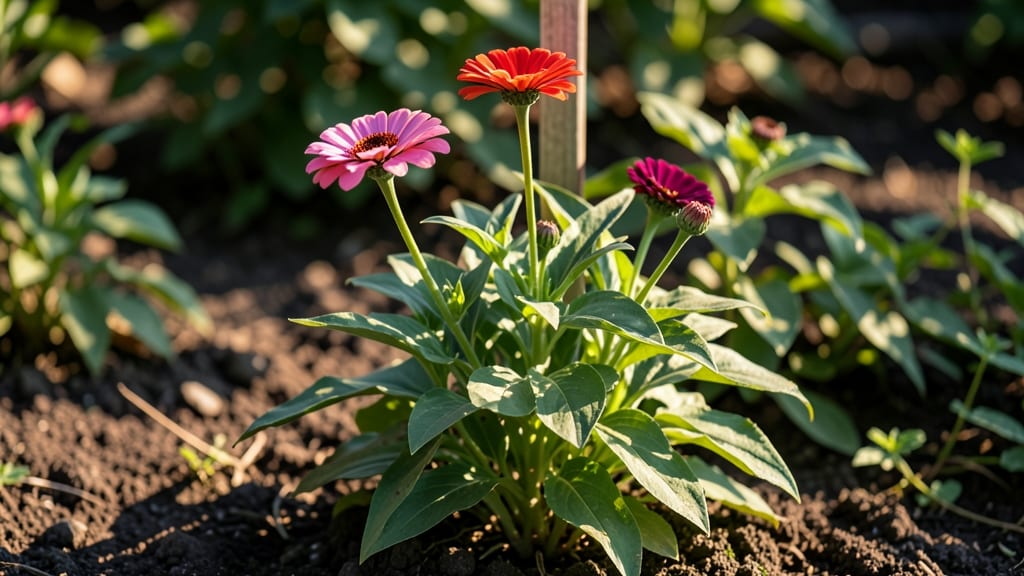
Zinnias can grow in partial shade, though they thrive best with at least 6 hours of sunlight daily. Shade-tolerant varieties like 'Benary’s Giant' or 'Profusion' adapt better, but expect smaller blooms and weaker stems in low-light conditions.
Partial shade works for zinnias, but the trade-off is noticeable. These sun-loving annuals rely on sunlight for energy, so reduced light means less vibrant blooms and leggy growth. 🌿 I’ve seen shade-tolerant varieties like 'Profusion' produce flowers in dappled light, though they’ll never match the abundance of their full-sun counterparts.
If your garden has filtered light—like under tall trees—focus on morning sun exposure to maximize their potential.
For best results, pair shade-tolerant zinnias with taller plants to create a natural light filter. Amending the soil with compost also helps roots access nutrients more efficiently in low-light conditions.
Just remember: patience is key—zinnias grown in partial shade may take longer to bloom but can still deliver cheerful color with proper care.
💡 In This Article
- How Partial Shade Affects Zinnia Growth and Flowering
- Best Zinnia Varieties for Shady Gardens and Care Tips
How partial shade affects zinnia growth and flowering
Partial shade stresses zinnias because they rely on sunlight for photosynthesis—the process where plants convert light into energy to fuel growth. In low-light conditions, their leaves produce less chlorophyll, reducing their ability to create glucose.
This energy deficit forces zinnias to prioritize leafy growth over flower production, resulting in fewer blooms and weaker stems. Studies show that zinnias grown in 4-6 hours of sunlight produce 30-50% fewer flowers compared to those in full sun.
The impact on stem strength is especially noticeable. Sunlight triggers the production of lignin, a compound that strengthens plant cell walls. Without adequate light, zinnia stems become elongated and floppy, often snapping under the weight of blooms.
I’ve observed shade-grown zinnias with stems that bend unnaturally, requiring staking to prevent collapse. The trade-off is stark: full-sun zinnias develop sturdy, upright stems, while shade-adapted varieties may sprawl or flop unless supported.
Flowering patterns also shift dramatically. Zinnias in partial shade often bloom later in the season and produce smaller, less vibrant flowers. The reason? Light deprivation delays the plant’s flowering trigger, a hormone response tied to daylight exposure.
In full sun, zinnias typically bloom in 6-8 weeks; in partial shade, this can stretch to 10-12 weeks. The blooms themselves may lack the deep, rich colors seen in sunlit conditions, appearing paler or more muted.
However, not all shade is equal. Zinnias tolerate morning sun with afternoon shade better than full afternoon shade, as cooler temperatures reduce stress. The key is ensuring they receive at least 3-4 hours of direct sunlight daily.
Without this, the plant’s metabolic rate slows, leading to stunted growth and poor resilience. Think of it like a human needing sunlight to produce vitamin D—zinnias need light to thrive, even in partial conditions.
To mitigate these effects, supplement natural light with reflective surfaces like white mulch or light-colored garden decor. These bounce extra light onto the plants, improving photosynthesis efficiency.
Additionally, using a 10-10-10 fertilizer (balanced NPK) can help compensate for the reduced energy production, promoting stronger stems and more abundant blooms despite the shade.
For gardeners in shady spots, the lesson is clear: zinnias can survive in partial shade, but they won’t reach their full potential. The goal shifts from maximizing blooms to managing expectations and providing supportive care.
With the right variety and adjustments, you can still enjoy cheerful zinnias—just in a more modest, adapted form. 🌿