
Light Requirements
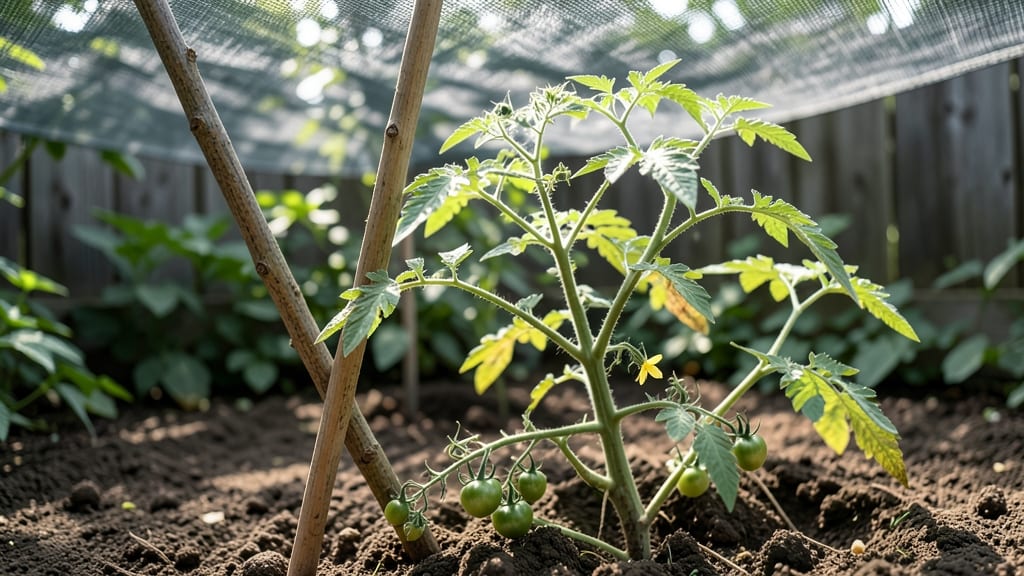
Tomatoes can grow in shade but need partial sunlight—6 to 8 hours daily—to produce quality fruit. Opt for dwarf or cherry varieties, use reflective surfaces, and prioritize well-draining soil to boost yields in low-light areas.
While tomatoes thrive in full sun, they can still flourish in partial shade with the right approach. 🌱 The key is selecting varieties bred for lower light, like 'Tiny Tim' or 'Patio Princess,' which prioritize leaf growth over fruit production when sunlight is limited.
I've found that adding reflective mulch or white surfaces nearby can redirect light to the plants, making a noticeable difference in fruit size and color. Just remember—shade-tolerant doesn't mean shade-proof, so even these varieties will reward you more when they get a few hours of direct sunlight.
For best results, focus on container gardening with these varieties—they're less likely to outgrow their space. A south-facing window or balcony with afternoon sun exposure works surprisingly well, especially when combined with regular pruning to encourage upward growth.
The trade-off? You might get fewer tomatoes, but they'll be sweeter and more flavorful than those struggling in deep shade.
💡 In This Article
- How Shade Affects Tomato Growth and Fruit Development
- Top Shade-Tolerant Tomato Varieties for Low-Light Gardens
How shade affects tomato growth and fruit development
Tomatoes rely on photosynthesis to convert sunlight into energy, and when light is limited, their growth patterns shift dramatically. In full sun, plants allocate energy toward both leaf production and fruit development, but in shade, they prioritize leaves to maximize light capture.
This means fewer blossoms and smaller tomatoes, as the plant redirects its resources away from fruit production. Studies show that tomatoes receiving less than 4 hours of sunlight daily may produce only 30-50% of the fruit compared to sun-exposed plants.
The chlorophyll in tomato leaves absorbs light primarily in the blue (400-500 nm) and red (600-700 nm) wavelengths, which are most abundant in direct sunlight. Shade filters out these wavelengths, forcing the plant to stretch and grow thinner stems in search of light—a process called etiolation.
These elongated stems are weaker and more prone to snapping under the weight of fruit. The leaves also become larger and paler, reducing their efficiency in capturing what little light is available. 🌿
Fruit development suffers in low light because tomatoes need energy to form and ripen. Without sufficient photosynthesis, the plant produces smaller, often misshapen tomatoes with less vibrant color.
For example, a 'Sun Gold' cherry tomato grown in full sun will yield bright orange fruits, while the same variety in deep shade may produce pale yellow, underdeveloped berries. The flavor also declines, as sugars and acids—key components of tomato taste—require sunlight to develop properly.
Shade-adapted tomato varieties handle light deprivation better by growing more compactly and producing fruit more efficiently. These plants have been bred to allocate energy differently, prioritizing fruit over excessive leaf growth.
For instance, 'Tiny Tim' tomatoes can produce 20-30 fruits per plant in partial shade, while standard varieties might yield only 5-10. The trade-off is that even shade-tolerant varieties will still produce better-quality fruit with 4-6 hours of direct sunlight daily.
Another critical factor is temperature. Shade can keep soil and air cooler, slowing down the plant's metabolism. Tomatoes thrive in temperatures between 70-85°F, and prolonged shade may keep them below this range, further reducing growth and fruit set.
However, shade can also protect tomatoes from scorching in extreme heat, which is why partial shade (especially afternoon shade) is ideal in hot climates. This balance is key to maximizing both growth and fruit production.
To mitigate shade stress, gardeners can use reflective surfaces like white gravel or aluminum foil around the base of plants to bounce extra light onto the leaves. This simple trick can increase light exposure by up to 20%, making a noticeable difference in fruit size and color.
Additionally, pruning lower leaves to improve air circulation and light penetration can help shade-grown tomatoes perform better. 💡