
Light Requirements
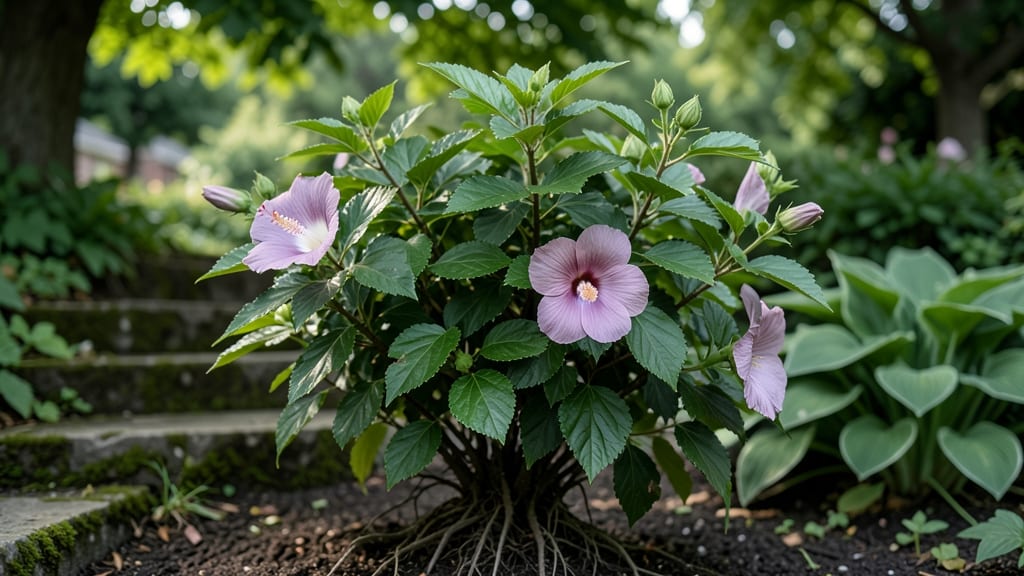
Rose of Sharon can grow in shade, but it performs best with partial shade to full sun exposure, requiring at least 4-6 hours of sunlight daily. Too much dense shade weakens its blooms and stunts growth, while strategic pruning can improve light access.
While Rose of Sharon can survive in shaded areas, its growth and flowering potential are directly tied to light exposure. 🌿 The plant relies on sunlight for photosynthesis, and insufficient light leads to sparse blooms and leggy stems.
I’ve seen it thrive in dappled shade from trees, where it gets filtered sunlight throughout the day. For container growers, placing it near a south-facing window or under a sheer curtain can mimic ideal conditions.
If your garden has heavy shade, focus on pruning to open up the canopy and encourage new growth toward light sources.
Amending the soil with compost also helps compensate for reduced photosynthesis by improving nutrient uptake. 🌱 Remember, even shade-tolerant varieties like Rose of Sharon will reward you with the most vibrant blooms when they get their fair share of sunlight.
💡 In This Article
- Rose of Sharon’s Light Requirements Explained
- Shade Adaptation Tips for Rose of Sharon
Rose of Sharon’s light requirements explained
Rose of Sharon (Hibiscus syriacus) thrives on sunlight because its leaves contain chlorophyll that converts light energy into glucose through photosynthesis. The plant requires 4-6 hours of direct sunlight daily to produce enough energy for robust growth and abundant blooms.
Without sufficient light, the plant’s energy production drops, leading to weaker stems and fewer flowers. In deep shade, photosynthesis slows dramatically, causing the plant to rely on stored energy, which depletes over time.
The ideal sunlight spectrum for Rose of Sharon includes a balance of blue light (400-500 nm), which promotes compact growth and flowering, and red light (600-700 nm), which drives photosynthesis. Shade blocks or filters these wavelengths, especially in dense canopies where only 10-20% of sunlight reaches the plant.
This deficiency causes leaves to develop a pale, almost yellowish-green hue, a sign of chlorophyll breakdown due to insufficient energy production. 🌿
Leaf color shifts are a clear indicator of light stress. In low-light conditions, Rose of Sharon’s leaves may appear duller and smaller, lacking the vibrant green of well-lit plants. The plant also produces fewer blooms because flowering is an energy-intensive process.
Studies show that hibiscus varieties in full sun produce 30-50% more flowers than those in deep shade, with blooms lasting longer due to better nutrient allocation. The trade-off? Too much direct sun (over 8 hours) can scorch leaves, especially in hot climates.
Partial shade—like dappled light from trees or a 50% shade cloth—strikes a balance, reducing stress while maintaining energy production. This environment allows the plant to grow steadily without the risk of leaf burn.
For example, placing Rose of Sharon near a building’s east or west side provides morning or afternoon sun while shielding it from harsh afternoon rays. The key is monitoring leaf condition: if they look healthy and glossy, the light balance is right.
Seasonal light changes also affect growth. In winter, shorter days reduce sunlight exposure, and Rose of Sharon may enter a semi-dormant state. Supplementing with a grow light (10,000 lux) for 4-6 hours daily can mimic natural light cycles, encouraging continued growth.
Conversely, summer shade helps protect the plant from heat stress, especially in regions with intense sunlight. The goal is to replicate the natural light rhythm of its native Mediterranean climate, where it experiences mild winters and hot, sunny summers.
Understanding these light dynamics helps you tailor care to your plant’s needs. For instance, if your garden has heavy shade, focus on improving light access through pruning or relocating the plant. Even small adjustments—like trimming overgrown branches—can make a significant difference in flower production and overall health. 🌸