
Light Requirements
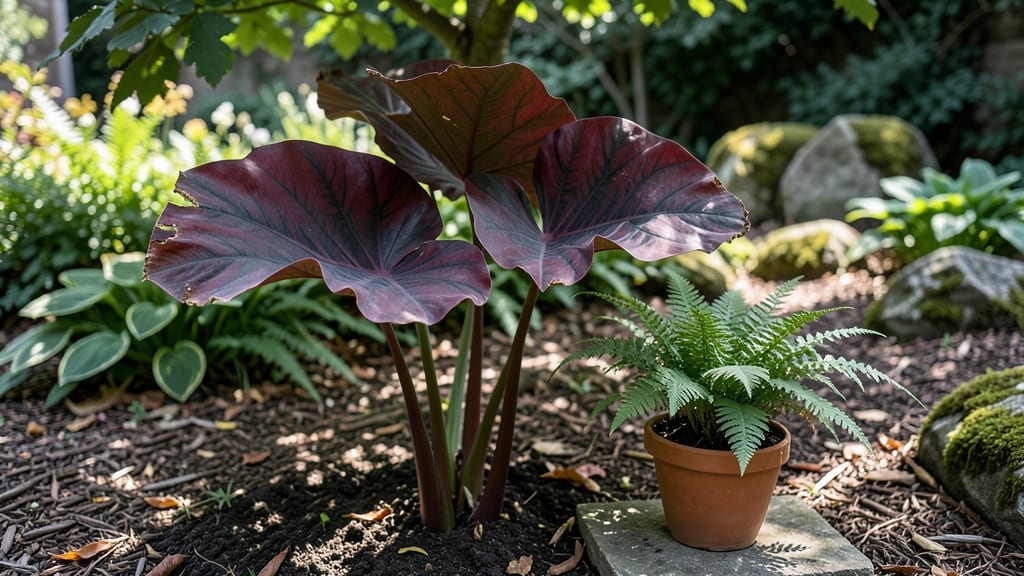
Elephant ears can grow in shade, though slower with smaller leaves, especially with shade-tolerant varieties like Alocasia 'Polly' or Colocasia 'Black Magic.' Provide bright indirect light, moist soil, and high humidity for best results.
While these tropical plants thrive in low-light conditions, they still need some filtered sunlight to prevent leggy growth or pale foliage. 🌿 The right variety makes all the difference—Alocasia types often handle shade better than Colocasia, which may develop smaller but more vibrant leaves.
I've seen 'Black Magic' produce stunning deep purple hues even in partial shade, proving that shade isn't a dealbreaker with the right care.
For optimal results, aim for at least 4-6 hours of dappled sunlight daily, especially in northern climates. The key is preventing waterlogged soil—elephant ears in shade are prone to root rot if overwatered.
A thick layer of mulch helps maintain moisture while improving drainage, and grouping plants together creates a microclimate with better humidity levels.
💡 In This Article
- Shade-Tolerant Elephant Ear Varieties for Low-Light Gardens
- Optimizing Soil, Light, and Humidity for Shady Elephant Ears
Shade-tolerant elephant ear varieties for low-light gardens
Elephant ears thrive in shade thanks to their biological adaptations, particularly in species like Alocasia and Colocasia. These plants evolved in tropical understories where direct sunlight is limited, developing thick, waxy leaves that reduce water loss.
The Alocasia genus, for example, contains varieties like 'Polly' that produce arrowhead-shaped leaves with striking silver markings—these leaves have a unique hypostomatic structure, meaning their stomata (pores) are mostly on the underside, minimizing water evaporation in low-light conditions. 🌿
The leaf size and color vary dramatically between species. Colocasia 'Black Magic' delivers deep purple-black foliage even in partial shade, while Xanthosoma varieties like 'Pink Princess' may show reduced pink hues but still grow well under 30-50% shade.
What's fascinating is how these plants prioritize leaf development over stem growth in low light—you'll notice thicker, more robust leaves but shorter stems compared to sun-exposed plants. This adaptation helps them capture whatever light is available through their larger surface area.
For gardeners, this means you can successfully grow elephant ears under large trees or on north-facing patios. The trade-off is slower growth—plants in full shade may take 2-3 times longer to reach mature size compared to those in bright indirect light.
However, the right variety can make all the difference. Alocasia 'Zebrina' with its zebra-striped leaves thrives in 60% shade, while 'Illustris' produces dramatic burgundy leaves even in 40% shade conditions.
Color intensity is another key consideration. In low light, chlorophyll production dominates, often diluting vibrant hues. That's why 'Black Magic' maintains its deep purple tones better than 'White Queen,' which may appear more greenish.
The secret lies in their anthocyanin content—these pigments protect leaves from excess light damage and actually increase in cooler, shaded environments, giving you those stunning dark leaves even without full sun.
When selecting varieties, consider your specific shade conditions. Dappled light (like under deciduous trees) works better than dense shade from evergreens, which blocks all light. The best performers in low light are those with naturally thick leaves and high anthocyanin levels—look for varieties marketed as "shade-tolerant" or "low-light adapted."
These plants have evolved to maximize photosynthesis efficiency in limited light conditions through specialized leaf structures and pigmentation.
One surprising fact is that some elephant ear varieties actually prefer partial shade in hot climates. In areas with intense midday sun, providing afternoon shade can prevent leaf scorch while maintaining vigorous growth.
This dual adaptation makes them incredibly versatile for different growing conditions, from shady forest edges to bright indoor spaces with filtered light.