
Light Requirements
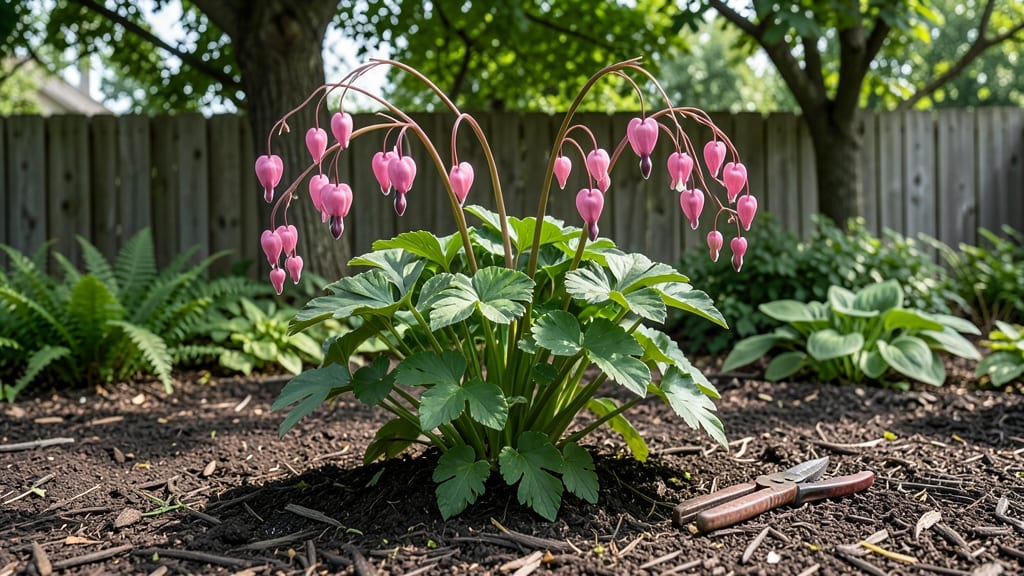
Bleeding heart plants in full shade thrive best, delivering vibrant foliage and iconic heart-shaped flowers when grown in consistently moist, well-draining soil with high humidity. Cultivars like Dicentra spectabilis and Dicentra eximia excel in low-light gardens but need protective mulch during winter in colder regions.
These shade-loving perennials actually flourish where other plants struggle, thanks to their unique ability to adapt to minimal light conditions. 🌿 The key is maintaining that moisture balance—too dry and the leaves wilt, but soggy soil leads to root rot.
I've found that adding organic compost at planting time gives them the nutrients they need to establish strong roots quickly, which is especially important in full-shade environments where sunlight can't fuel photosynthesis as efficiently.
What many gardeners don't realize is that the color intensity of those signature heart-shaped blooms actually increases in full shade—it's nature's way of compensating for lower light levels. The trade-off? You might see slightly fewer flowers compared to sun-exposed plants, but the foliage becomes even more lush and vibrant.
For best results, I recommend planting them where they'll get dappled shade in the afternoon, which mimics their natural woodland habitat.
💡 In This Article
- How Light Levels Affect Bleeding Heart Flowering
- Top Full-Shade Bleeding Heart Varieties for Different Climates
How light levels affect bleeding heart flowering
Bleeding heart plants (Dicentra spp.) have evolved a fascinating adaptation for low-light environments. Their leaves contain a higher concentration of chlorophyll compared to sun-loving plants, allowing them to capture what little light reaches the forest floor where they naturally grow.
This adaptation means they can thrive in conditions receiving less than 25% of full sunlight—about the light levels found under a dense canopy of trees. The trade-off is that their photosynthesis rate is slower, which is why they need that consistently moist soil to compensate for reduced energy production.
The intensity of light directly impacts their flowering cycle. In full shade, these plants focus their energy on producing lush foliage rather than abundant blooms, which is why you'll often see fewer but larger, more vibrant flowers.
The blooms themselves contain pigments called anthocyanins, which help protect the delicate petals from excessive light damage—a clever evolutionary trait for shade-dwelling plants.
What's surprising is that the color saturation of these flowers actually increases in lower light conditions, as the plant concentrates its limited energy on producing more pigment rather than more flowers.
Seasonal light changes play a crucial role in their dormancy cycle. As daylight hours shorten in fall, bleeding hearts naturally prepare for dormancy, which is why they often go dormant after flowering. In full shade, this transition happens more gradually because the reduced light levels create a more stable microclimate.
This is why they're less prone to sudden stress from temperature fluctuations compared to sun-exposed plants. However, this also means they need that protective 3-4 inch layer of mulch in winter to insulate their roots from freezing ground.
What most gardeners overlook is how light quality affects their growth. While full shade provides protection from intense sunlight, it's often blue-light deficient—the wavelengths that trigger flowering. This is why some gardeners report more prolific blooms when they provide artificial grow lights with a blue spectrum during late winter.
The light intensity threshold for optimal growth sits around 1,000-2,000 foot-candles (about 10,000-20,000 lux), which is roughly what you'd find under a dense oak canopy on a sunny day.
Here's what happens when light levels get too extreme: In bright shade (like 50% sunlight), you'll see more foliage growth but potentially fewer blooms, while in deep shade (10% sunlight), the plants may become leggy as they stretch toward any available light.
The sweet spot is 20-30% light, where you get that perfect balance of lush foliage and abundant flowers. This is why they perform so well in woodland gardens or under large shrubs where they get morning sun but afternoon shade.
One fascinating adaptation is their ability to change leaf orientation. In lower light conditions, the leaves become more horizontal to maximize light capture, while in brighter shade, they angle slightly upward.
This dynamic response helps them optimize photosynthesis throughout the growing season. 🌿 For gardeners, this means you can often "revive" a struggling bleeding heart by simply rotating it to face different light directions throughout the season.