
Light Requirements
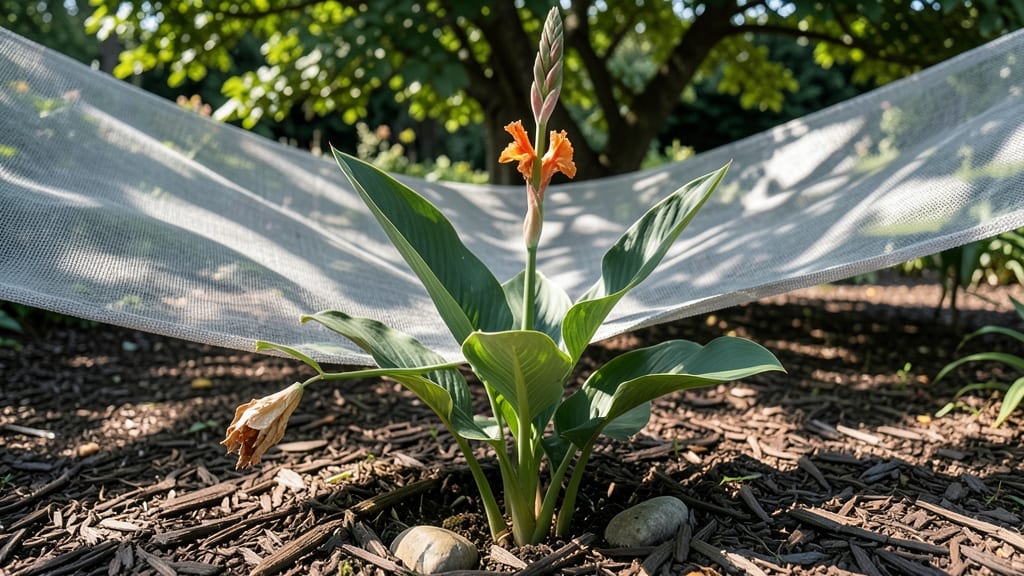
Cannas can grow in shade but thrive best with at least 4-6 hours of bright, indirect sunlight daily. In deep shade, they produce fewer blooms and may grow leggy, though some low-light varieties tolerate partial shade better than others.
While cannas are adaptable, their growth patterns change dramatically based on light exposure. 🌿 Without sufficient sunlight, these tropical plants focus energy on leafy growth rather than vibrant blooms, often resulting in tall, sparse stems.
The good news is that certain canna varieties—like 'Black Knight' or 'Wyoming'—have evolved to handle partial shade better than others, making them ideal for shaded gardens. For best results, position your cannas where they can still catch filtered sunlight through trees or near east-facing windows.
Light isn't just about quantity—it's about quality. Bright indirect light (think dappled sunlight) helps cannas maintain their signature bold foliage and occasional blooms, while deep, dense shade forces them into survival mode.
If you're working with limited light, consider supplementing with a grow light during the plant's active growing season to encourage healthier development.
💡 In This Article
- How Light Affects Canna Growth and Bloom Production
- Best Shade-Tolerant Canna Varieties for Low-Light Gardens
How light affects canna growth and bloom production
Cannas rely on photosynthesis to convert sunlight into energy, and their chlorophyll needs bright, indirect light to function efficiently. When exposed to 4-6 hours of sunlight daily, these tropical plants produce enough glucose to fuel both leaf growth and vibrant blooms.
However, in deep shade, chlorophyll production slows dramatically, forcing cannas to prioritize survival over reproduction. This shift explains why shaded cannas often develop long, leggy stems with sparse foliage and minimal flowers.
The science behind this involves phytochrome pigments in canna leaves, which detect light quality. In low-light conditions, these pigments trigger elongated stem growth (a process called etiolation) to maximize light absorption. 🌱 Meanwhile, the plant diverts energy away from flower buds, which require significant resources.
Studies show that cannas in deep shade can reduce bloom production by up to 70% compared to those in optimal light. The tuber development also suffers, as stored energy isn't replenished efficiently.
For gardeners working with limited light, the key is bright indirect light rather than harsh shade. East-facing windows or areas under high-canopy trees provide ideal filtered sunlight. Even 3-4 hours of morning sun can make a noticeable difference in foliage health and occasional blooms.
Without this light, cannas become stressed, making them more susceptible to pests and diseases. The trade-off is clear: more light equals better growth and more dramatic flowers.
Temperature plays a secondary role in light adaptation. Cannas thrive in 70-85°F environments, but cooler shade areas can further stress the plant. The combination of low light and cooler temps slows metabolic processes, leading to weaker stems and smaller leaves.
This is why cannas in shaded northern gardens often struggle more than those in southern climates, even with similar light exposure.
Consider this real-world example: A 'Striped Indian Blood' canna in full sun produces bold red-and-yellow foliage with frequent blooms, while the same variety in deep shade may grow to 3 feet taller with pale leaves and no flowers.
The visual contrast highlights how critical light is to canna performance. 🌿 For best results, supplement natural light with a 12-hour grow light during cloudy periods to maintain energy production.
What most gardeners don't realize is that cannas can actually overheat in intense midday sun, which is why bright indirect light is preferable. The ideal scenario is morning sun followed by afternoon shade, allowing the plant to photosynthesize efficiently without stress.
This balance is particularly important in containers, where heat retention can be an issue.