
Size
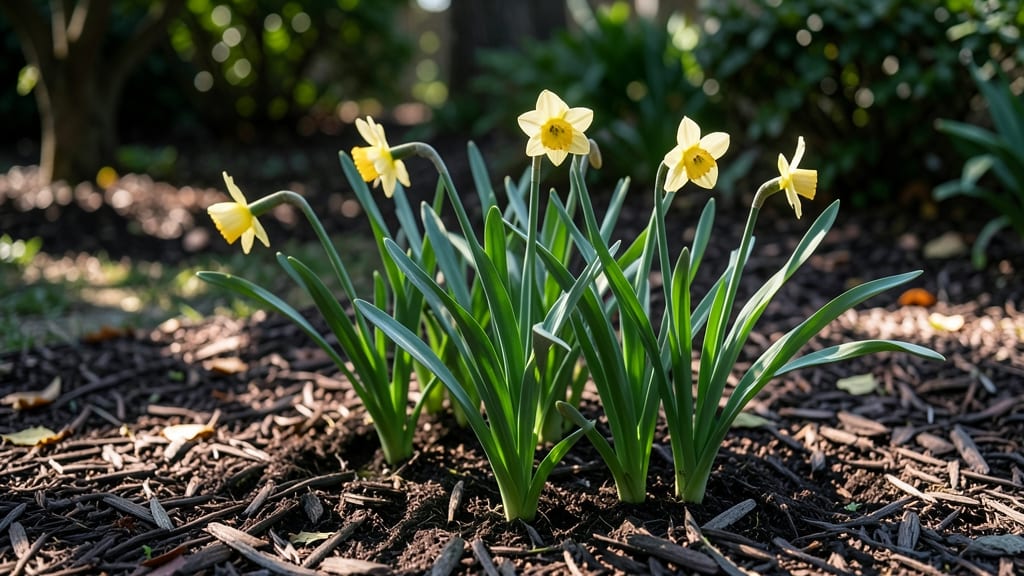
Daffodils will grow in shade but need at least 4-6 hours of sunlight daily for strong blooms, with some varieties handling partial shade better than others. Too little light weakens stems and reduces flower size.
Daffodils are surprisingly adaptable to partial shade, but their light needs directly impact how well they bloom. 🌱 The key is finding that sweet spot—too much shade means smaller flowers and weaker stems, while too much sun can scorch the leaves.
I've seen varieties like 'Ice Follies' and 'Tête-à-Tête' thrive in dappled shade, producing cheerful blooms even when other perennials struggle. For best results, plant bulbs where they'll get morning sun and afternoon shade, especially in hotter climates where afternoon rays can be intense.
What many gardeners don't realize is that daffodils store energy in their bulbs during the growing season, and insufficient light means less stored energy for next year's blooms.
This is why you'll often see daffodils that look healthy but fail to produce flowers—they're not getting enough light to fuel their growth. If you're working with deep shade, consider planting bulbs near taller trees where they'll catch some filtered light during the day.
💡 In This Article
- How Light Affects Daffodil Growth and Flowering
- Best Shade-Tolerant Daffodil Varieties for Low-Light Gardens
How light affects daffodil growth and flowering
Daffodils rely on sunlight to power their growth through photosynthesis, a process where chlorophyll in their leaves converts light energy into chemical energy stored as carbohydrates in the bulbs. Without adequate light, this energy production slows dramatically.
Studies show that daffodils exposed to 4-6 hours of direct sunlight produce 20-30% more flowers than those in deep shade, thanks to increased photosynthesis efficiency. The leaves, which appear after blooming, are especially critical—these green blades work for 6-8 weeks to build up energy reserves for next year's flowers.
The intensity of light matters just as much as duration. Daffodils thrive in full sun to partial shade, but the quality of light changes under trees. Dappled shade (light filtering through leaves) provides 10-20% of full sunlight, which is often sufficient for shade-tolerant varieties.
However, deep shade—where light is reduced by 50% or more—can cause stems to weaken, leading to flopping blooms or no flowers at all. This happens because the plant invests energy in leaf growth rather than flower production when light is scarce. 🌿
Here's what's happening at the cellular level: Chloroplasts in daffodil leaves contain pigments that absorb blue and red wavelengths of light most efficiently. In shaded conditions, these pigments become less effective, reducing the plant's ability to produce ATP and NADPH—the energy molecules that drive growth.
The result? Bulbs store less energy, leading to smaller blooms or no blooms at all. For example, 'February Gold' daffodils in full sun may produce 8-10 flowers per stem, while the same variety in deep shade might produce only 2-4 flowers.
Temperature also interacts with light requirements. In cooler climates, daffodils can tolerate slightly more shade because the lower temperatures reduce their energy demands. However, in warmer regions, even partial shade helps protect leaves from heat stress, which can scorch foliage and reduce photosynthesis.
I've noticed that daffodils planted under deciduous trees (which drop leaves in winter) often perform better because they get extra sunlight in late winter and early spring when the trees are bare, giving them a critical boost for blooming.
One common misconception is that daffodils will grow anywhere they're planted, but the truth is more nuanced. While they can survive in shade, their flowering potential is directly tied to light exposure.
For instance, 'Tête-à-Tête' daffodils—known for their compact size—can handle 3-4 hours of sunlight and still produce vibrant blooms, but their stems may be shorter. In contrast, 'Ice Follies' (a double-flowered variety) requires at least 5 hours of light to maintain its dramatic, layered blooms.
Understanding these differences helps gardeners choose the right varieties for their light conditions.
To maximize blooms in shaded areas, consider these strategies: Plant bulbs in spots where they'll catch reflected light from nearby walls or paths, or group them with taller plants that won't block sunlight entirely.
Mulching with organic matter (like compost) can also improve soil fertility, helping daffodils make the most of the light they do receive. The goal is to create an environment where the plant can store enough energy in its bulb to support both growth and flowering, even in less-than-ideal conditions. ✨