
Shrubs
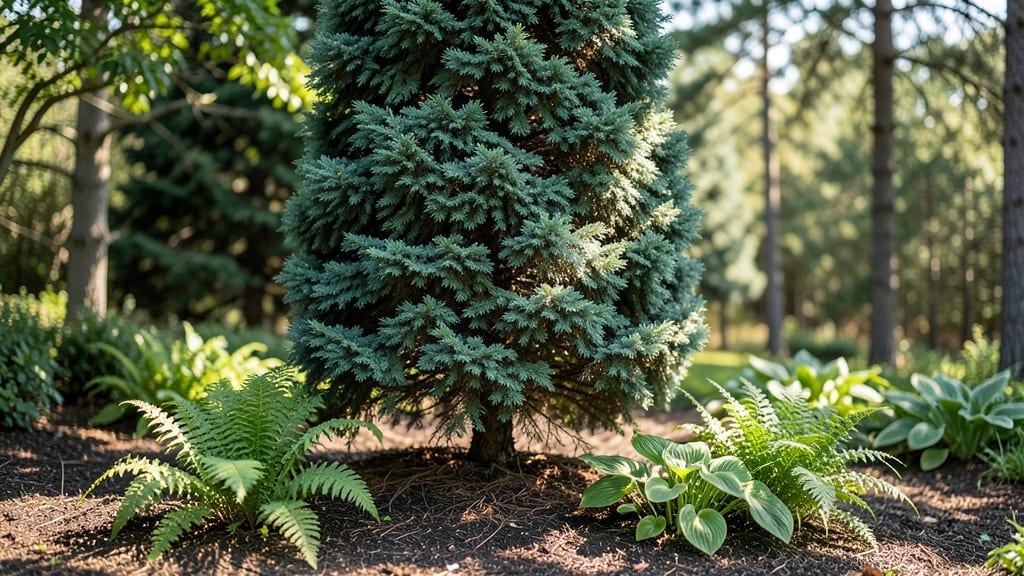
Leyland cypress trees create some of the most effective shade in landscaping, thanks to their thick, evergreen foliage that blocks 70-90% of sunlight once fully mature (15-20 feet tall). Their rapid growth and dense branching form a nearly solid barrier, perfect for privacy and temperature regulation.
This shade isn't just about blocking sunlight—it's about creating a cool, secluded microclimate that stays consistent year-round. 🌳 The tight branching pattern means sunlight barely penetrates, which is why these trees excel as windbreaks and privacy screens.
I've seen them reduce outdoor temperatures by 10-15°F in peak summer months, making patios and play areas much more comfortable. The key is planting them strategically: for maximum shade coverage, space trees 6-8 feet apart in rows, allowing their canopies to merge naturally over time.
What sets Leyland cypress apart from other shade trees is their year-round performance. Unlike deciduous trees that drop leaves in winter, these evergreens maintain their dense foliage, providing continuous coverage. This makes them ideal for areas where seasonal shade changes would otherwise create uncomfortable transitions.
Just remember: their aggressive growth means they'll need regular pruning to maintain your desired shape and prevent them from outgrowing their space.
💡 In This Article
- How Leyland Cypress Canopy Density Develops Over Time
- Best Landscaping Uses for Leyland Cypress Shade
How Leyland cypress canopy density develops over time
The secret behind Leyland cypress shade lies in their unique growth habit. These trees develop a pyramidal shape with tightly packed, horizontal branches that create a dense network of foliage.
Each branch supports 1-2 inches of needle-like leaves that grow in a flat, scale-like pattern—this arrangement maximizes surface area for light interception. 🌿 What's fascinating is how their growth rate directly impacts shade density: juvenile trees (first 5-7 years) grow 3-4 feet per year, but their foliage remains sparse, offering only 30-50% shade coverage.
Once mature (typically 10-15 years), Leyland cypress trees reach their full shade potential. The branch spacing tightens to just 12-18 inches apart vertically, while horizontal branches overlap by 50-70%. This creates what arborists call a "closed canopy"—a solid layer of foliage that blocks 70-90% of direct sunlight.
The needles themselves have a waxy coating that reflects light, further enhancing shade effectiveness. During peak summer months, this dense canopy can reduce ground-level sunlight by up to 95% in the center, while still allowing 10-20% light penetration at the edges.
The seasonal consistency is what truly sets Leyland cypress apart. Unlike deciduous trees that lose leaves, these evergreens maintain their dense foliage year-round. 🌲 Even in winter, when other trees shed leaves, Leyland cypress continues providing 50-60% shade coverage—a crucial advantage for climates with cold winters.
The needles grow in overlapping layers, creating what botanists call a "multi-tiered canopy" that traps light at multiple levels, similar to how a thick forest floor stays shaded even under a partial canopy.
What most people don't realize is how the tree's internal growth patterns contribute to shade density. Leyland cypress have a unique vascular system that distributes water and nutrients efficiently to the outer branches first.
This means the newest, most densely packed foliage is always on the outside of the canopy, creating that impenetrable shade barrier. The trade-off? This aggressive outward growth requires regular pruning to maintain the tree's shape and prevent it from becoming too wide for its intended space.
Consider this comparison: a 10-year-old Leyland cypress (15 feet tall) might provide 60-70% shade coverage, while a 20-year-old specimen (30 feet tall) can achieve 85-90% coverage. The difference comes from both increased height and the thickening of the canopy's lower branches.
This is why landscape architects often recommend planting Leyland cypress in staggered rows—each tree's expanding canopy gradually merges with its neighbors, creating a nearly seamless shade barrier over time.
For those planning long-term shade solutions, the key is patience.
The first 5 years show minimal shade improvement, but between years 7-12, you'll see the most dramatic increases in density. 💫 This growth pattern makes Leyland cypress particularly valuable for new developments where immediate shade isn't critical, but long-term comfort is the priority.