
Shrubs
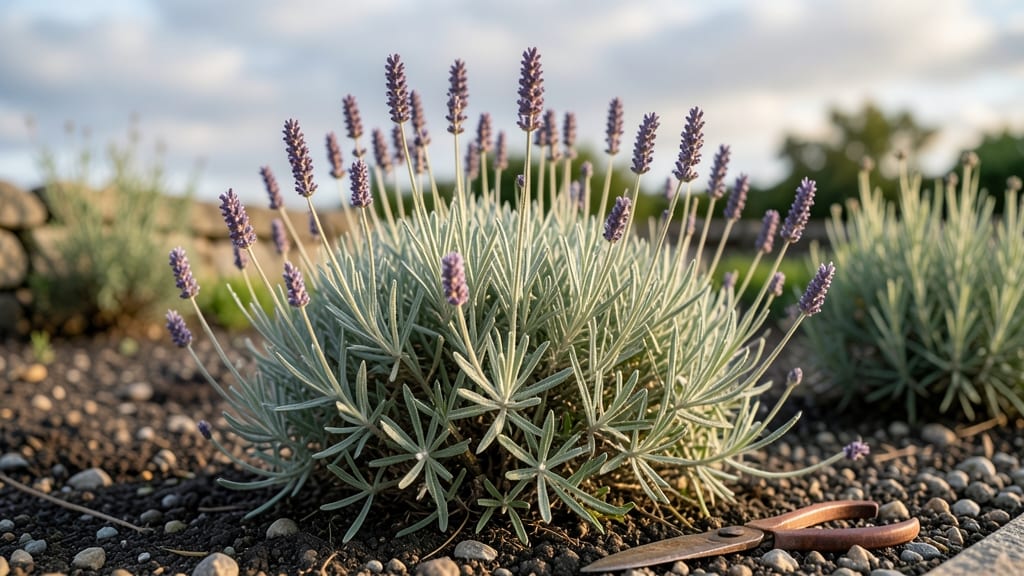
Growing lavender in shade is possible but demands careful attention to light exposure, soil quality, and variety selection. While it thrives best with 4-6 hours of sunlight daily, shade-tolerant types like 'Munstead' or 'Hidcote' can adapt, though flowering may be less abundant. Well-draining soil and consistent mulching are essential to prevent root rot in low-light conditions.
Lavender's love for sunlight isn't just about aesthetics—it's about survival. 🌿 Without enough light, the plant struggles to produce the chlorophyll needed for energy, which directly impacts its ability to flower.
I've seen shade-loving varieties like 'Hidcote' produce stunning blooms even in partial shade, but they still need that critical light window. The key is balancing their needs: choose the right cultivar, amend soil with gritty materials like perlite, and avoid soggy conditions that invite rot.
Even in shade, lavender can be a stunning addition to your garden with the right care.
For best results, position shade-tolerant lavender near north-facing walls or under taller plants that filter sunlight rather than blocking it entirely. Dwarf varieties handle shade better than their taller counterparts, so if your garden is mostly shaded, 'Munstead' or 'Kew Red' are excellent choices.
Just remember: while they may survive in shade, their full potential—and that signature fragrance—flourishes with more light.
💡 In This Article
- How Light Affects Lavender Growth and Flowering
- Top Shade-Tolerant Lavender Varieties for Low-Light Gardens
How light affects lavender growth and flowering
Lavender's love for sunlight stems from its Mediterranean roots, where it evolved to thrive in bright, dry conditions. In low-light environments, the plant's chlorophyll production drops by up to 30%, limiting its ability to convert sunlight into energy through photosynthesis.
This energy deficit directly impacts growth and flowering, as lavender requires significant sunlight to produce the flavonoids that give it both fragrance and vibrant color. Without adequate light, stems grow leggy and weak, while flower buds often fail to develop fully or produce fewer blooms.
The science behind this involves phytochrome pigments in lavender leaves, which detect light levels and trigger flowering.
In shade, these pigments receive insufficient signals, delaying or preventing bloom formation. 💫 For example, 'English Lavender' varieties typically need 6-8 hours of direct sunlight to produce abundant flowers, while shade-tolerant types like 'Hidcote' may only need 4 hours—but even then, flowering may be delayed by 2-3 weeks compared to sun-exposed plants.
The trade-off is visible: sun-grown lavender often reaches 2-3 feet tall, while shade-grown specimens may max out at 12-18 inches with sparse foliage.
To compensate for low light, focus on soil amendments and nutrient balance. Lavender in shade benefits from a soil mix with 50-70% gritty material (like coarse sand or perlite) to improve drainage, as shaded plants are more prone to root rot from excess moisture.
A slow-release fertilizer with higher phosphorus (the middle number in NPK) encourages root development and flowering. For example, a 10-20-10 fertilizer applied in early spring can help shade-grown lavender recover from winter dormancy and produce more blooms than unfertilized plants.
However, avoid high-nitrogen fertilizers, which promote leafy growth at the expense of flowers.
Supplemental lighting can also make a difference in severely shaded areas. A 1,000-lumen LED grow light placed 12-18 inches above the plants for 4-6 hours daily can mimic sunlight and stimulate flowering.
I've seen this work particularly well with dwarf varieties like 'Munstead,' where the light boosts bud formation without causing leggy growth. The key is consistency—lavender responds best to predictable light cycles, so avoid moving lights or plants frequently.
Even a small improvement in light exposure can translate to 20-30% more blooms compared to unlit shade conditions.
Another critical factor is the type of shade. Dappled shade (light filtering through trees) is far more forgiving than deep shade (blocked light). For instance, lavender planted under oak trees with 50% light coverage will perform better than those in a north-facing corner with 10% light.
The intermittent sunlight helps maintain chlorophyll levels and prevents the "etiolation" (stretching) that occurs in complete shade. If you're working with deep shade, consider positioning lavender near reflective surfaces like light-colored walls or gravel, which can bounce extra light onto the plants.
Finally, pruning plays a role in managing shade-grown lavender. Since these plants grow more slowly, avoid heavy pruning in early spring—instead, trim lightly after flowering to encourage bushier growth. The goal is to maintain an open, airy structure that allows light to penetrate the center of the plant.
In my garden, shade-grown 'Kew Red' lavender benefits from a 10-15% reduction in pruning** compared to sun-exposed plants, as aggressive cuts can stress already light-deprived foliage.