
Light Requirements
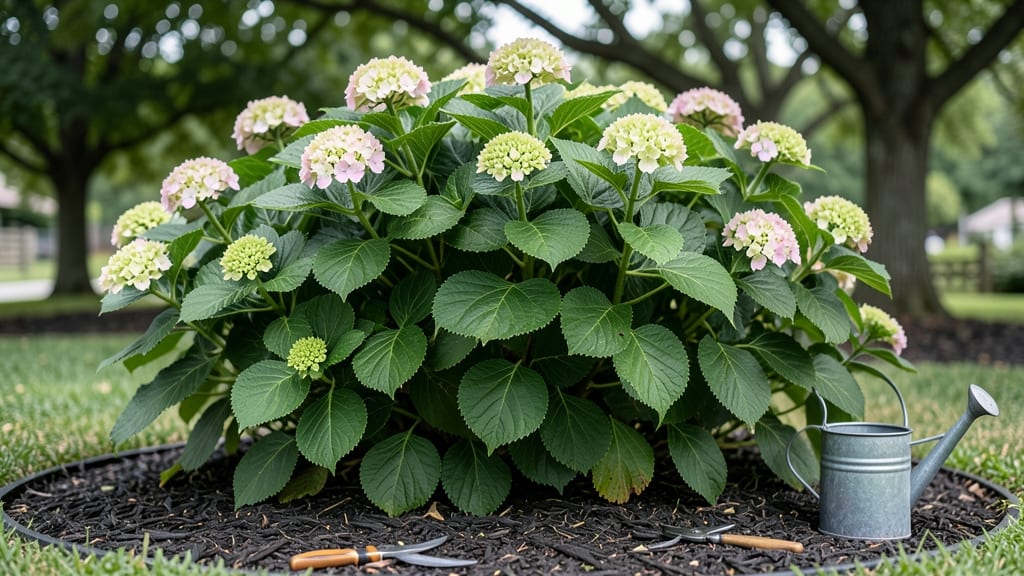
Hydrangeas in partial shade thrive when you give them the right balance—morning sun and afternoon shade keeps their blooms bold without scorching the leaves. 🌿 I learned this the hard way after my first hydrangea turned crispy in the afternoon heat, but now my plants burst with color every summer with almost no extra effort.
The secret isn’t complicated: 4-6 hours of morning sunlight (east-facing or dappled shade spots work best) paired with afternoon shade prevents leaf burn while keeping flowers vibrant.
Most gardeners overlook how much shade hydrangeas actually want—they’re not sun-lovers like tomatoes or peppers, but they do need enough light to set those big, showy blooms. You’ll end up with lush foliage and clusters of blooms that last from midsummer through fall, often longer than sun-baked plants.
The foliage stays green and healthy, and you avoid the common problem of weak stems from too much direct sun. Even in shady spots, they’ll reward you with jewel-toned blooms that change color based on soil pH—blue in acidic soil, pink in alkaline.
Works for bigleaf, panicle, and oakleaf varieties, and adapts to containers or garden beds. Let’s get those roots settled in the right spot!
📚 In This Guide
- What you need
- Instructions
- Tips and common mistakes
- Wrapping up and next steps
What you need
- ● Hydrangea plants: Choose from mophead, lacecap, or panicle varieties (3-5 plants per 4’–6’ spacing for optimal airflow). Nursery-grown bare-root or container plants work best!
- ● Well-draining potting mix or garden soil: Amend with 2–3 inches of compost or organic matter (e.g., peat moss, coconut coir) to boost fertility. Test soil pH (aim for 5.2–6.0 for blue blooms, 6.0–7.0 for pink).
- ● Mulch: 2–3 inches of shredded bark or pine needles to retain moisture and regulate soil temp.
- ● Watering can or hose with a gentle spray nozzle: Hydrangeas love 1–1.5 inches of water weekly (more in extreme heat).
- ● Pruners: Bypass pruners (sharp, clean) for shaping. Sterilize with rubbing alcohol between cuts to prevent disease.
- ● Slow-release fertilizer: Balanced 10-10-10 or acid-loving plant formula (apply spring and early summer).
- ● Soil pH adjustment: Aluminum sulfate (to acidify) or lime (to raise pH) if needed.
- ● Plant supports: Stakes or cages for heavy blooms (especially for panicle hydrangeas).
- ● Rain gauge or moisture meter: Track watering consistency—hydrangeas hate soggy roots!
Step-by-Step guide to thriving hydrangeas in partial shade
Here’s how to coax those lush, vibrant blooms from your shade-loving hydrangeas—no fuss, just results.
🌱 Step 1: Choose the Right Hydrangea Variety for Partial Shade
Not all hydrangeas thrive equally in partial shade. For the best results, opt for varieties like Oakleaf (Hydrangea quercifolia), Bigleaf (Hydrangea macrophylla), or Panicle (Hydrangea paniculata). These handle dappled light beautifully, while Smooth (Hydrangea arborescens) varieties like ‘Annabelle’ also do well. Avoid Mountain (Hydrangea serrata)—they prefer full sun.
Check your hydrangea’s tag or research its light needs before planting. If you’re unsure, observe the spot: if it gets 3-6 hours of morning sun with afternoon shade, it’s perfect. Too little light? Your blooms will shrink, and foliage may yellow. Too much direct afternoon sun can scorch leaves.
☀️ Step 2: Plant in the Right Spot with Proper Light Balance
Dig a hole twice as wide as the root ball but only as deep. Hydrangeas hate being buried too deep—plant so the top of the root ball sits 1 inch above the soil line. This prevents rot and encourages strong growth. Gently loosen roots if they’re circling tightly before placing the plant in the hole.
Space plants 3-5 feet apart (closer for dwarf varieties). If your yard has east-facing shade (morning sun + afternoon shade), that’s ideal. West-facing spots with afternoon shade work too, but avoid south-facing shade—it’s often too dark. Watch for leaves turning yellow or stems stretching toward light; those are signs to relocate.
💧 Step 3: Water Deeply and Keep Soil Consistently Moist
Hydrangeas in partial shade drink more than you think. Water deeply once a week (or more in extreme heat) until the soil is 6 inches deep and damp. Stick your finger in the soil—if it’s dry past your first knuckle, it’s time to water. Shallow watering leads to weak roots and fewer blooms.
Mulch around the base with 2-3 inches of organic mulch (like shredded bark) to lock in moisture and cool roots. Keep mulch 6 inches away from the stem to prevent rot. Overwatering is just as bad as underwatering—yellow leaves or wilting stems often mean soggy roots. Adjust your watering based on rainfall; hydrangeas hate soggy feet.
✂️ Step 4: Prune Strategically for Season-Long Blooms
Timing matters! Bigleaf and Oakleaf hydrangeas bloom on old wood (last year’s growth), so prune right after flowering in late summer or early fall. Cut back 1/3 of the oldest stems to encourage new growth. Never prune in late winter—you’ll remove next year’s flower buds.
Panicle hydrangeas bloom on new wood, so prune in late winter or early spring before new growth starts. Cut back 1/3 of the oldest stems and shape lightly. Avoid heavy pruning—it reduces blooms. If you see dead or crossing branches, remove them anytime to improve airflow and prevent disease.
🌿 Step 5: Feed and Maintain for Year-Round Health
Hydrangeas love acidic soil (pH 5.2-6.0) for vibrant blooms. Test your soil and amend with sulfur or peat moss if needed. Feed with a balanced, slow-release fertilizer (like 10-10-10) in early spring and again after mid-summer blooms. Avoid high-nitrogen fertilizers—they boost leaves at the expense of flowers.
Watch for aphids or powdery mildew in shaded spots (they love damp conditions). Spray leaves with neem oil or soapy water at the first sign of pests. Deadhead spent blooms only on new-wood bloomers (like Panicle types) to encourage reblooming. For old-wood types, leave some seed heads—they add winter interest!
Tips & tricks for perfect Hydrangea care in partial shade
Took me years to figure out these little details that make all the difference between just-surviving hydrangeas and showstopping shrubs.
Light Observation: The 3-6 hours of morning sun mentioned in Step 1 is your golden window—literally. I always check my yard's light patterns for a full week before planting. Use a white sheet as a makeshift light meter: if it gets fully shaded by 11 AM, that spot's too dark. Morning sun is ideal because it's gentler than afternoon rays, which can scorch leaves even in partial shade.
Planting Depth Secret: That 1-inch above soil line rule in Step 2 is non-negotiable. I've seen gardeners bury the root ball too deep, thinking it needs more soil, only to watch the plant struggle with rot. If you're unsure, remove the plant from its pot and check the root flare—the natural bulge where roots meet stem should be visible above soil level. This prevents crown rot while encouraging strong growth.
Watering Wisdom: The 6-inch deep watering in Step 3 is crucial, but timing matters just as much. I water in the early morning so leaves have all day to dry, preventing fungal issues. Pro tip: Use a moisture meter or dig down with a trowel to check soil moisture—surface dry doesn't mean roots are hydrated. If your soil drains too quickly, add compost to improve water retention.
Pruning Precision: When cutting back those 1/3 of oldest stems in Step 4, I always make clean cuts at a 45-degree angle just above a leaf node or outward-facing bud. This encourages new growth in the right direction. For old-wood bloomers, I leave some seed heads—they add texture and interest, plus birds love them! Just don't let them go to seed if you want more blooms next year.
Pro Tips for Hydrangea Partial Shade
- Took me years to figure out these little details that make all the difference between just-surviving hydrangeas and showstopping shrubs.
- Light Observation: The 3-6 hours of morning sun mentioned in Step 1 is your golden window—literally.
- Planting Depth Secret: That 1-inch above soil line rule in Step 2 is non-negotiable.
Frequently asked questions
Got questions about growing hydrangeas in partial shade? You’re not alone! Here are some of the most common concerns—and their answers—to help you cultivate stunning blooms with ease.
What exactly counts as "partial shade" for hydrangeas?
Partial shade typically means 3–6 hours of direct sunlight per day, with the rest in dappled light or filtered shade. Avoid deep shade (like under dense trees) or full sun (which can scorch leaves). Morning sun with afternoon shade is ideal for most varieties!
Do hydrangeas in partial shade need extra watering?
Yes! While partial shade reduces water needs slightly, hydrangeas still thrive on consistent moisture. Water deeply 1–2 times per week (more in heatwaves) and mulch to retain humidity. Yellowing leaves? Often a sign of underwatering or poor drainage.
When is the best time to plant hydrangeas in partial shade?
Plant in early spring or early fall for optimal root establishment. Avoid summer heat, which stresses young plants. If transplanting, water thoroughly after planting and keep soil moist for the first 2–3 weeks to encourage growth.
Why aren’t my hydrangeas blooming in partial shade?
Bloom issues often stem from over-fertilizing with high nitrogen (which fuels leaves, not flowers) or pruning at the wrong time. For most varieties, prune right after flowering (or in late winter for old wood bloomers). Try a balanced bloom booster fertilizer in early spring.
Can hydrangeas grow under trees with partial shade?
Just ensure the tree isn’t too competitive (e.g., oaks with shallow roots). Hydrangeas tolerate root competition better than full-sun plants. Monitor soil moisture—tree roots can dry out the area. If needed, add mulch or a soaker hose.
What’s a good alternative if my yard has too much shade?
Try shade-tolerant cousins like azaleas, ferns, or impatiens for color, or opt for Bigleaf hydrangeas (e.g., ‘Nikko Blue’), which handle lower light better than mopheads or panicles. Just expect slightly smaller blooms in deep shade.
Wrapping up and next steps
Growing hydrangeas in partial shade is a rewarding way to enjoy stunning blooms with minimal stress—whether you're a seasoned gardener or just starting out! 🌿 With the right soil, sunlight balance, and care, these beauties thrive effortlessly, adding color and charm to your space.
Now that you’re armed with the how-to, it’s time to roll up your sleeves and give your hydrangeas the love they deserve.
💡 Next step: Pick your favorite variety, prep your spot, and watch your garden transform into a lush, floral paradise! Happy planting! 🌸