
Size
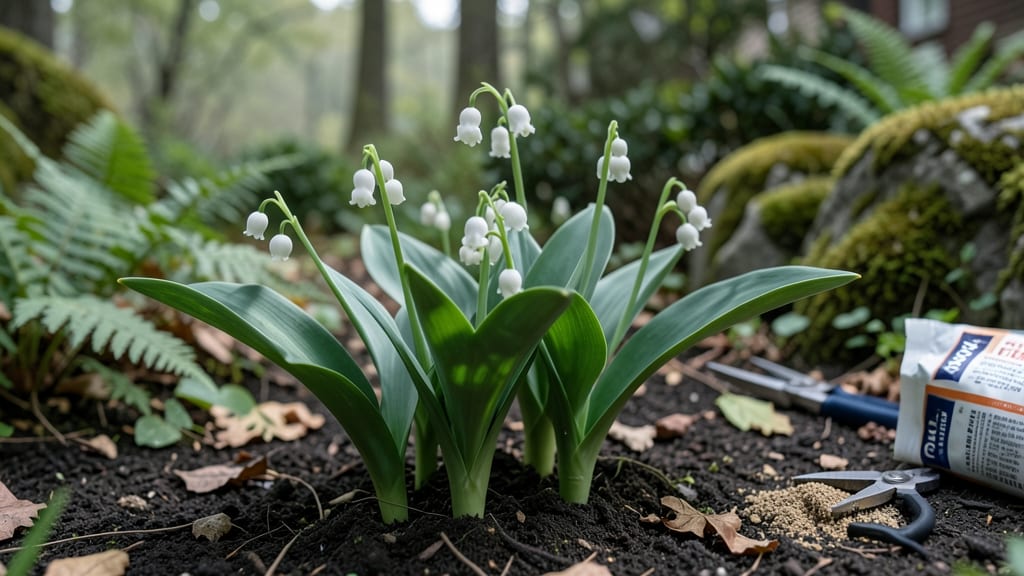
Yes, lily of the valley grows well in shade, thriving in partial to full shade where it gets dappled sunlight or filtered light—especially in hotter climates. While it tolerates deep shade, blooms may be less frequent in complete darkness.
Lily of the valley naturally grows in wooded areas where sunlight filters through tree canopies, making it perfectly adapted to shade. 🌿 The plant's broad leaves maximize light absorption even in low-light conditions, though it still benefits from occasional bright light to encourage flowering.
In my experience, the best spots are near deciduous trees where morning sun and afternoon shade create ideal growing conditions.
What's fascinating is how this plant balances its needs—it can survive in deep shade but may produce fewer blooms because flowering requires more energy.
If you're planting in full shade, consider adding a layer of organic mulch to maintain moisture and simulate the dappled light it prefers in its natural habitat.
💡 In This Article
- How Shade Affects Lily of the Valley Flowering and Growth
- Best Shade Conditions for Planting Lily of the Valley
How shade affects lily of the valley flowering and growth
Lily of the valley (Convallaria majalis) evolved in forest understories where sunlight is limited, so its biology is finely tuned to thrive in low-light conditions. The plant's broad, waxy leaves contain a high concentration of chlorophyll, allowing it to efficiently capture what little light reaches the forest floor.
In shade, these leaves develop a deeper green color as they produce more chlorophyll to compensate for reduced light intensity. This adaptation is why lily of the valley can survive in as little as 20-30% sunlight, which is far less than most garden plants require.
The plant's flowering mechanism is particularly sensitive to light exposure. Lily of the valley requires a minimum of 4-6 hours of indirect light daily to trigger its flowering cycle, which typically occurs in late spring.
When grown in deep shade with less than 2 hours of filtered light, the plant may still produce leaves but will often skip flowering entirely. This is because flowering demands significant energy, and the plant prioritizes leaf growth in low-light conditions to maintain photosynthesis.
The scent of its blooms—often described as sweet and floral—is also more intense when the plant receives adequate indirect light.
Root development is another critical factor influenced by shade. In low-light environments, lily of the valley's roots grow more horizontally to spread out and access moisture and nutrients efficiently.
This horizontal growth pattern helps the plant anchor itself securely in shaded soil, which is often denser and less aerated than sunny garden beds. The roots also store more starches, giving the plant energy reserves to survive periods of minimal light, such as during winter or under dense tree canopies.
What's fascinating is how lily of the valley responds to seasonal light changes. In early spring, when trees are still bare, the plant takes advantage of increased light exposure to push new growth and prepare for flowering.
By late spring, as foliage thickens, the plant shifts to a more conservative growth mode, focusing on maintaining its existing leaves and roots. This adaptability is why lily of the valley can thrive in partial shade gardens where light conditions fluctuate throughout the day and year.
For gardeners, this means that while lily of the valley can tolerate deep shade, the trade-off is often fewer blooms.
If you're aiming for a lush display of white bell-shaped flowers, prioritize planting in areas with morning sun and afternoon shade, such as near the north or east side of buildings or under deciduous trees.
This balance allows the plant to maximize both growth and flowering potential while avoiding the stress of direct afternoon sun, which can scorch its delicate leaves.
One common misconception is that lily of the valley can grow in complete darkness, like a basement or heavily shaded corner. While the plant is remarkably resilient, it will eventually decline without any light exposure.
Even in these conditions, the leaves may turn pale and sparse, and the plant will fail to produce flowers.
The key is to provide at least some indirect light—even a few hours of dappled sunlight filtering through a sheer curtain or tree branches can make a significant difference in the plant's health and vigor.
In my own garden, I've noticed that lily of the valley planted under a mature oak tree produces vibrant foliage but fewer blooms compared to those in a partially shaded border.
The lesson here is that while this plant excels in shade, it still needs some light to perform at its best. Think of it like a woodland creature that thrives in the forest but still needs occasional sunlight to stay active and healthy. 🌿