
Light Requirements
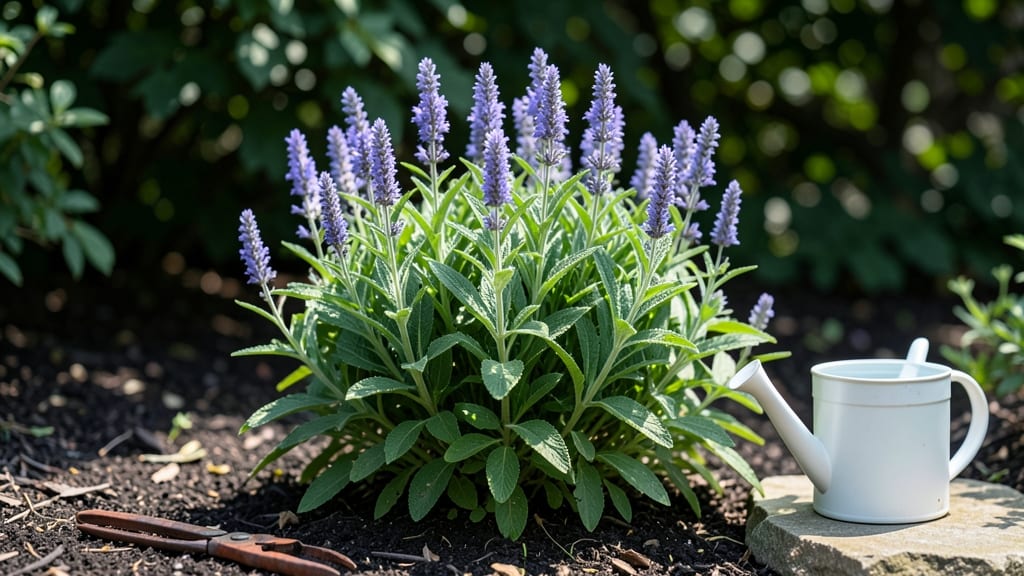
Growing catmint in part shade unlocks its silvery-blue foliage magic without the harsh sun demands. 🌿 I learned the hard way that catmint thrives where others struggle—my first batch in full sun bolted by July, while the part-shade plants grew lush and fragrant all season long.
The secret lies in balancing light, soil, and water to keep those velvety leaves looking their best.
Catmint loves well-draining soil with a touch of grit—think 60% garden soil mixed with 30% compost and 10% coarse sand. Water when the top inch feels dry, but never soggy; these plants hate wet feet.
Spacing them 18-24 inches apart gives them room to spread without crowding, and they’ll reward you with 3-4 feet of airy blooms from early summer through fall.
Pruning is where the real charm comes in. Shear back by one-third after flowering to encourage a second flush of blooms, and trim leggy stems in early spring.
The silver foliage glows in dappled light, making it perfect for woodland gardens, shady borders, or even container plantings where other perennials struggle.
Watch for powdery mildew in humid climates—improve airflow by spacing plants properly—and avoid overwatering, which causes yellowing leaves. With the right care, your catmint will spread gently, creating a low-maintenance, pollinator-friendly groundcover that’s as tough as it is beautiful.
📚 In This Guide
- What you need
- Instructions
- Tips and common mistakes
- Wrapping up and next steps
What you need
- ● Catmint plants: 3–5 nursery-grown transplants (preferred for faster results) OR
- ● Seeds (sow 10–15 per spot, as germination rates vary)
- ● Soil amendments: 2–3 cups well-draining potting mix or garden soil amended with compost (per planting hole)
- ○ Optional: Perlite or sand (1 part to 3 parts soil) for extra drainage in heavy clay
- ● Tools: Trowel or small shovel
- ● Garden gloves (to protect from prickly stems!)
- ● Watering can or hose with a gentle spray nozzle
- ● Measuring tape or ruler (for spacing)
- ● Mulch: 1–2 inches of wood chips or straw (to retain moisture and suppress weeds)
- ● Fertilizer: Balanced 10-10-10 granular fertilizer (sprinkle lightly at planting)
- ● Support: Small stakes or rings (if planting near walkways to protect from trampling)
- ● Pruners: For deadheading spent blooms (encourages more flowers!)
Step-by-Step guide to planting catmint in part shade
Here's how to establish thriving catmint with striking silver foliage, even where full sun isn't available.
🌱 Step 1: Select the Right Catmint Variety for Your Site
Choose Walker's Low or Purpurascens varieties—they tolerate part shade better than others. These cultivars handle 2-4 hours of direct sun daily while still producing abundant blooms. I avoid Nepeta 'Six Hills Giant' for shady spots; it demands full sun to prevent leggy growth.
Examine your site's light patterns first. If dappled sunlight filters through trees, catmint will thrive there. The key is avoiding deep shade where foliage loses its signature silver hue. Look for areas where morning sun warms the soil but afternoon shade prevents stress—this is ideal catmint territory.
🪴 Step 2: Prepare the Planting Site with Well-Draining Soil
Catmint roots need fast drainage to prevent rot, so amend native soil with 25% perlite or coarse sand until the mixture feels gritty when squeezed. I dig a hole twice as wide as the root ball but only as deep as the container—planting too deep suffocates the crown.
Work in a 2-3 inch layer of compost at the bottom of the hole. This provides nutrients without compacting the soil. Avoid fresh manure—it can burn tender roots. The amended soil should crumble easily between your fingers, with no clumping. Test drainage by filling the hole with water; it should drain completely within 30 minutes.
☀️ Step 3: Plant at Correct Spacing and Water Thoroughly
Set the plant so the top of the root ball sits ½ inch below soil level. Space plants 18-24 inches apart—closer spacing leads to crowded, mildew-prone foliage. Gently backfill with amended soil while pressing lightly to eliminate air pockets.
Water immediately after planting with 1 gallon per plant, letting the water soak into the soil until it emerges from the drainage holes. This settles the roots into place. Mulch with 2 inches of shredded bark to retain moisture and suppress weeds, but keep mulch 3 inches away from stems to prevent rot.
🌿 Step 4: Maintain Through the First Growing Season
Water deeply once weekly during establishment, aiming for 1-1.5 inches of water per week. Let the top 2 inches of soil dry between waterings—catmint is drought-tolerant once established, but young plants need consistent moisture. You'll see new growth within 3-4 weeks if conditions are right.
Fertilize lightly in early spring with 5-10-10 granular fertilizer at half the recommended rate. Too much nitrogen produces lush foliage but fewer flowers. Deadhead spent blooms to encourage continuous flowering. By midsummer, your catmint should be bushy with silvery foliage and clusters of lavender-blue flowers.
✂️ Step 5: Prune for Winter Hardiness and Spring Renewal
After the first hard frost, cut back stems to 2-3 inches above ground level. This prevents dieback and encourages fresh growth in spring. I use clean, sharp pruners to make 45-degree cuts just above a leaf node. Avoid cutting into old wood—catmint reblooms best from new growth.
In early spring, remove any dead or diseased stems before new shoots emerge. The plant's natural silver foliage will return within 4-6 weeks of pruning. If you notice powdery mildew on leaves, space plants further apart next season and water at the base rather than overhead to prevent recurrence.
Tips & tricks for perfect catmint in part shade
Took me a while to figure these out, so here goes—your secret weapon for growing catmint that actually thrives in partial shade.
Variety Matters: While Walker's Low and Purpurascens are your best bets for part shade, I've found that even within these varieties, nursery-grown plants often come from full-sun environments. To give them the best start, acclimate purchased plants to your shade conditions for 7-10 days before planting by moving them to progressively shadier spots each day. This gradual transition prevents shock from sudden light changes.
Soil Texture Test: The 30-minute drainage test in Step 2 is non-negotiable, but here's what I do differently: I fill the hole with water, then after 30 minutes, I press the soil with my finger. If it feels damp but not soggy, you're good. If it's still dripping, add another 25% perlite or coarse sand to the mix. Too many gardeners skip this test and end up with root rot—don't make that mistake.
Watering Wisdom: Those 1-1.5 inches of water per week sound simple, but timing matters. I water catmint in the early morning (before 9 AM) to prevent fungal issues. The mulch layer helps retain moisture, but I still check soil moisture by sticking my finger 2 inches down—if it's dry, water again. Overwatering is the #1 killer of young catmint plants in part shade.
Pruning Precision: When you're cutting back to 2-3 inches after frost, I use a different approach: I make my cuts just above a set of leaves that are facing outward. This encourages bushier growth next season. Also, store your pruners in rubbing alcohol between uses—this prevents spreading powdery mildew, which loves to hitch a ride on dirty blades.
Pro Tips for Catmint Part Shade
- Took me a while to figure these out, so here goes—your secret weapon for growing catmint that actually thrives in partial shade.
- Variety Matters: While Walker's Low and Purpurascens are your best bets for part shade, I've found that even within these varieties, nursery-grown plants often come from full-sun environments.
- Soil Texture Test: The 30-minute drainage test in Step 2 is non-negotiable, but here's what I do differently: I fill the hole with water, then after 30 minutes, I press the soil with my finger.
Frequently asked questions
Got questions about growing catmint in part shade?
You’re not alone! Here are answers to the most common concerns—from spacing to pests—to help you cultivate lush, fragrant foliage with ease.
How much shade can catmint tolerate in part shade?
Catmint thrives in partial shade (3–6 hours of sunlight daily), but it can handle up to 50% shade—especially in hot climates. In deeper shade (<4 hours of light), expect slower growth and fewer blooms. For best results, place it where it gets morning sun and afternoon shade to balance foliage health and flowering.
What’s the ideal spacing for catmint in part shade?
Space plants 18–24 inches apart to allow airflow and prevent overcrowding. In part shade, they may spread slightly less aggressively than in full sun, but pruning spent blooms encourages bushier growth. Mulch around the base to retain moisture and suppress weeds—catmint’s invasive roots will thank you!
Are there pests or diseases to watch for in part shade?
Catmint is drought-tolerant and pest-resistant, but part-shade conditions can attract aphids or spider mites if humidity rises. Yellowing leaves? Check for powdery mildew (common in damp shade). Improve airflow, avoid overhead watering, and treat issues early with neem oil or insecticidal soap.
When should I prune catmint in part shade?
Prune twice a year for part-shade catmint:
- Early spring (before new growth): Trim back 1/3 of the plant to shape it and encourage dense foliage.
- After flowering (late summer): Cut back spent blooms to promote a second flush of flowers and prevent seed spread.
What’s a good alternative if catmint struggles in my shade?
If your part shade is too dark for catmint, try these low-light, silver-foliage friends:
- Lamb’s Ear (Stachys byzantina) – Soft, fuzzy leaves; thrives in <4 hours of light.
- Heuchera (Coral Bells) – Vibrant foliage; tolerates <3–4 hours of sun.
- Ajuga (Ajuga reptans) – Ground cover with purple blooms; shade-tolerant.
Wrapping up and next steps
Catmint thrives in part shade—its silvery foliage and fragrant blooms make it a low-maintenance, drought-tolerant star for gardens with filtered sunlight. Whether you’re a beginner or a seasoned gardener, this hardy perennial delivers year-round interest with minimal fuss.
Ready to transform your part-shade spot? Start by selecting the right variety (like ‘Walker’s Low’ or ‘Purpurascens’) and prep your soil—then watch your garden sparkle with effortless beauty! 🌿✨