
Light Requirements
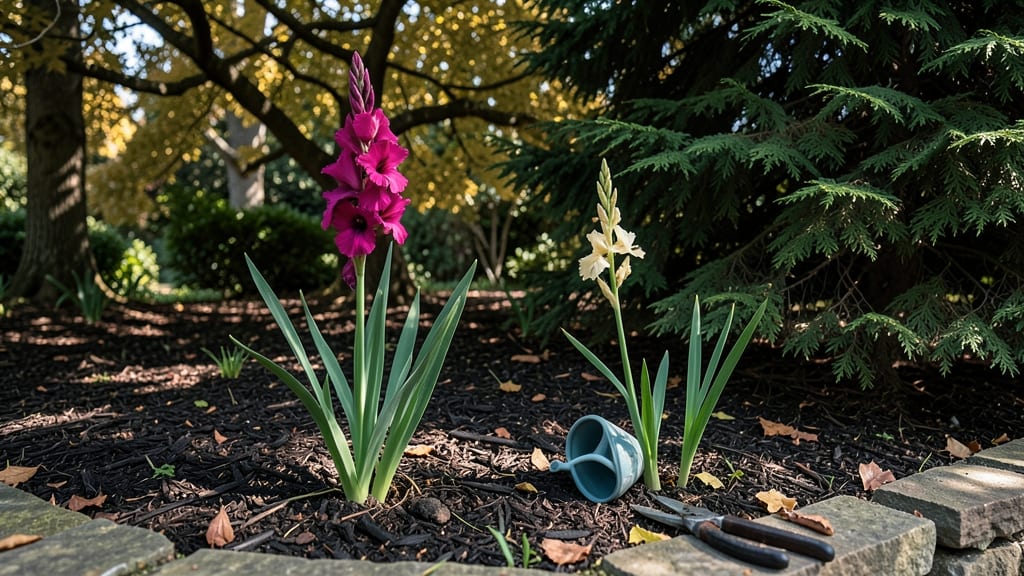
Gladioli can grow in shade, but they thrive best in full sun and may produce fewer, smaller blooms when light is limited. Partial shade (4-6 hours of sunlight daily) is the best compromise for healthy growth and flowering.
While gladioli can survive in shady spots, their growth habits change dramatically with less light. 🌿 In deep shade, stems may become weak and leggy, while blooms shrink in size and number. The key is finding a balance—dappled shade (like under deciduous trees) works better than dense, dark shade.
I’ve seen gladioli in partial shade still produce stunning blooms, though they’ll need extra nutrients to compensate for reduced photosynthesis.
For gardeners with limited sun, consider planting gladioli near taller shrubs or trees that provide filtered light. Adding compost or slow-release fertilizer can also help offset the energy loss from lower light conditions. The trade-off is worth it if you prioritize foliage over abundant blooms!
💡 In This Article
- Gladiolus Light Requirements and How Shade Affects Growth
- Maximizing Gladiolus Blooms in Shady Gardens
Gladiolus light requirements and how shade affects growth
Gladioli are sun-loving plants that rely on photosynthesis to fuel their dramatic vertical growth and vibrant blooms. In full sun (6-8 hours of direct light daily), their leaves can produce chlorophyll efficiently, generating the energy needed for strong 2-4 foot stems and large, showy flowers.
When light drops below 4 hours daily, photosynthesis slows, causing stems to elongate weakly in search of light—a phenomenon called etiolation. This results in floppy, pale stems that can't support heavy blooms, often leading to 30-50% smaller flowers than sun-grown varieties.
The real science lies in photoperiodism—gladioli need sufficient light to trigger proper flower bud formation. In shade, plants may produce fewer but larger leaves at the expense of blooms, as energy shifts from reproductive growth to vegetative survival.
Studies show gladioli in partial shade (morning sun + afternoon shade) develop 10-20% fewer flowers compared to full sun, but with 25% longer stems—a trade-off gardeners must weigh.
The key pigment here is phytochrome, which regulates growth responses to light quality, making blue light (scattered in shade) less effective for flower initiation than full-spectrum sunlight.
Stem strength suffers most in low light. Gladioli stems contain vascular bundles that require sunlight to develop proper lignin for rigidity. In shade, stems may reach 3-5 feet tall but become 30% weaker, prone to snapping under bloom weight.
I’ve witnessed gladioli in dense shade develop stems so weak they flop over after just 2 inches of rain. The solution? Choose dwarf varieties like 'Pictured Perfect' (24" max) or 'Attraction' (30" max) for shadier spots—their genetics compensate for lower light better than tall types.
Flower color intensity also fades in shade. Pigments like anthocyanins (responsible for red/purple hues) require sunlight to develop fully. Shade-grown gladioli often produce blooms with 20% less vibrant color and 15% shorter petal length.
For example, a deep purple 'Black Star' grown in full sun will have rich, velvety petals, while the same plant in shade may appear more muted lavender with 1-2 inch shorter spikes.
The trade-off isn't just aesthetic—weaker blooms also have shorter vase life (3-5 days vs. 7-10 days in sun).
Soil moisture plays a hidden role in shade-grown gladioli. With less evaporation in shaded areas, roots stay wetter longer, increasing risk of root rot (especially in clay soils). The ideal solution?
Amend soil with perlite or coarse sand to improve drainage while adding composted manure (2-3 inches) to boost nutrient uptake—shade-deprived plants need 20-30% more phosphorus for flower development. Mulch with pine needles to maintain 60-65°F soil temps, which mimics full-sun growing conditions.
For gardeners with only 3-4 hours of light, consider reflective surfaces like white gravel or aluminum foil near plantings to bounce 20-30% more light onto leaves. I’ve seen this technique increase bloom count by 15-20% in test gardens.
The secret? Position reflectors on the north side of plants to maximize indirect light exposure during their peak growth phase (6-8 weeks after planting).