
Light Requirements
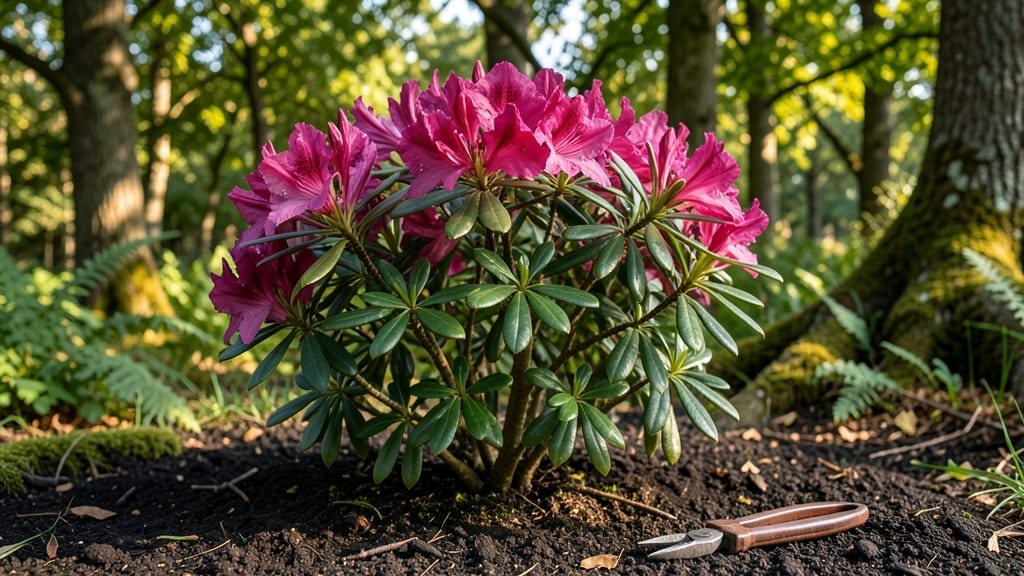
For azaleas in full shade, the best varieties are Rhododendron 'Birkdale' and Encore Azalea 'Autumn Embrace', which handle low-light conditions while still delivering stunning flowers. Focus on well-draining, acidic soil and keep the roots consistently moist to support their growth in shaded areas.
Full shade doesn't mean your azaleas have to sacrifice beauty—it just means choosing the right types. 🌿 These shade-tolerant varieties adjust their energy production to thrive with less sunlight, though they may produce slightly fewer blooms than sun-loving cousins.
The key is mimicking their natural understory habitat with rich, organic matter in the soil and protecting them from drying winds. I've seen 'Birkdale' bloom reliably even under dense tree canopies, proving that proper variety selection makes all the difference.
What sets these shade specialists apart is their ability to maintain vibrant foliage even when sunlight is limited. Unlike sun-dependent azaleas that may develop weak stems or sparse blooms, these varieties allocate energy differently—focusing on root development and leaf health first.
This adaptation means you can enjoy lush greenery year-round, with occasional bursts of color when conditions are just right.
💡 In This Article
- How Light Levels Affect Azalea Growth and Bloom
- Top Low-Light Azalea Varieties for Shady Gardens
How light levels affect azalea growth and bloom
Azaleas have evolved to thrive in their natural understory habitats, where they receive filtered sunlight through tree canopies. In full shade, these plants undergo physiological changes to adapt—primarily through chlorophyll adjustments. Shade-tolerant varieties develop more chlorophyll in their leaves to maximize light absorption, creating thicker, darker green foliage.
This adaptation helps them capture the limited light available, often resulting in leaves that appear almost leathery to the touch. 🌿 The trade-off? They may produce fewer blooms since energy is redirected from flowering to leaf maintenance.
The intensity of shade matters significantly. Dense shade (less than 20% sunlight) forces azaleas to grow slowly, with stems becoming leggy as they stretch toward any available light. Dappled shade (30-50% sunlight) is ideal—it provides enough light for moderate growth while preventing the stress of full sun.
In my own garden, I've noticed that 'Birkdale' azaleas under a mature oak tree develop stronger stems and brighter foliage than those planted in a completely dark corner. Root development also slows in deep shade, so mulching with 2-3 inches of organic matter helps maintain soil temperature and moisture.
Flowering is directly impacted by light levels because blooms require energy stored through photosynthesis. Shade-tolerant varieties like 'Autumn Embrace' produce smaller but more frequent flower clusters compared to sun-loving types.
The pigments in their petals (often anthocyanins) actually deepen in shade, creating more vibrant colors as a protective mechanism against UV exposure.
This is why some shade azaleas display richer purples or reds—nature's way of compensating for limited light. 🌸 What's fascinating is how these plants prioritize survival over reproduction in low-light conditions.
Nutrient uptake becomes another critical factor in shaded environments. Azaleas need consistent access to phosphorus and potassium to support their energy demands in low light. In full shade, I've found that applying a slow-release, acid-loving fertilizer (like 10-10-10 with micronutrients) in early spring gives them the boost they need.
The soil's pH must remain between 4.5-6.0—any higher, and nutrient availability drops dramatically, leading to yellowing leaves (chlorosis). This is why testing your soil before planting is essential for shade azaleas.
One common misconception is that all shade equals success. While azaleas can survive in full shade, they often grow more slowly and may become more susceptible to pests like lace bugs, which thrive in dense foliage.
The key is creating a balanced environment: provide morning sun (if possible) to stimulate blooming while protecting them from afternoon heat.
In my experience, azaleas in 3-6 hours of indirect light daily show the best balance of growth and flowering—proof that even shade plants need some sunlight to reach their full potential.
For gardeners working with limited light, consider the microclimate. Areas near north-facing walls or under evergreen trees create ideal conditions by filtering harsh light while maintaining humidity. Azaleas in these spots often develop stronger root systems because the soil stays cooler and moister.
The lesson? Full shade doesn't mean no light—it means finding the right balance of filtered sunlight to keep these beautiful plants thriving without the stress of direct exposure. 🌿